Top picks in Asheville
The places most worth your time here.
Connect your Cour circle to see which places friends and family recommend here.
Connect Cour →Landmarks
75 places worth the detour
tap the eye to open · swipe or use buttons to browse
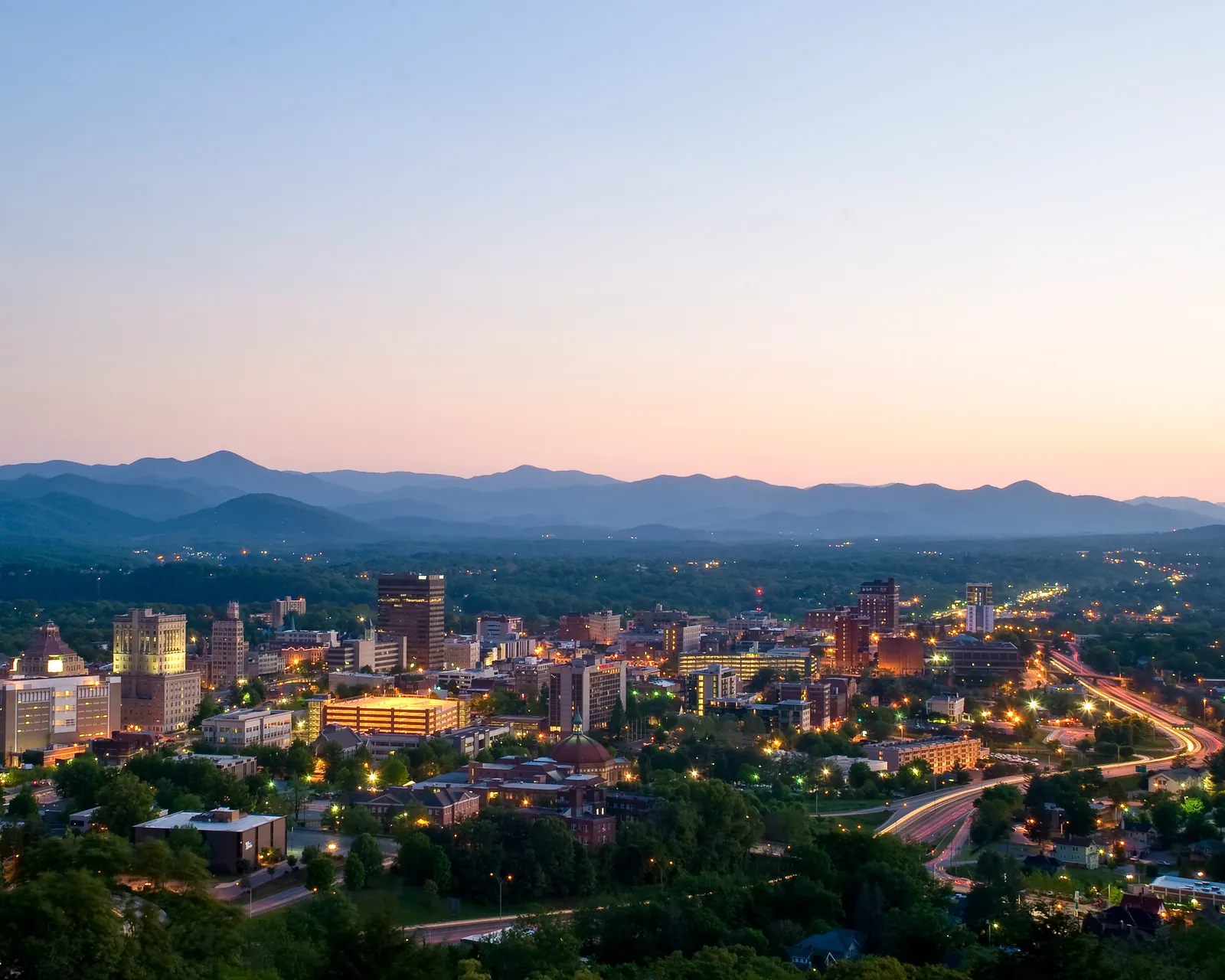
Asheville sits in a mountain bowl at the confluence of the French Broad and Swannanoa rivers, surrounded by the Blue Ridge. The elevation moderates what would otherwise be a Southern climate —…
Read the full storyOn the map
Reading
The men who built the Biltmore Estate had no place to gather until George Vanderbilt funded one for them. That building, completed in 1892 at 39 S. Market Street, became the YMI Cultural Center — and eventually the anchor of The Block, Asheville's Black business district, where Louis Armstrong played the juke joints in their heyday. Urban renewal took most of it. At Stephens-Lee, the main structure was demolished overnight by urban renewal with no public notice; alumni saved the gym wing, now a community center at 30 George Washington Carver Avenue with a heritage museum inside. The Burton Street neighborhood was carved through twice — by I-240 in the 1960s, then by I-26 connector planning — though local tradition holds E.W. Pearson founded the WNC Colored Agricultural Fair there before the highways came. Every September, the Goombay Festival returns to Market Street. What endured, endured because people fought to keep it.
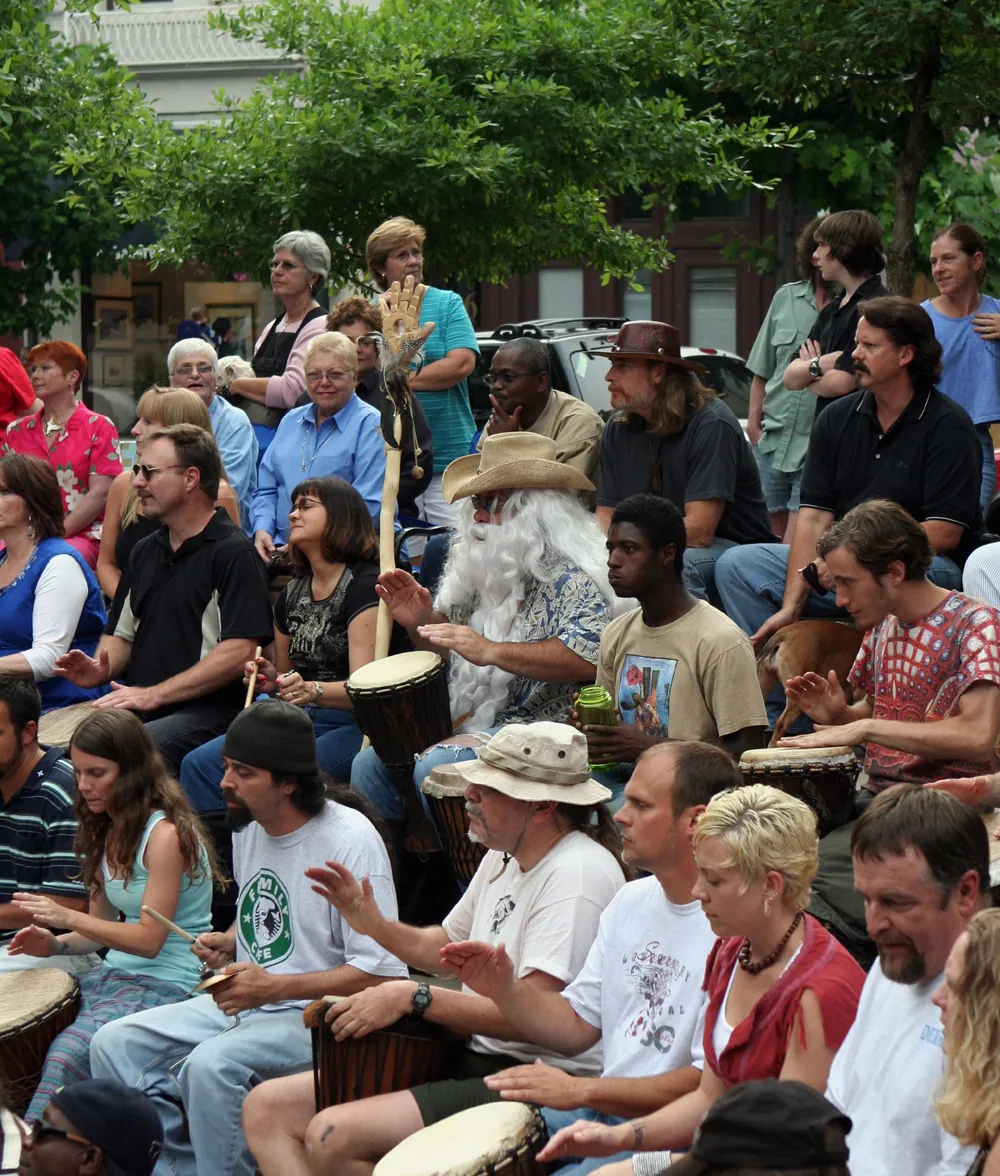
Bascom Lamar Lunsford was born in 1882 in Madison County, learned fiddle from his father and ballads from his mother, and spent decades walking the isolated hollows of western North Carolina collecting what people sang. He performed in a starched white shirt and black bow tie — a campaign against the hillbilly caricature, dressed like a man making a case that this music mattered. On June 6, 1928, he founded the Mountain Dance and Folk Festival in Asheville, the first event ever publicly described as a "folk festival," and ran it every year until a stroke took him out in 1965. Harry Smith put Lunsford's 1928 recording of "I Wish I Was a Mole in the Ground" on the Anthology of American Folk Music; Dylan later echoed it. The Folk Heritage Committee carries the festival forward today at Pack Square, alongside Shindig on the Green — free, every Saturday evening in summer, lawn chairs and fiddles welcome, still not charging admission, still trusting the tradition to keep itself alive.
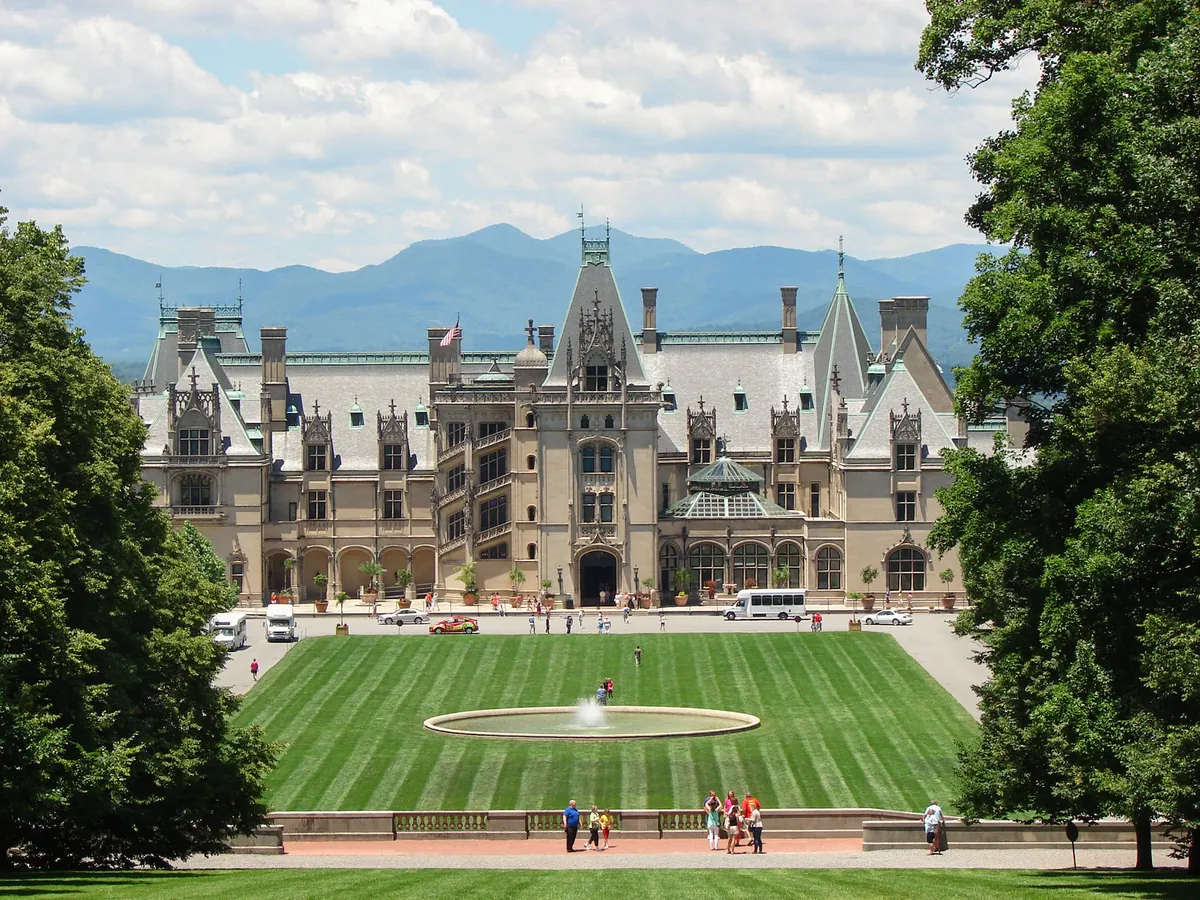
George Vanderbilt arrived near Asheville in the late 1880s and started buying land — parcel by parcel, until he held 125,000 acres. What he built on it reshaped the region in ways no single estate should. He hired Frederick Law Olmsted to design the grounds, Richard Morris Hunt to design the house, and Carl Schenck to manage the forests — Schenck opened the Biltmore Forest School in 1898, the first school of professional forestry in the United States. He funded the YMI Cultural Center in 1892 for the African American men building his estate, after community leaders approached him directly. Richard Sharp Smith, supervising architect on the Biltmore site, designed the planned worker village below it. In 1914, Edith Vanderbilt sold 86,700 acres to the federal government; Pisgah National Forest was established in 1916. One man's property became the blueprint for American conservation.
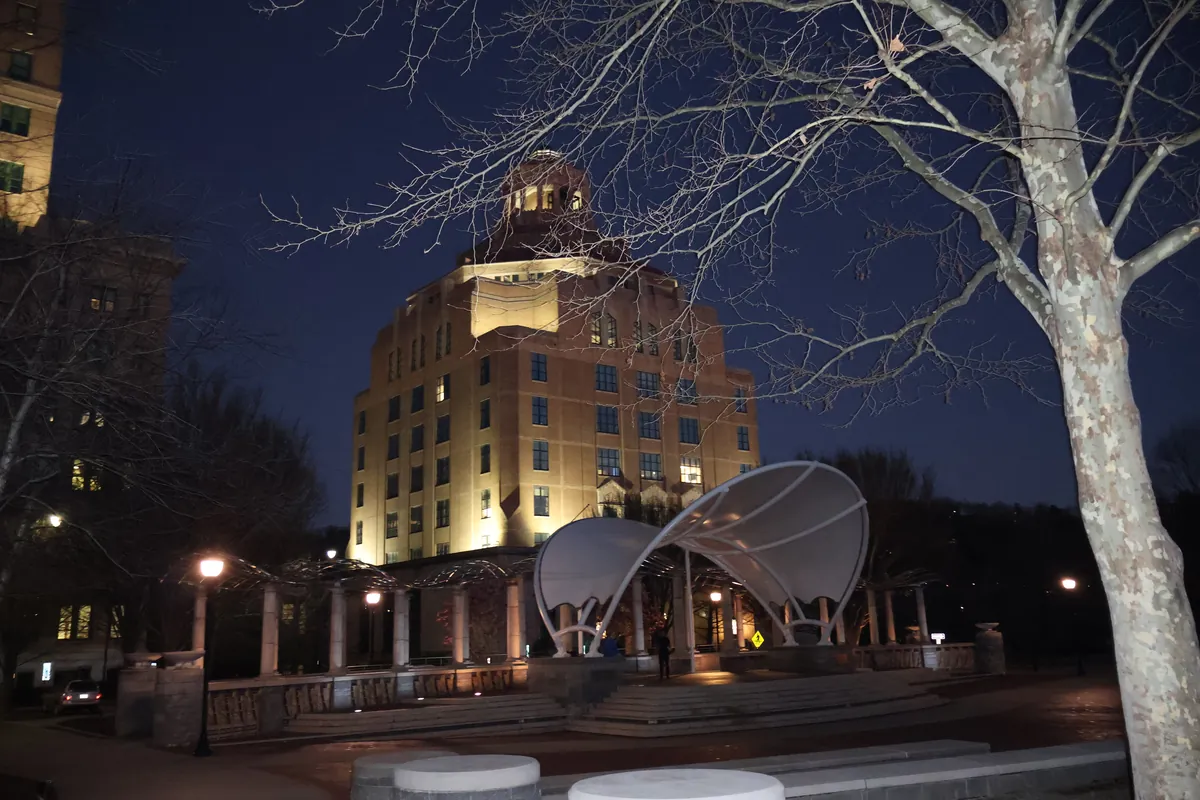
Asheville entered the Depression carrying what the brief describes as the largest per-capita municipal debt in the United States. That fact, ruinous at the time, is why the city looks the way it does now. Too broke to demolish, too broke to rebuild, Asheville held still while other American downtowns tore themselves apart and started over. What survived is a concentrated run of Art Deco that reads like a single interrupted sentence: Douglas Ellington's City Hall at 70 Court Plaza, its steep setbacks and colored tile tower now on the city seal; the S&W Cafeteria building at 56 Patton Avenue, its polychrome terracotta chevrons, urns, and fountains intact, today housing a food hall with a scoop counter inside. The debt was the disaster. The disaster was the preservation. The traveler standing downtown is looking at what poverty accidentally protected.
Tickets & Shows
Before you go
Plan your trip
The only thing left to do is go.
Some of these are partner links — if you book through them, Portage may earn a commission at no extra cost to you.
Plan your visit
Editorial content compiled with AI assistance. Place details verified against public records.