Art Deco's Accidental Preservation: How the Great Depression Froze Asheville's Architectural Time Capsule
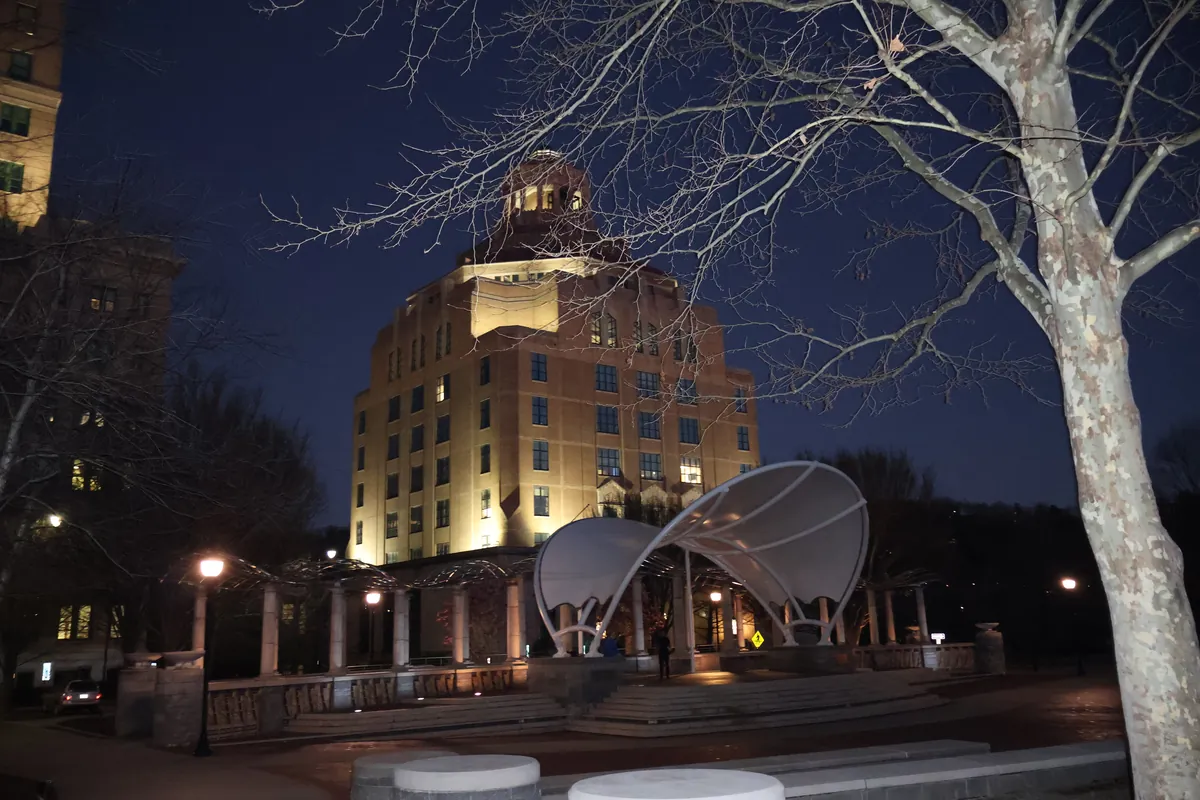
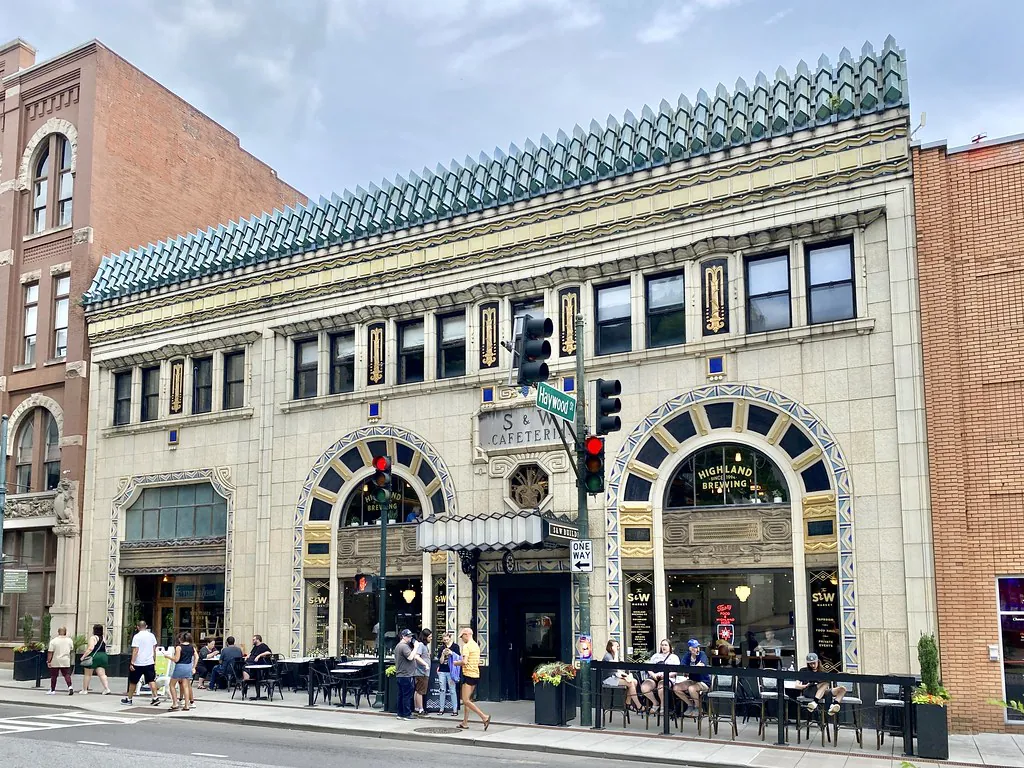
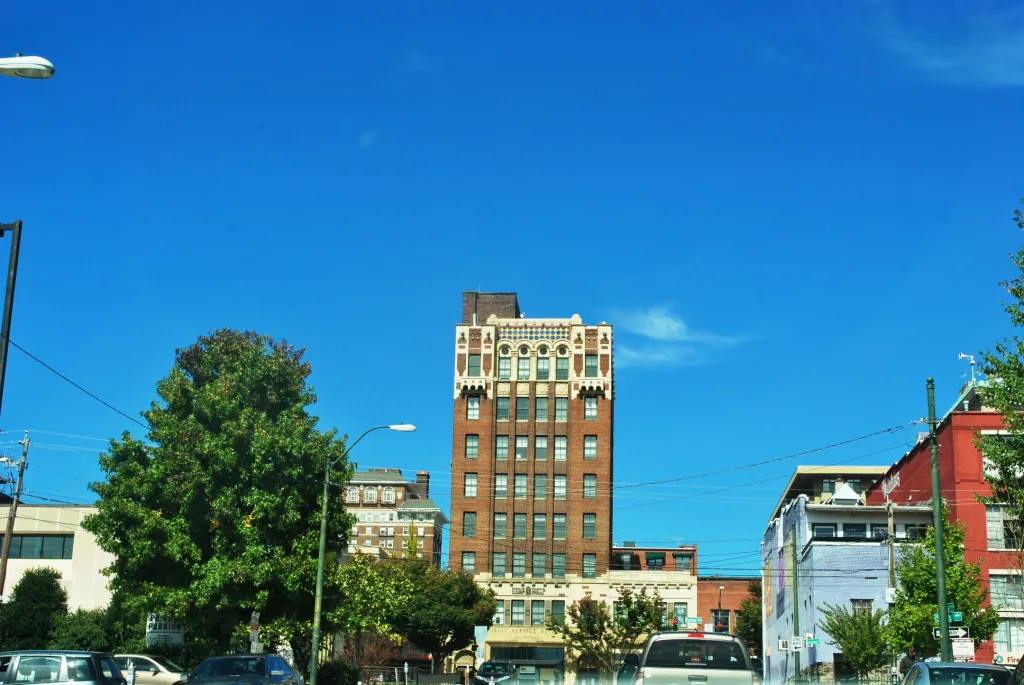
Asheville entered the Depression carrying what the brief describes as the largest per-capita municipal debt in the United States. That fact, ruinous at the time, is why the city looks the way it does now. Too broke to demolish, too broke to rebuild, Asheville held still while other American downtowns tore themselves apart and started over. What survived is a concentrated run of Art Deco that reads like a single interrupted sentence: Douglas Ellington's City Hall at 70 Court Plaza, its steep setbacks and colored tile tower now on the city seal; the S&W Cafeteria building at 56 Patton Avenue, its polychrome terracotta chevrons, urns, and fountains intact, today housing a food hall with a scoop counter inside. The debt was the disaster. The disaster was the preservation. The traveler standing downtown is looking at what poverty accidentally protected.