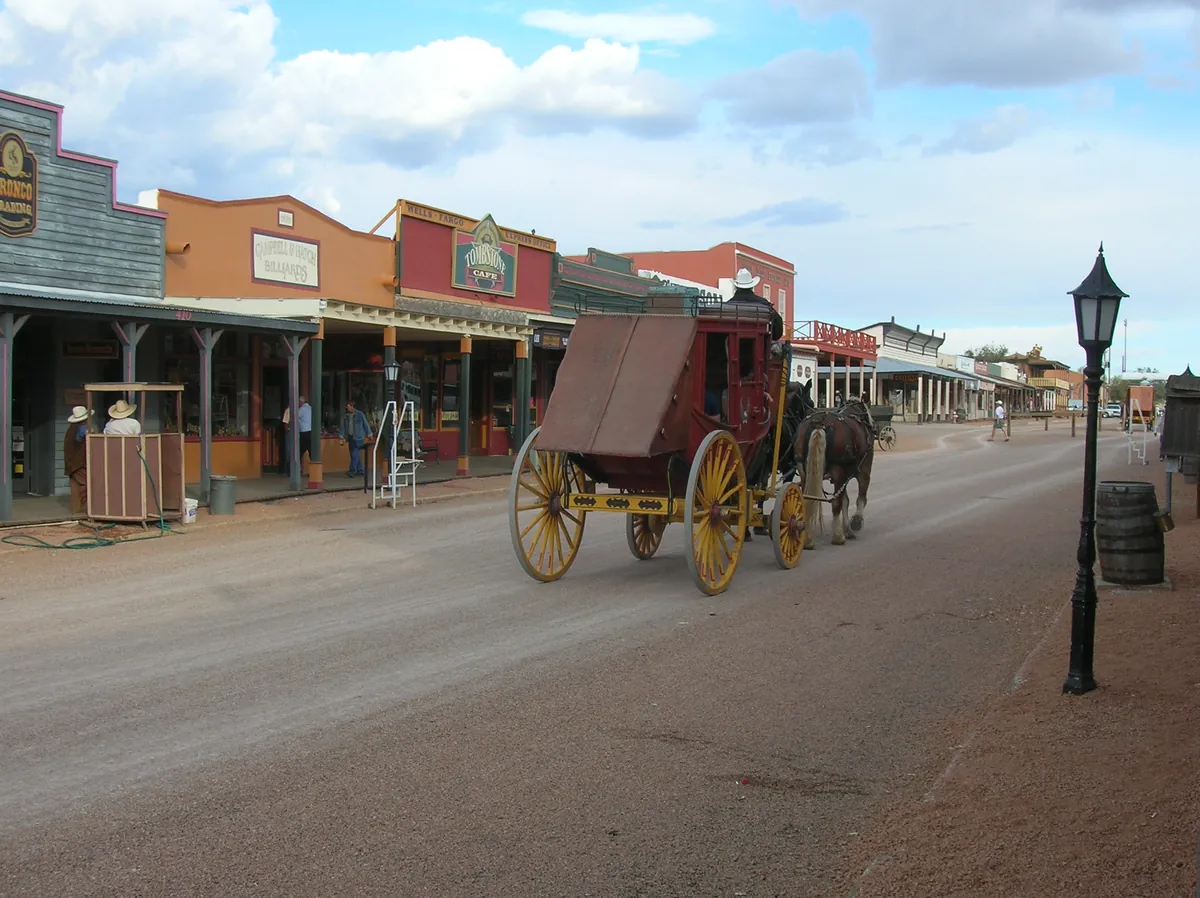
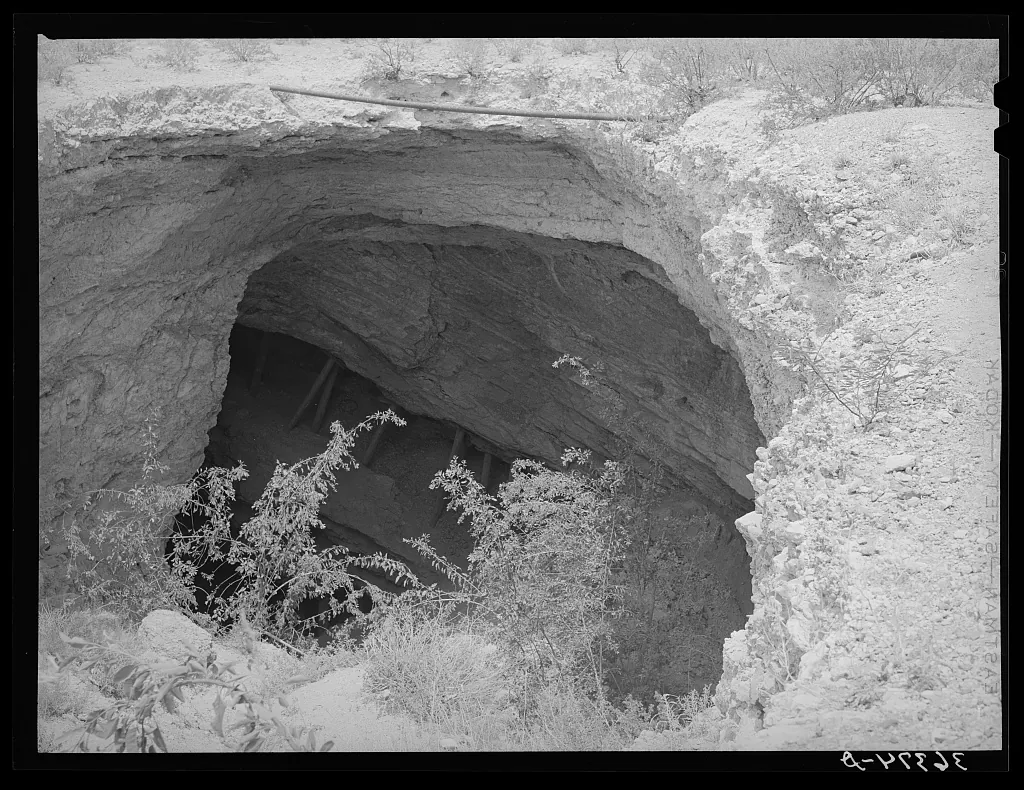
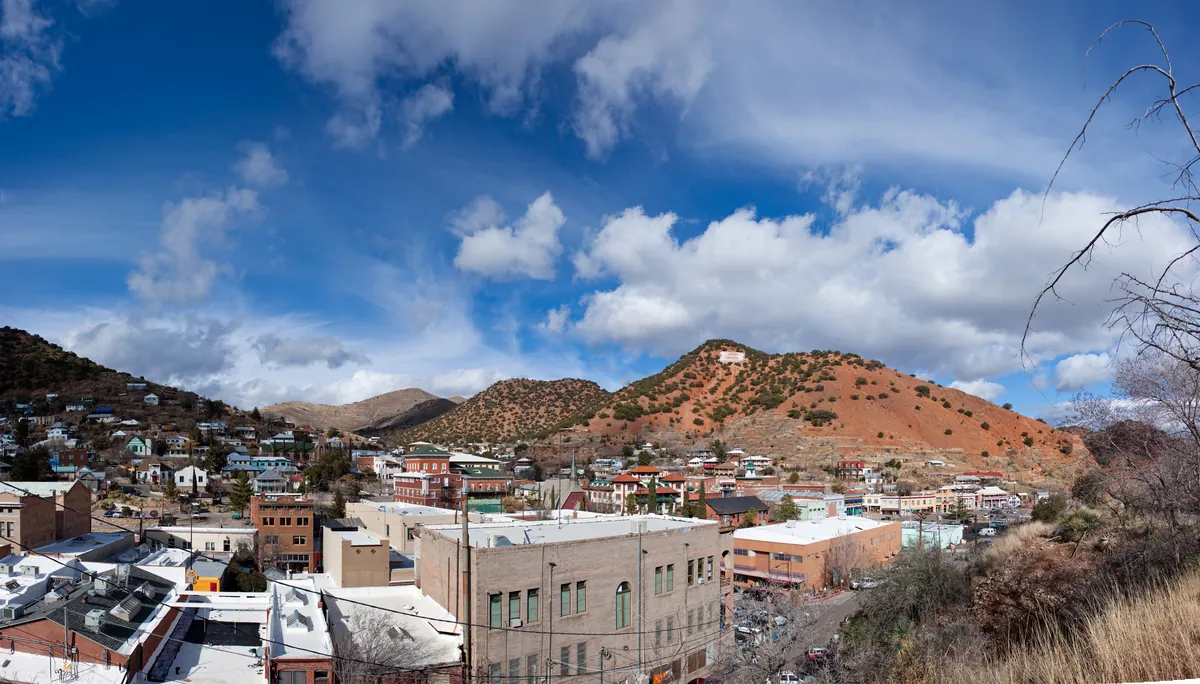
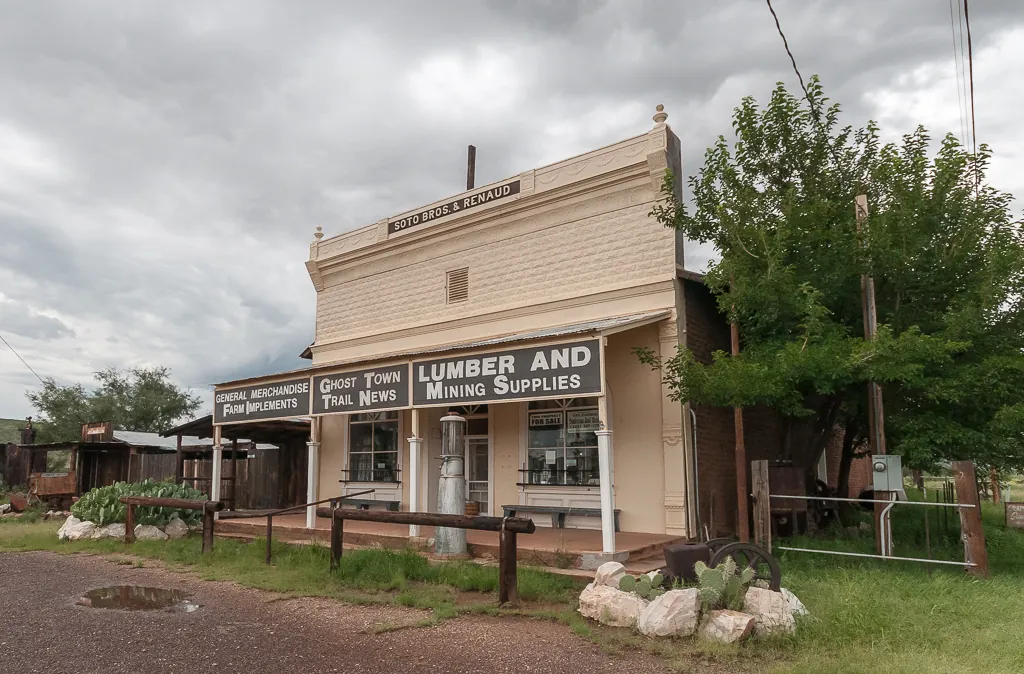
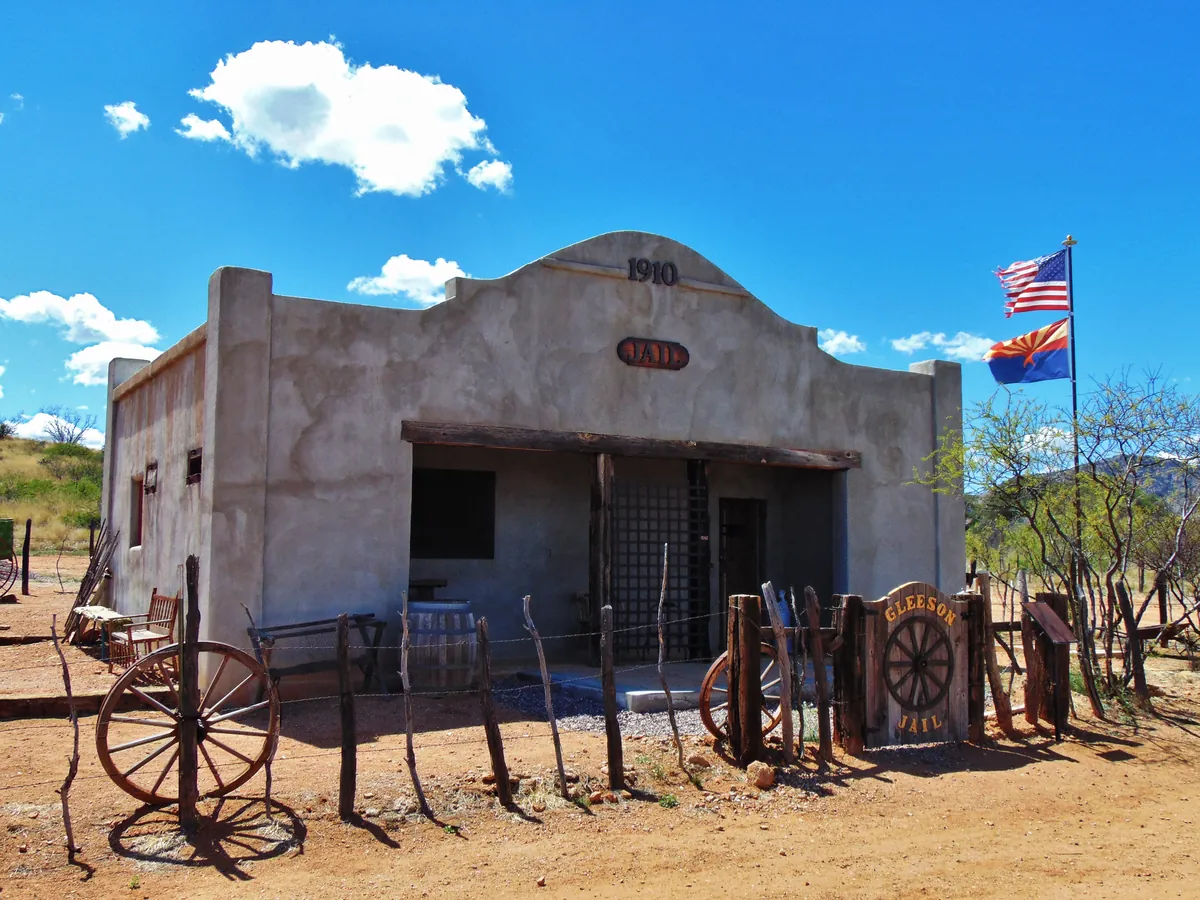
Ed Schieffelin prospected east of the San Pedro River in 1877, warned he'd find only his tombstone in Apache country. He filed claims anyway — named them the Tombstone and the Graveyard — and by March 1879 a settlement carried the joke as its own name. The district pulled roughly 32 million troy ounces of silver from the ground, around $25 million in bullion by mid-1884. Then in 1886 fire destroyed the Grand Central hoist and pumping plant while the water table was already flooding the shafts; the richest ore was gone, and the mines closed late in the decade. Sixty miles southeast, Bisbee's copper boom ended in a different kind of violence — 1917, Phelps Dodge and Sheriff Harry Wheeler loading more than a thousand striking IWW miners into cattle cars at gunpoint. The ore always ran out. What the brief records is what stayed: courthouses, churches, a restored jail someone bothered to fix the roof on, and a monument where Schieffelin asked to be buried dressed as a prospector.