The Commonwealth Mine pulled over a million tons of ore out of the Sulphur Springs Valley between 1895 and 1942 — call it eight million in silver, two and a half in gold. James Pearce, a Cornish miner turned cattleman, found the deposit in 1894. By 1919 the town that bore his name held fifteen hundred people, fed by twenty miles of underground workings. A post office opened in 1896; the railroad station followed in 1903.
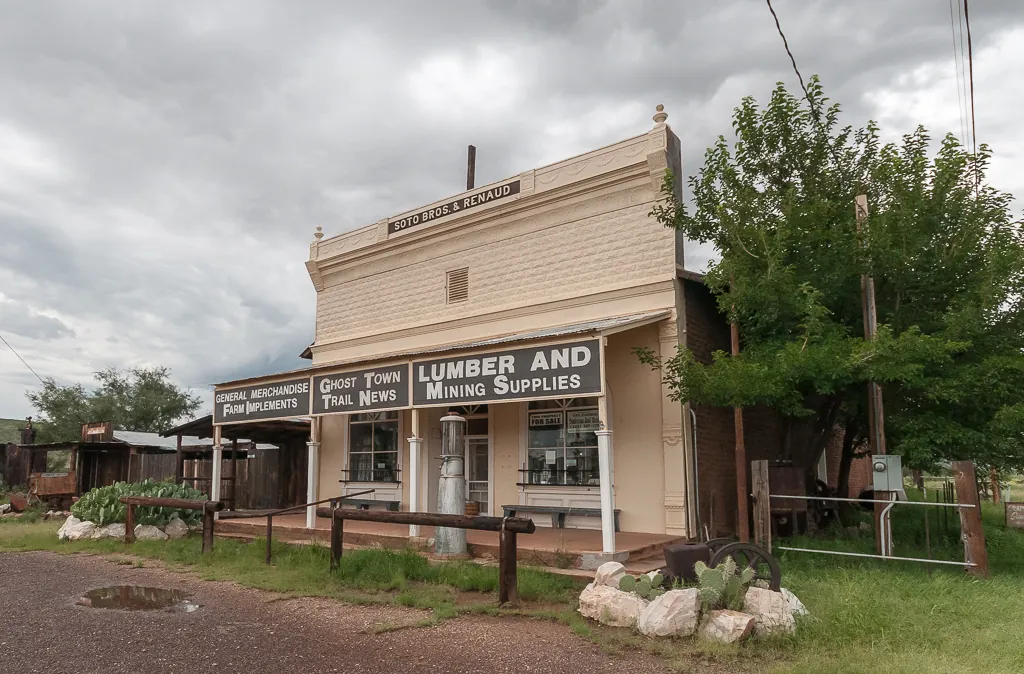
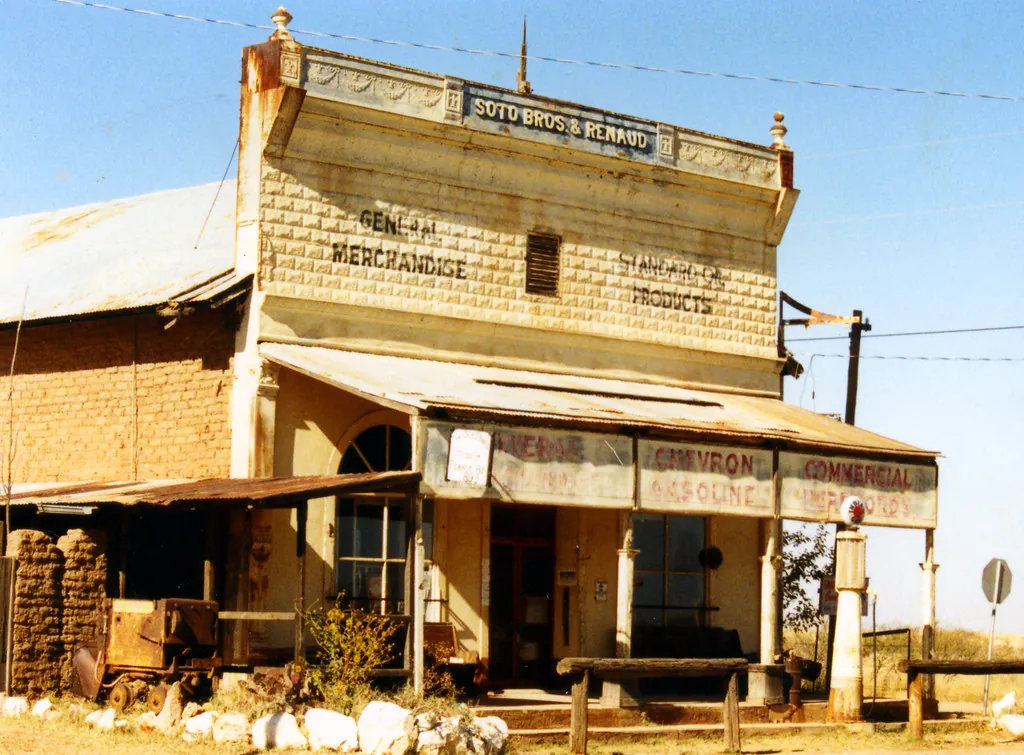
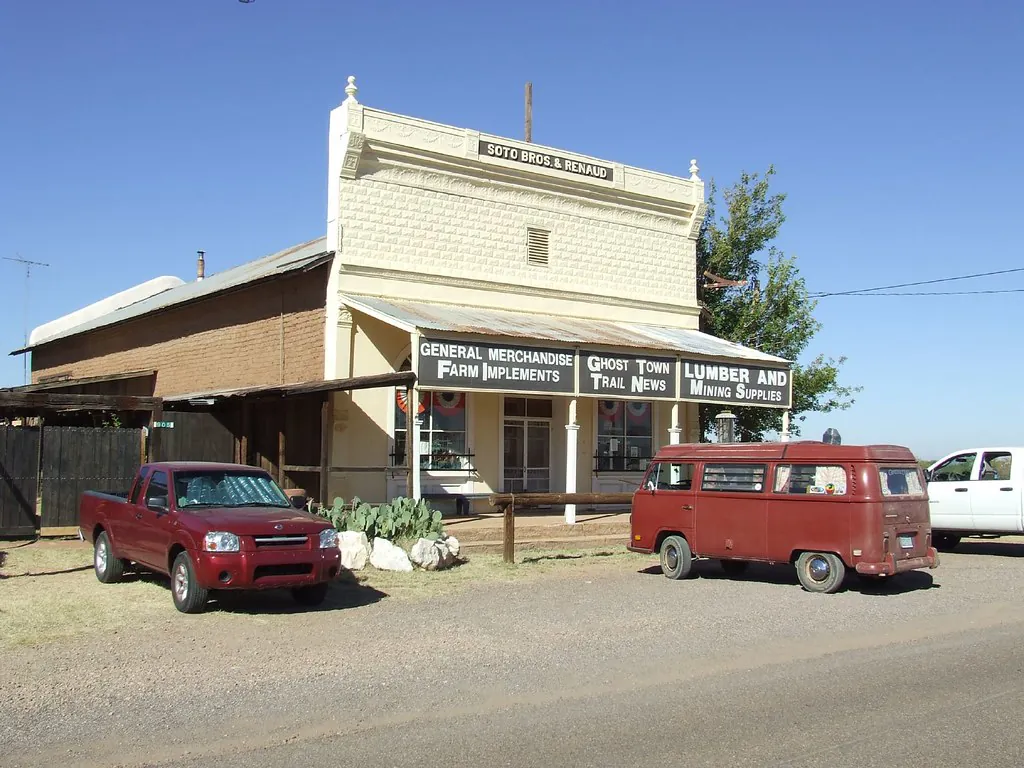
What's left now sits on the Ghost Town Trail: the general store, which opened the same year as the post office and ran as a tourist attraction until 1990; a jail; Our Lady of Victory Catholic Church, listed on the National Register in 2004. The cemetery went in ten years before Pearce struck gold — 1884, when this was still open rangeland and someone thought it worth marking a burial ground. The store made the Register separately; both buildings are contributing properties.
The mine gave out in the thirties. By the late forties the town was nearly empty. What remains is what lasted: stone and wood that outlived the silver, a graveyard older than the boom, a church that arrived after the mine opened and stayed after it closed. The store kept the doors open for nearly a century, long past the point when there was anyone left to sell to — testament less to commerce than to the habit of showing up. You go for what endures after the seam runs out.
- ·Coords from Wikipedia (31.90500, -109.82056). Commonwealth Mine in sec. 5, T.18S R.25E, 1/2 mile east of town. Post office est. Mar 6, 1896; railroad station 1903. NRHP: Pearce General Store (opened 1896, ran as a tourist attraction until 1990) and Our Lady of Victory Catholic Church (NRHP 2004). Pearce Cemetery established 1884. Remains: General Store, jail, cemetery, church. NRHP=true reflects the listed contributing properties. 5+ specific facts.
More archive
Memories
Editorial content compiled with AI assistance. Place details verified against public records.