Top picks in Tucson
The places most worth your time here.
Connect your Cour circle to see which places friends and family recommend here.
Connect Cour →Landmarks
52 places worth the detour
tap the eye to open · swipe or use buttons to browse
Tucson sits in a basin the desert made. The Santa Cruz River — now dry for most of the year, flooding hard when the monsoon arrives — runs through an alluvial plain ringed by mountain ranges on every…
Read the full storyOn the map
Reading
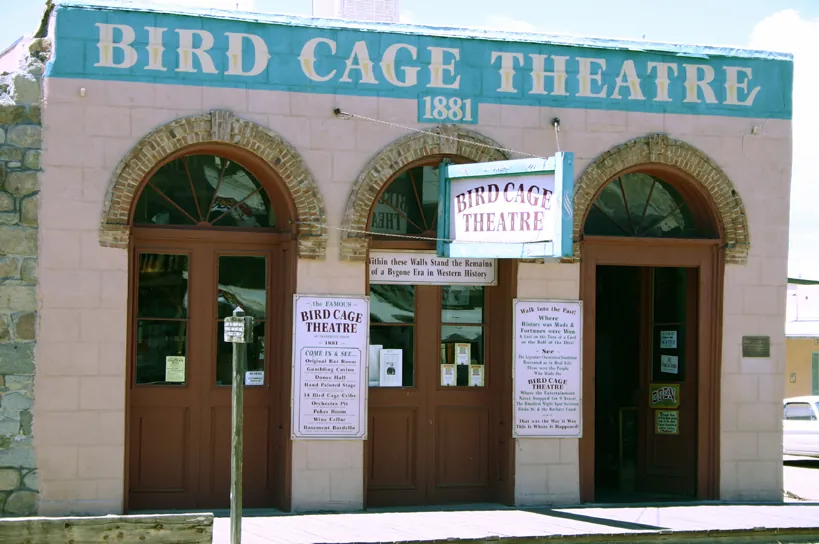
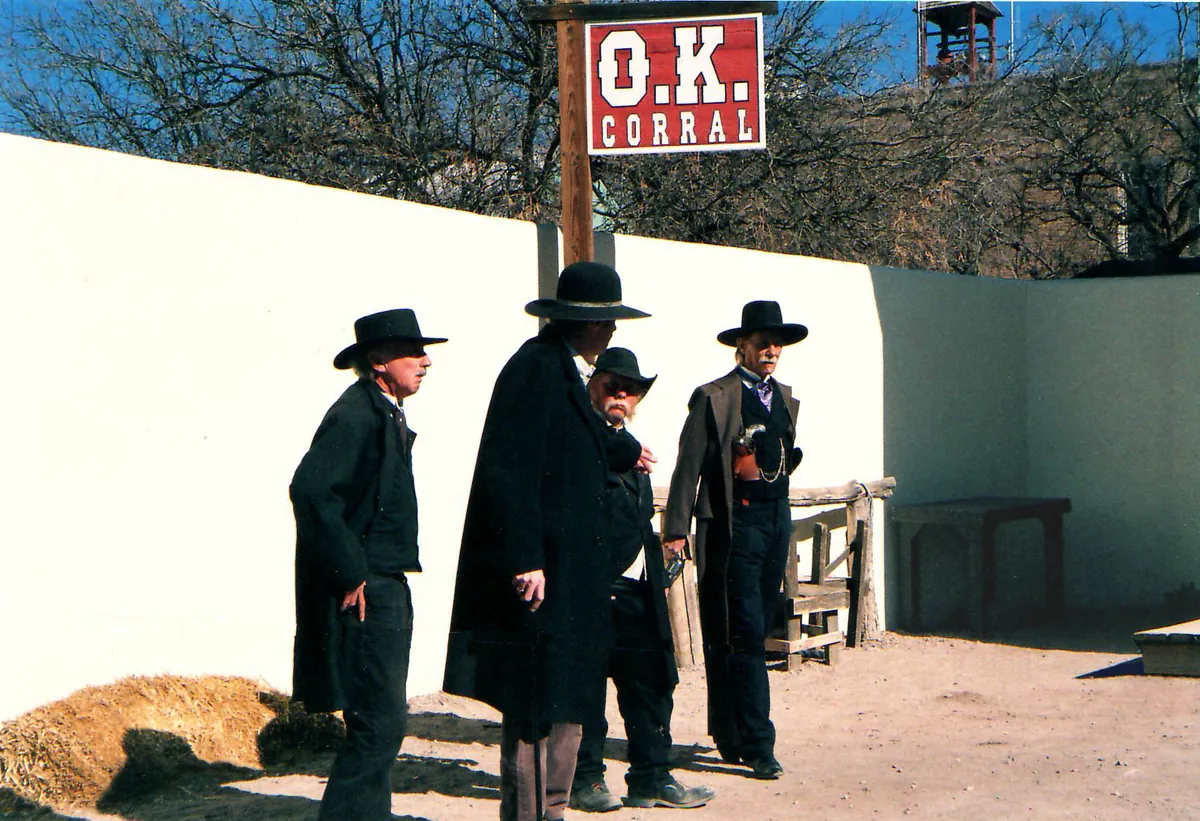
Ed Schieffelin prospected east of the San Pedro River in 1877, warned he'd find only his tombstone in Apache country. He filed claims anyway — named them the Tombstone and the Graveyard — and by March 1879 a settlement carried the joke as its own name. The district pulled roughly 32 million troy ounces of silver from the ground, around $25 million in bullion by mid-1884. Then in 1886 fire destroyed the Grand Central hoist and pumping plant while the water table was already flooding the shafts; the richest ore was gone, and the mines closed late in the decade. Sixty miles southeast, Bisbee's copper boom ended in a different kind of violence — 1917, Phelps Dodge and Sheriff Harry Wheeler loading more than a thousand striking IWW miners into cattle cars at gunpoint. The ore always ran out. What the brief records is what stayed: courthouses, churches, a restored jail someone bothered to fix the roof on, and a monument where Schieffelin asked to be buried dressed as a prospector.
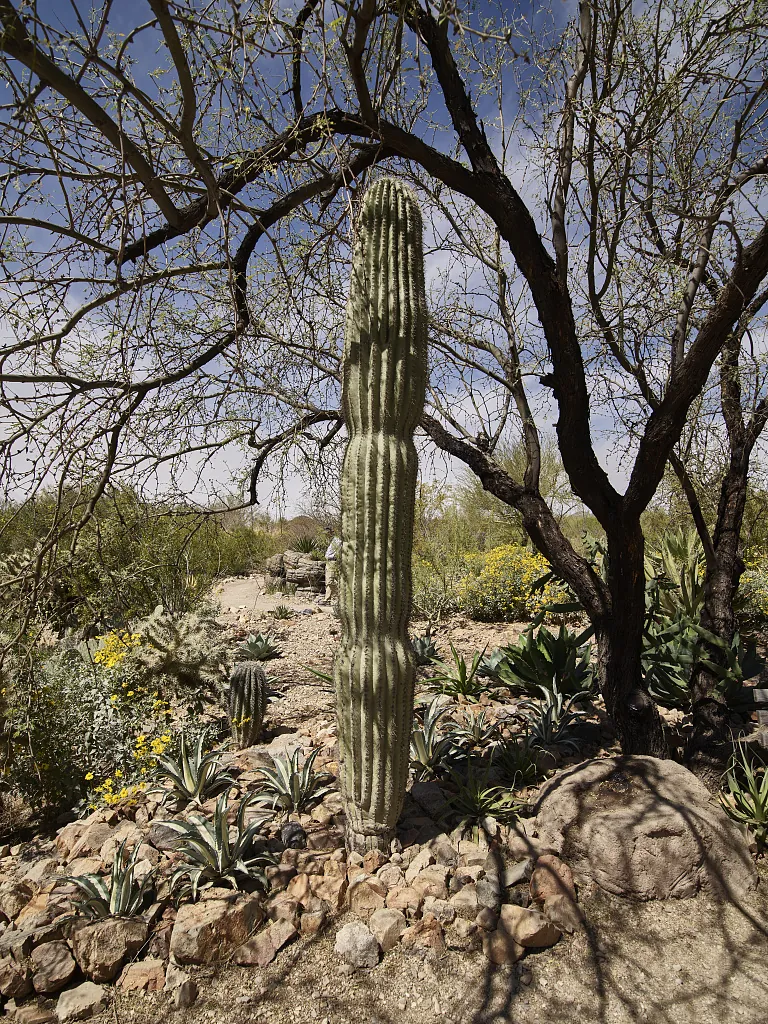
William Carr and Arthur Pack opened the Arizona-Sonora Desert Museum on Labor Day 1952, twelve miles west of Tucson, and the name they chose was either modest or sly — because what they built wasn't a museum in any conventional sense. Ninety-eight acres of bajada and rock, two miles of trail, 230 animal species and 1,200 plant varieties, all of them native to the Sonoran Desert that begins exactly where the parking lot ends. The animals live in enclosures designed to resemble the desert because they came from it. The plants outside the gates are the same ones labeled on the path inside. Naturalist Joseph Wood Krutch and paleontologist Roy Chapman Andrews sat on the early board, lending weight to something that could have been roadside novelty. Instead it became the argument — made at walking pace, under open sky — for why this particular desert, and everything living in it, is worth protecting.
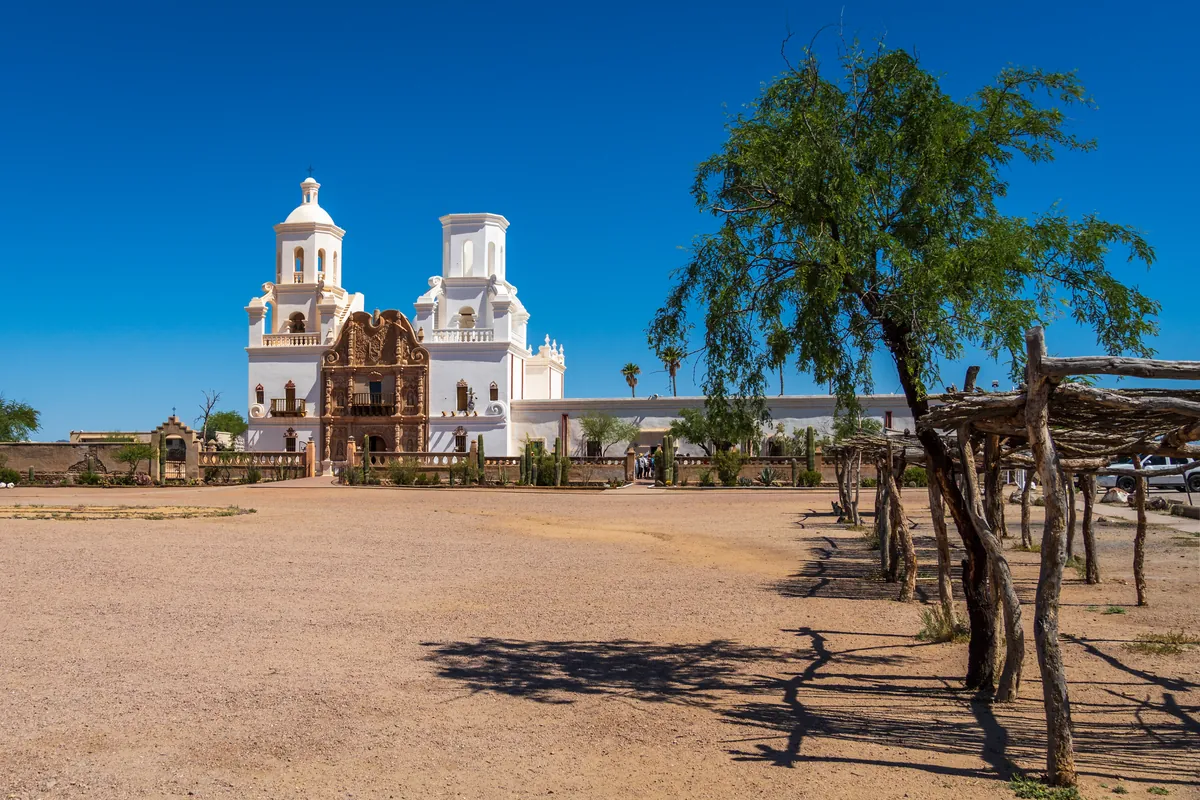
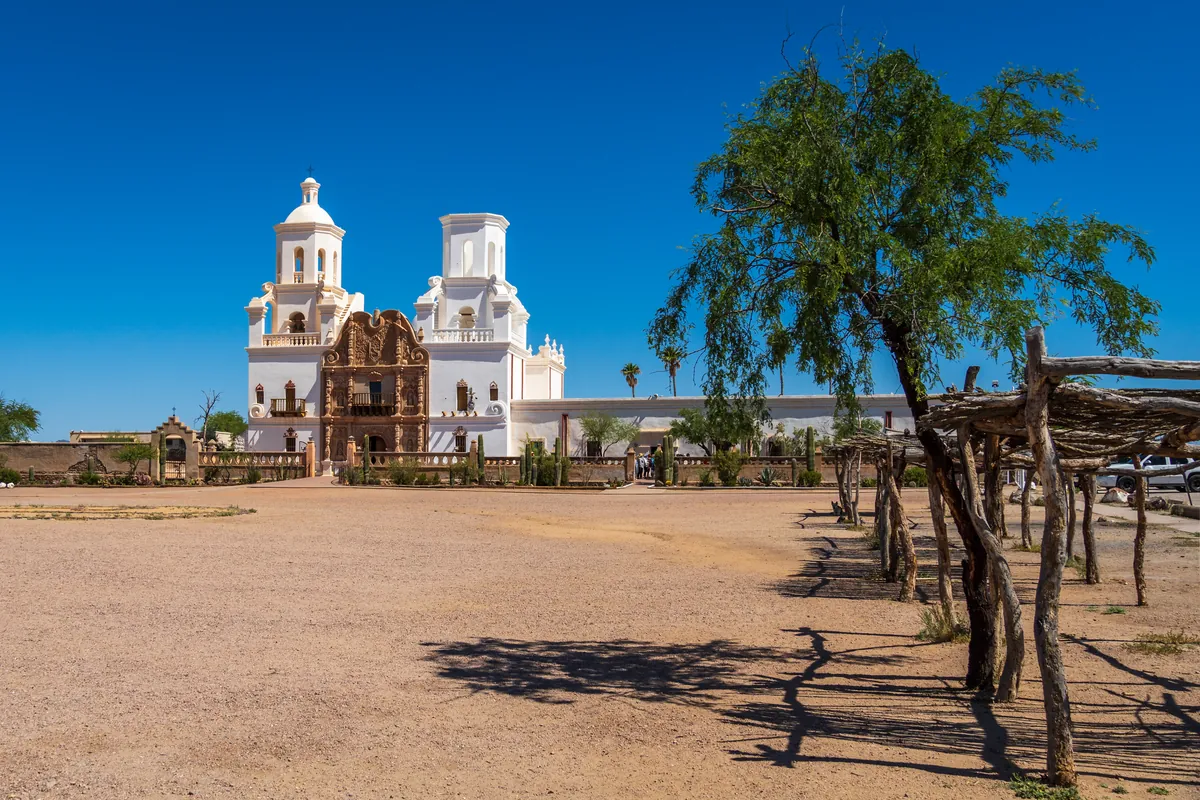
The name came first. *Cuk Ṣon* — "the base of the hill is black" — what the O'odham called the dark rock at Sentinel Peak's foot, a people who had farmed the Santa Cruz floodplain for over a thousand years before any European arrived. Father Eusebio Kino reached Wa:k in 1692 and founded Mission San Xavier del Bac in 1700; Apache raids destroyed that first church by 1770. What replaced it — built between 1783 and 1797 by Franciscans using O'odham labor, funded by borrowed pesos — still stands: the oldest intact European structure in Arizona. Meanwhile, in 1775, Captain Hugh O'Conor staked a presidio above the river; its adobe walls weren't finished until 1783, after Apache warriors nearly overran the place. Spain built here. Mexico inherited it in 1821. The United States bought it in 1853. The O'odham never left.
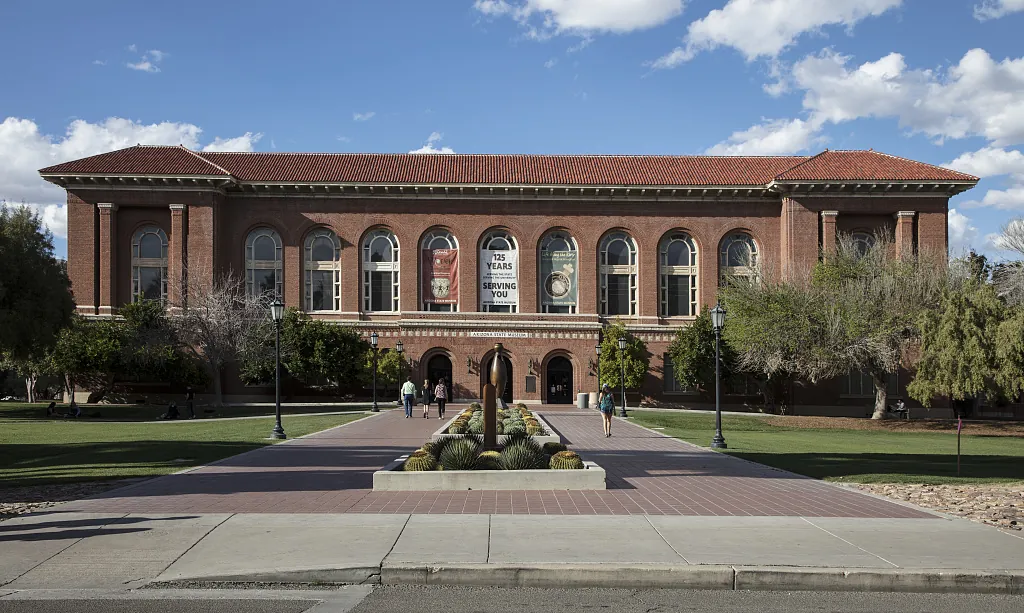
In 1885, the territorial legislature chartered the University of Arizona on overgrazed ranchland at the edge of Tucson — a city that still ran on adobe and borderland grit. The first class arrived in 1891: 32 students, six faculty, one building holding every classroom, every office, the library, the dorms. That building, Old Main, was condemned by 1938, saved by the US Navy during the war, and handed back in working order in 1945. What the university built from there reshaped what Tucson became. Beneath the east stands of Arizona Stadium, the Richard F. Caris Mirror Lab now spin-casts mirrors up to 8.4 meters across for the telescopes pushing deepest into the universe. OSIRIS-REx flew to an asteroid and back. The work helped earn Tucson the nickname "Optics Valley." A ranchland donation became the engine of a city.
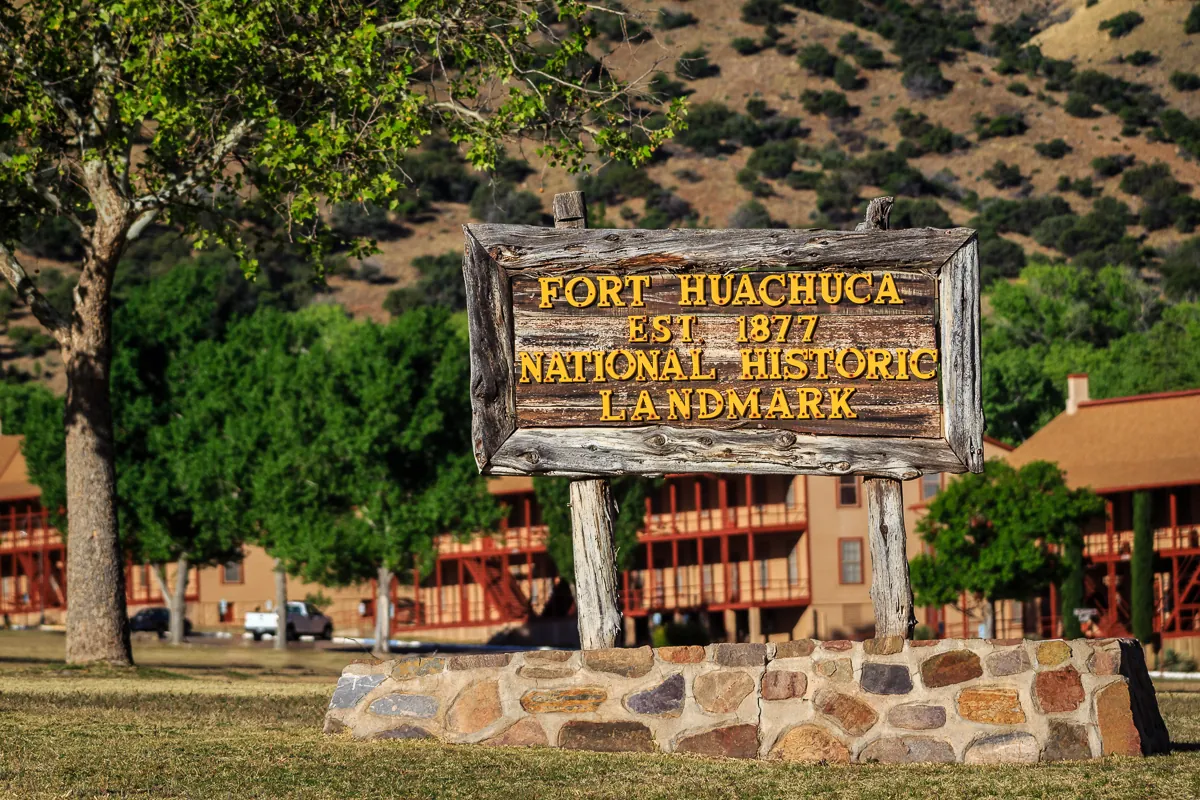
Before Tucson was a city, it was a problem to be held. The Spanish understood this in 1775, when Hugh O'Conor authorized Presidio San Agustín del Tucson at the base of Sentinel Peak — not to settle the land but to defend it against Apache raids. Adobe walls came slowly, finished only after warriors nearly overran the place in 1782. A century later, Camp Huachuca opened in 1877 with the same logic: hold the line. When Geronimo surrendered in 1886, the Apache wars ended, but the fort didn't close — the border was still twenty miles south. What this stretch of Sonoran Desert produced, over and over, was not conquest but persistence: forts that stayed, walls rebuilt, institutions planted in difficult ground. The presidio's corner stands reconstructed today at 196 North Court Avenue — not the original, but an honest marker of where the holding began.
People have farmed the Santa Cruz River floodplain for over 4,000 years — longer than most cities have existed at all. Archaic peoples were digging irrigation canals here around 1,200 BCE, among the first in North America. The Hohokam built on that tradition from roughly 450 to 1450 CE. When Jesuit Eusebio Francisco Kino founded Mission San Xavier del Bac in 1700, he was staking a claim on ground that already had a thousand years of agricultural memory. The Spanish built their presidio in 1775. Mexico took the territory in 1821. The United States bought it in 1853. The names and flags changed; the farming did not. Mission Garden exists now as a living record of that continuity — heritage crops and heirloom trees representing what this ground has produced across successive cultures. In 2015, UNESCO named Tucson the first City of Gastronomy in the United States. That designation didn't come from a restaurant scene. It came from this.
Tickets & Shows
Before you go
Tucson as crossroads of conquest, drug money, and prophecy — the city before the postcards existed.
Shot in Arizona's brutal high desert, this tense Western captures the frontier justice and moral ambiguity that defined Tucson's rough territorial era and borderland reality.
Plan your trip
The only thing left to do is go.
Some of these are partner links — if you book through them, Portage may earn a commission at no extra cost to you.
Plan your visit
Editorial content compiled with AI assistance. Place details verified against public records.