The story begins in 1692, when Jesuit Father Eusebio Kino established a mission at Wa:k — "water place" in the O'odham language — where the Santa Cruz River surfaced and fed a village that had stood for centuries. The Sobaipuri O'odham had farmed this floodplain for over a thousand years; Kino's mission was named for Francis Xavier, co-founder of the Jesuit order. Construction of the first church started April 28, 1700. Kino's diary records "many and very good stones" hauled from a hill a quarter-league away. Apache raids destroyed that building by 1770.
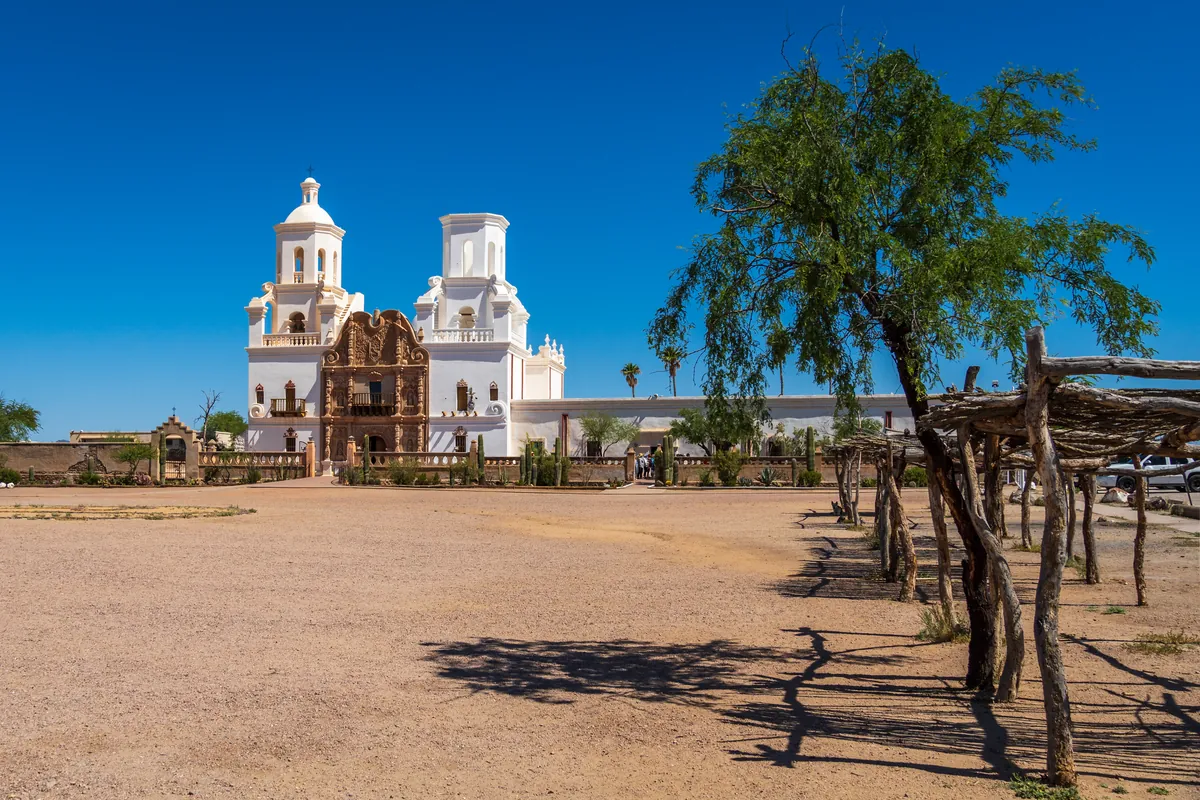
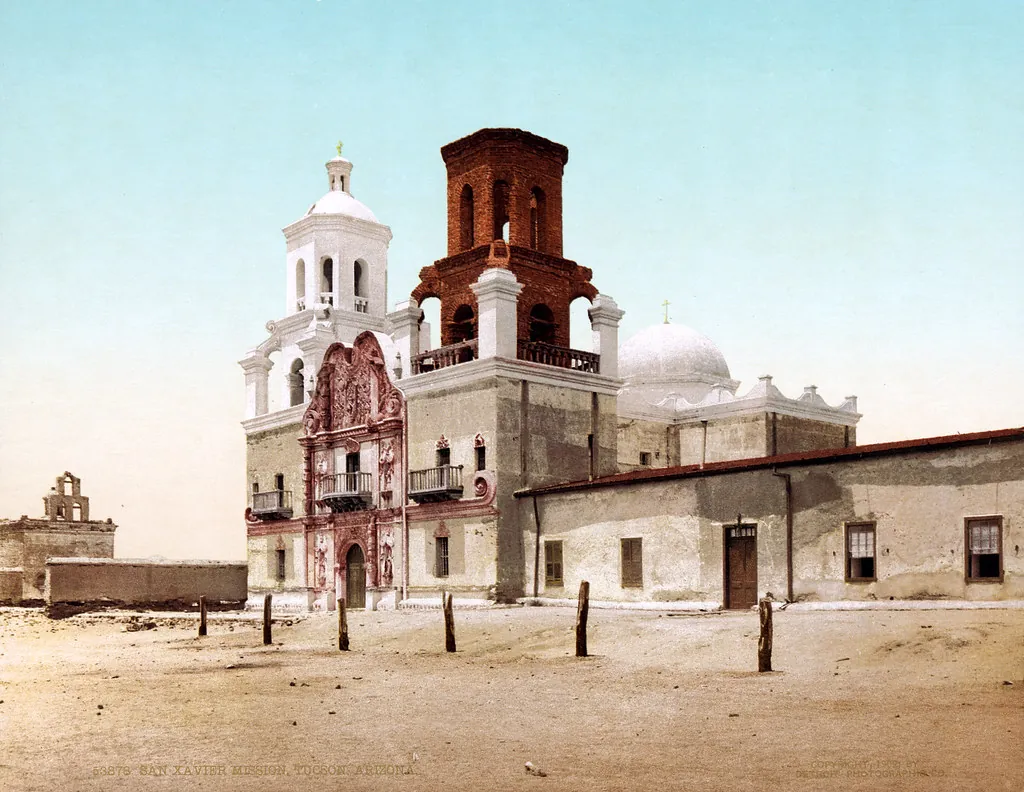
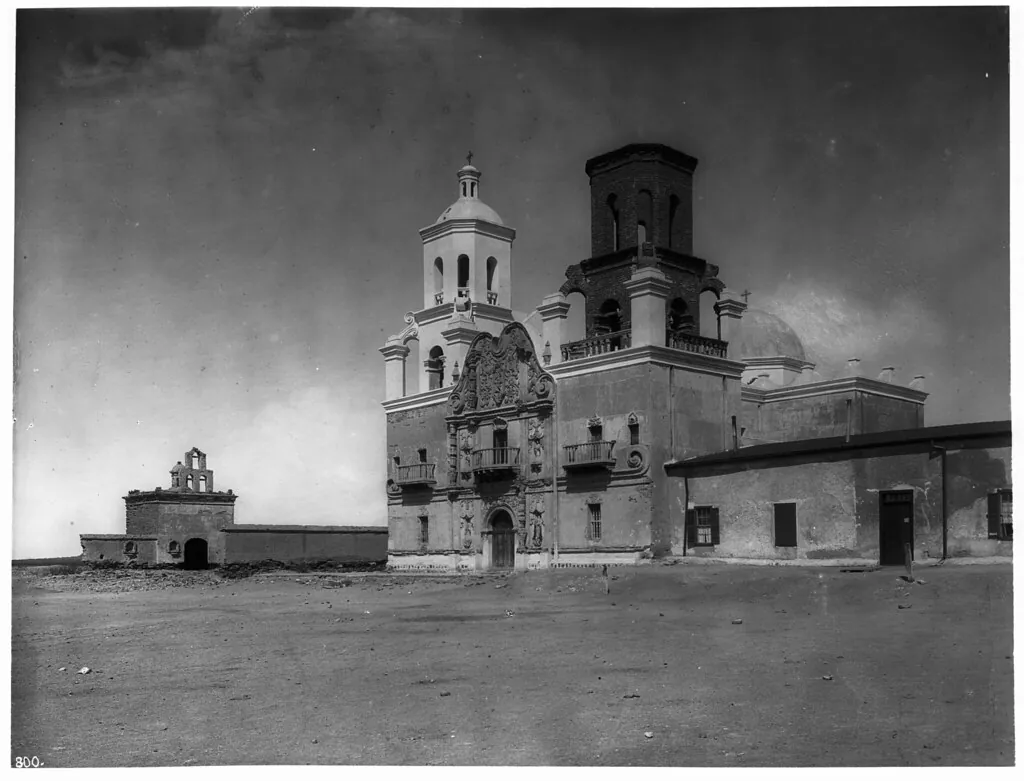
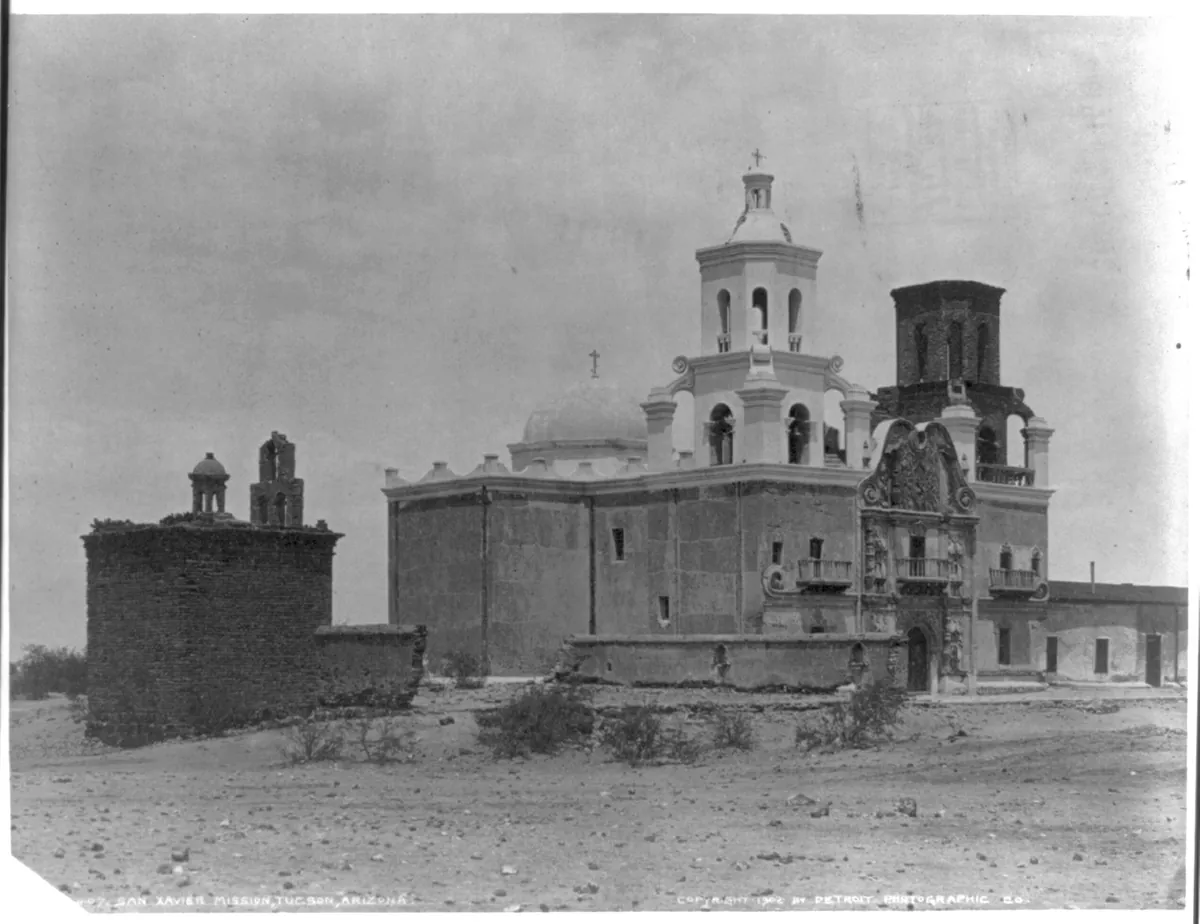
What stands now was built between 1783 and 1797 by Franciscans — the Jesuits had been expelled by Charles III in 1767 — under the direction of Juan Bautista Velderrain and Juan Bautista Llorenz. Architect Ignacio Gaona hired O'odham laborers, funded by 7,000 pesos borrowed from a Sonoran rancher. The result is the oldest intact European structure in Arizona: a Latin-cross plan with an ornately carved mesquite-wood door, a dome rising 52 feet above the transept, and two octagonal bell towers — one left unfinished, for reasons the record does not explain.
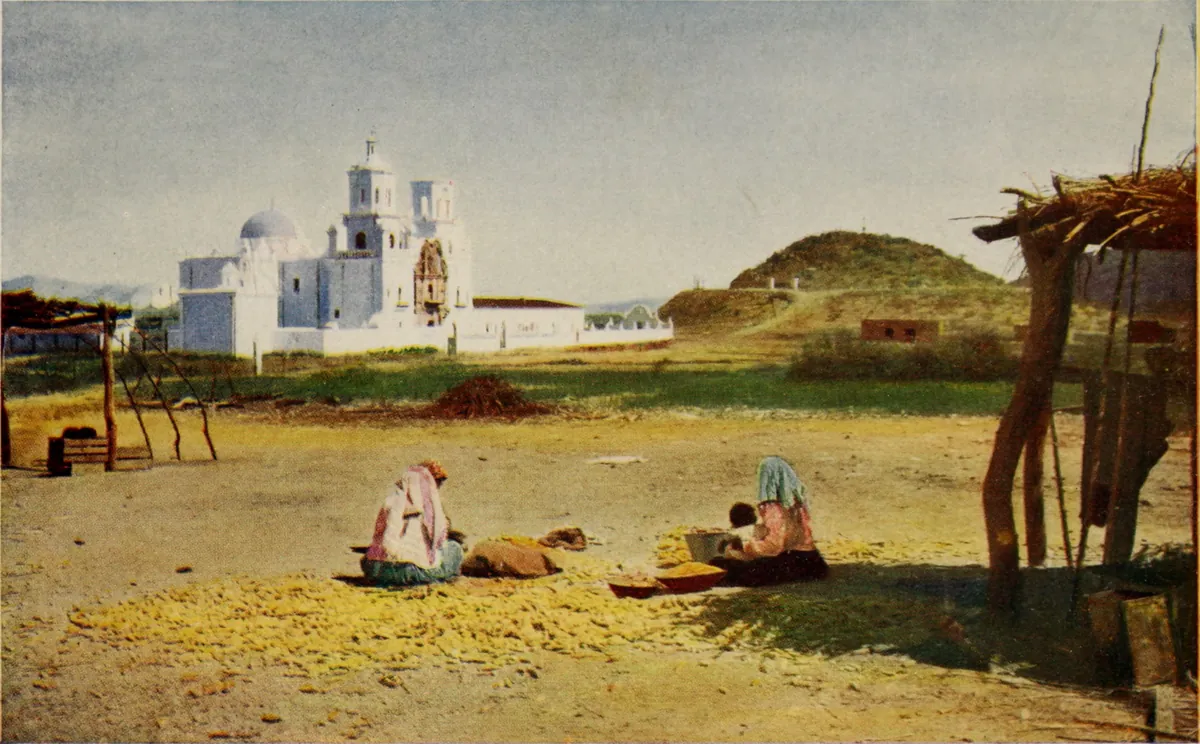
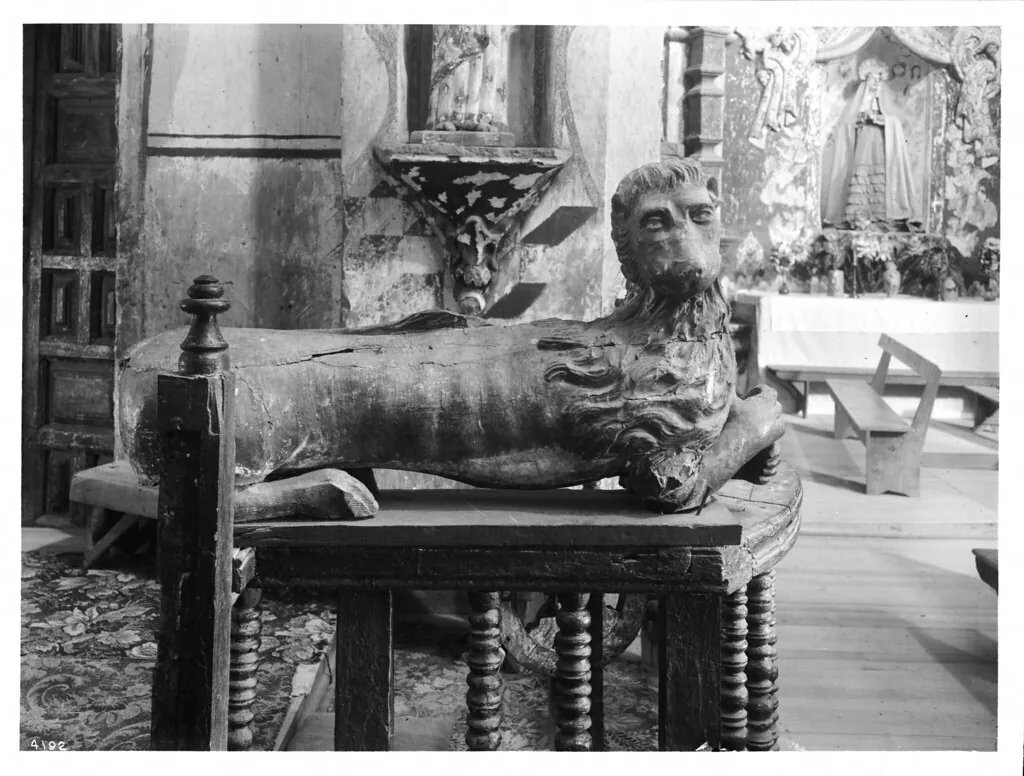
The white stucco exterior earned it the name "White Dove of the Desert." Inside, at least three different artists covered the walls and ceiling with paintings, carvings, frescoes, statues — Baroque work with no trace of O'odham influence in its design, though O'odham hands built every surface. After Mexican independence in 1821, the mission decayed. When American surveyor John Russell Bartlett arrived in 1852, he found the O'odham living in mud huts around "the largest and most beautiful church in the State of Sonora" — which the O'odham themselves had begun preserving.
The Gadsden Purchase brought it into U.S. territory in 1853. The Franciscans returned in 1913 and never left. It remains an active parish on the San Xavier Reservation of the Tohono O'odham Nation, hosting around 200,000 visitors a year. Declared a National Historic Landmark in 1960, it is widely considered the finest example of Spanish Colonial architecture in the United States.
- ·Founded 1700 by Jesuit Father Eusebio Kino; current church built by Franciscans 1783-1797. Declared National Historic Landmark 1960, NRHP-listed 1966. Latin-cross plan, two octagonal bell towers (one famously left unfinished). ~200,000 visitors/yr. Known as 'White Dove of the Desert.' Coords from Wikipedia. K-10: 5+ facts.
More archive
Memories
Editorial content compiled with AI assistance. Place details verified against public records.