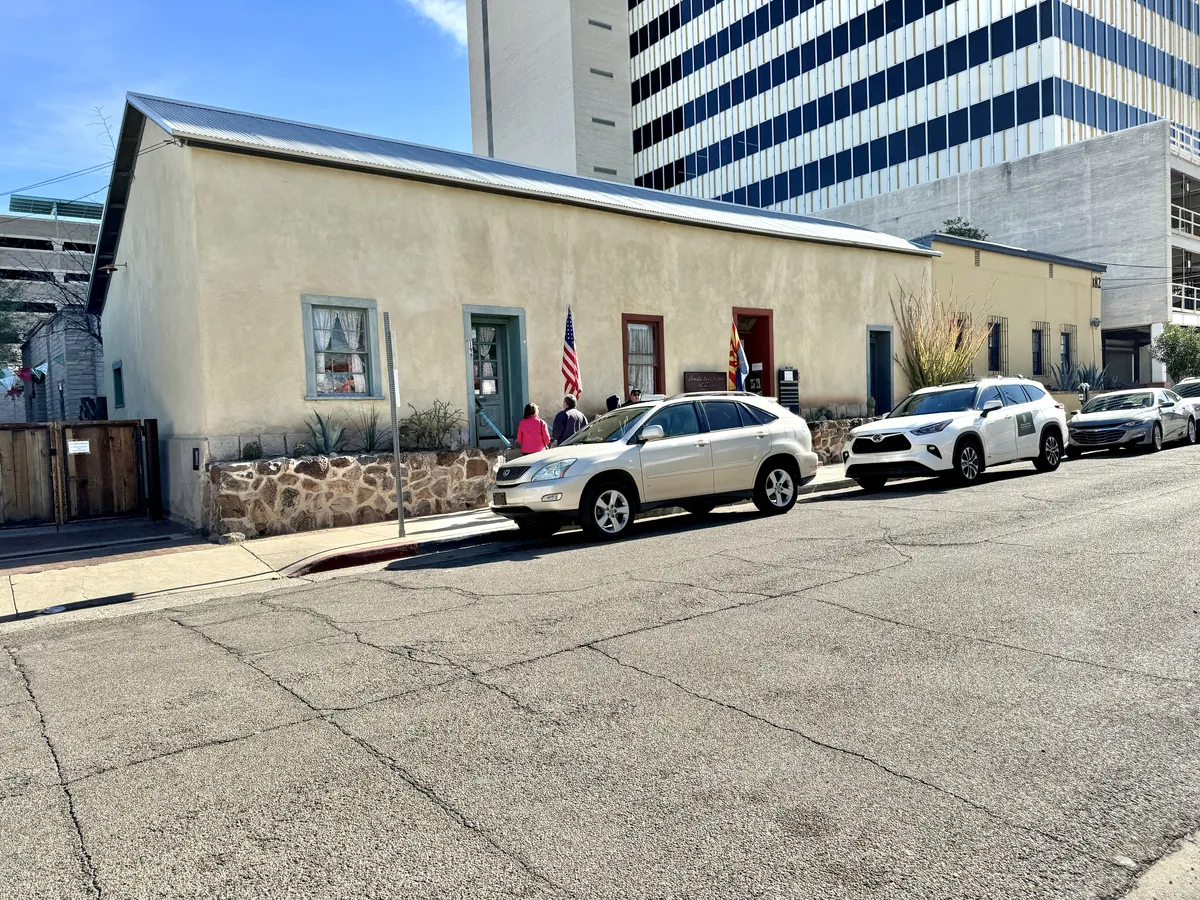
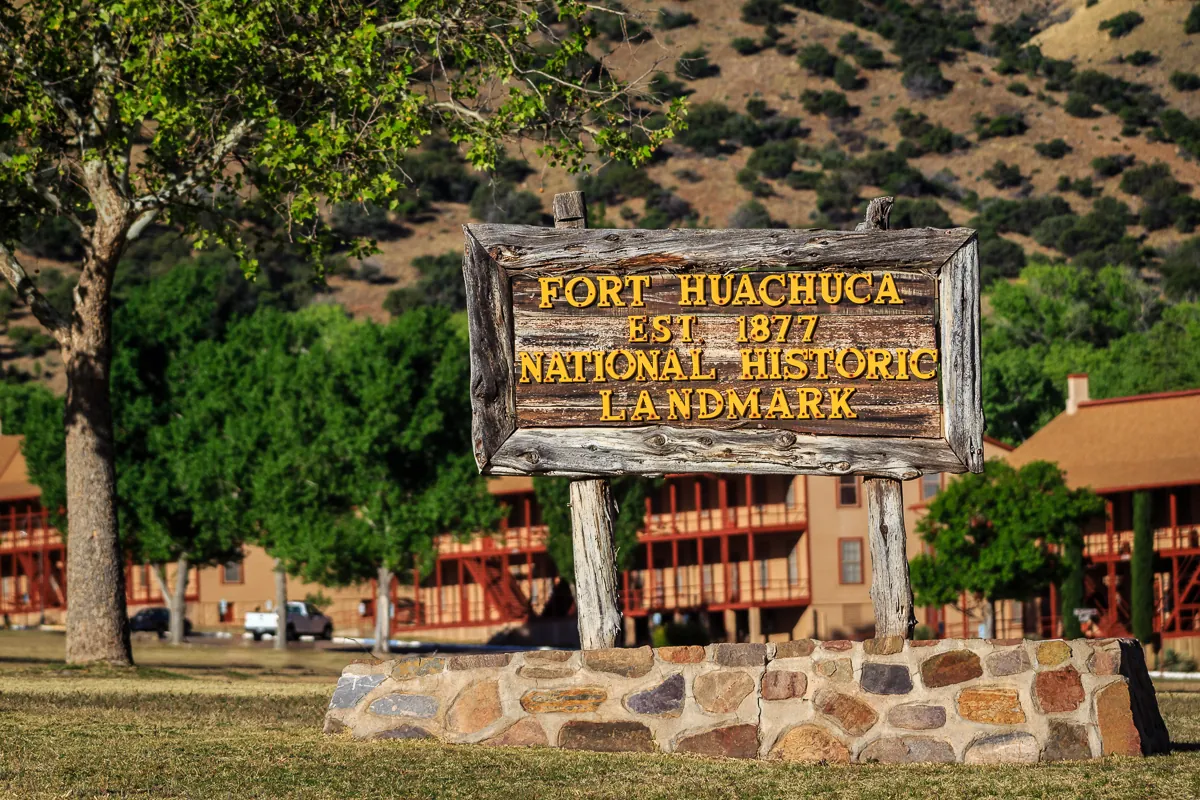
Before Tucson was a city, it was a problem to be held. The Spanish understood this in 1775, when Hugh O'Conor authorized Presidio San Agustín del Tucson at the base of Sentinel Peak — not to settle the land but to defend it against Apache raids. Adobe walls came slowly, finished only after warriors nearly overran the place in 1782. A century later, Camp Huachuca opened in 1877 with the same logic: hold the line. When Geronimo surrendered in 1886, the Apache wars ended, but the fort didn't close — the border was still twenty miles south. What this stretch of Sonoran Desert produced, over and over, was not conquest but persistence: forts that stayed, walls rebuilt, institutions planted in difficult ground. The presidio's corner stands reconstructed today at 196 North Court Avenue — not the original, but an honest marker of where the holding began.