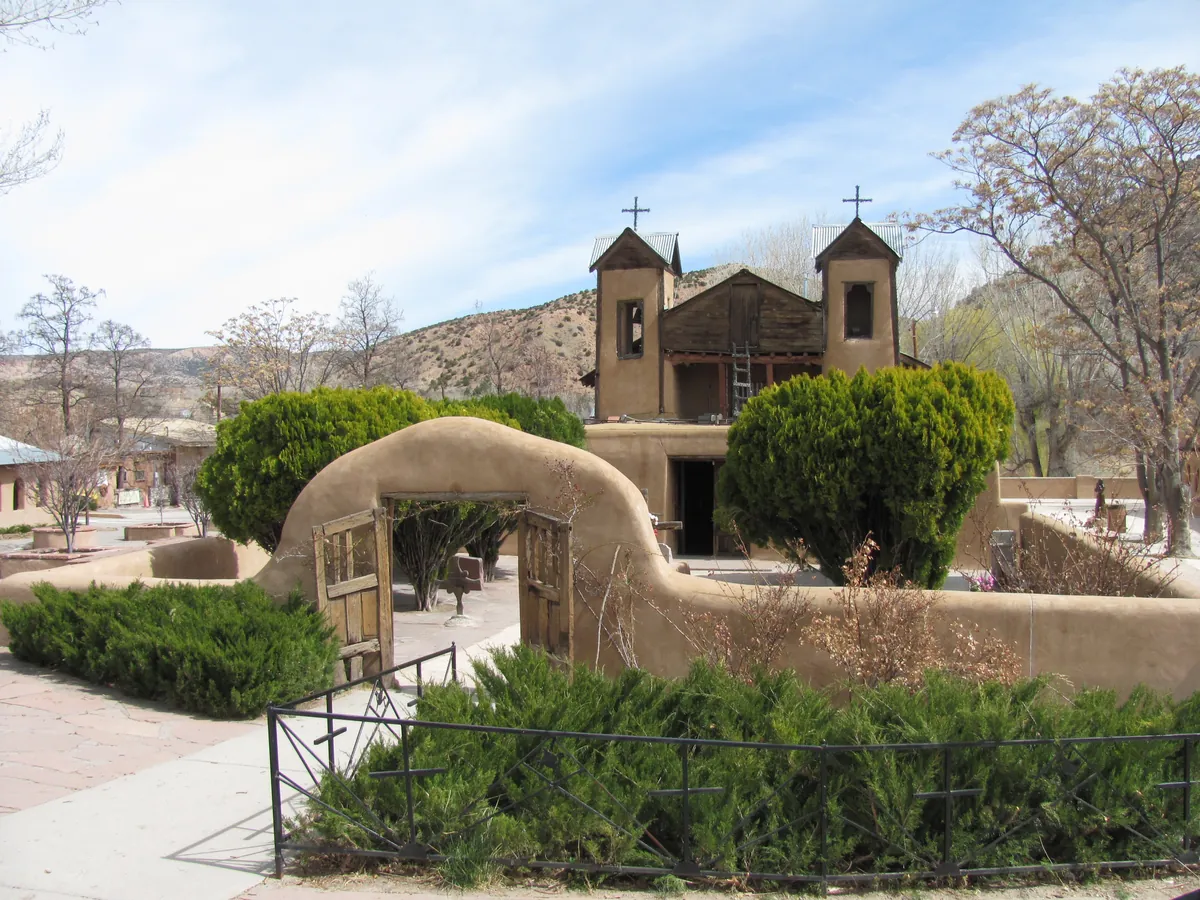
The dirt in the small round pit at the back of this adobe church has been carried out in pockets and plastic bags by pilgrims for generations. They believe it heals. The Church takes no position on whether miracles have occurred here.
What's documented: Bernardo Abeyta built a small chapel on this land around 1810, devoted to the Christ of Esquipulas — a Guatemalan pilgrimage tradition in which the earth itself is considered curative. By 1816, that chapel had become El Santuario de Chimayó. The property passed through Abeyta's family until 1929, when the Spanish Colonial Arts Society bought it and donated it to the Archdiocese of Santa Fe. Legend says the founding crucifix was discovered in the hillside, kept returning there after being moved, and the chapel was built on the spot to house it.
Each Holy Week, some 300,000 people walk to this church through the high desert of northern New Mexico — one of the largest Catholic pilgrimages in the United States. The walk itself is the point. The dirt, whether or not it heals, has been worn thin by two centuries of people who believed it might.
More archive
Memories
Editorial content compiled with AI assistance. Place details verified against public records.