Top picks in Santa Fe, Taos & the High Desert
The places most worth your time here.
Connect your Cour circle to see which places friends and family recommend here.
Connect Cour →Landmarks
80 places worth the detour
tap the eye to open · swipe or use buttons to browse
Santa Fe sits at 7,000 feet in the foothills of the Sangre de Cristo Mountains, a position that is not incidental. The high desert elevation kept the city cool enough to be habitable, far enough from…
Read the full storyOn the map
Reading
In 1943, the U.S. government built a secret facility on a New Mexico mesa, about 35 miles from the oldest state capital in the country, to design and assemble the first atomic bombs. The weapons were used at Hiroshima and Nagasaki in August 1945. What remained on that mesa became Los Alamos National Laboratory, which now conducts research across national security, nuclear science, and medicine. The Manhattan Project National Historical Park — run jointly by the National Park Service and the Department of Energy, established in 2015 — puts visitors as close as possible to where that work began, though the Los Alamos sites themselves are accessible only by Department of Energy bus tours. Santa Fe had already survived conquest, revolt, and the railroad's indifference. The mesa above it held something else entirely — a decision that changed the world, made in secret, in full view of the Sangre de Cristo Mountains.
When the main railroad line bypassed Santa Fe in the late nineteenth century, the city found its identity in the loss. Artists and writers arrived, drawn by the landscape, the climate, and the layered cultural life that centuries of Tewa, Spanish, and American presence had built. The architecture followed: a Pueblo Revival style, rooted in local adobe and codified as official building code after 1912, that now defines every streetscape. Canyon Road runs half a mile of those adobe buildings, more than a hundred galleries packed into a walkable stretch. The Georgia O'Keeffe Museum, opened in 1997, holds the largest collection of her work anywhere — nearly 1,200 objects. Taos has its own thread: the Harwood Museum, founded in 1923, holds an Agnes Martin gallery the artist installed herself, the only such installation in the world. What the railroad bypassed became, in time, what people came for.
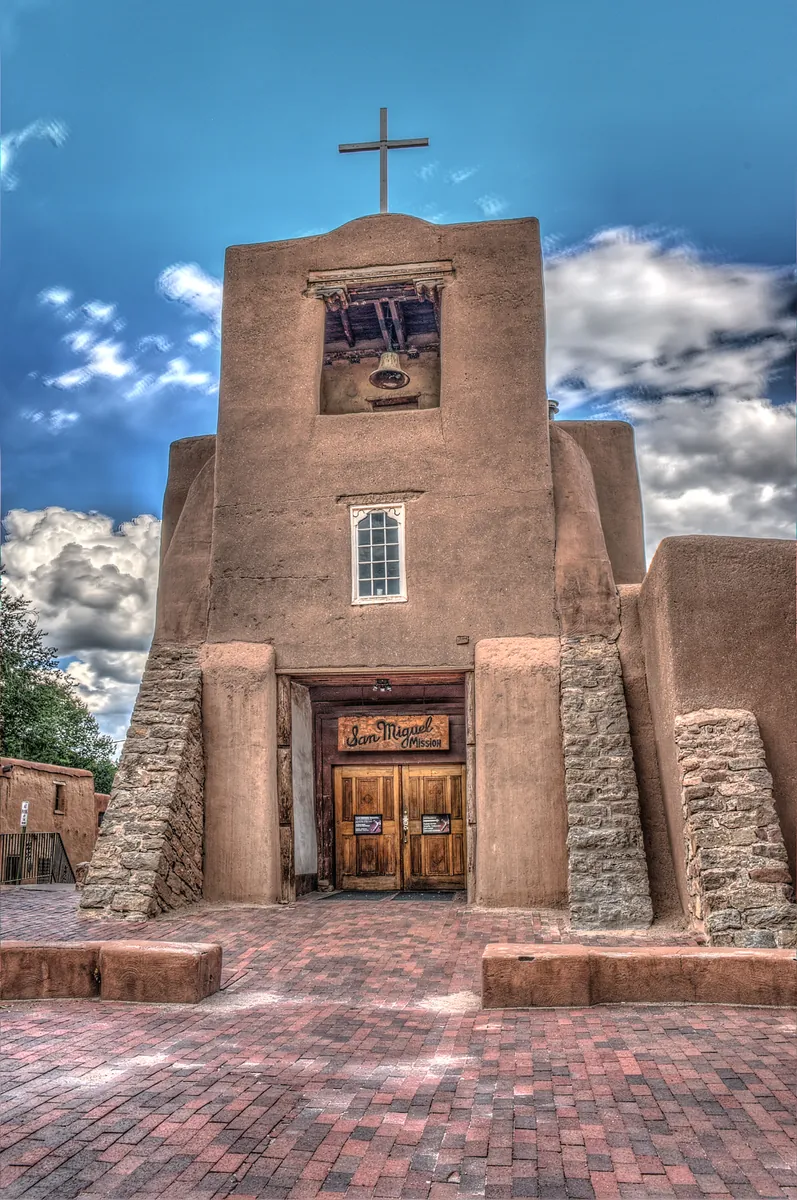
When the railroad bypassed Santa Fe in the late nineteenth century, the city faced a choice about what it was. Civic leaders chose to promote what remained: the landscape, the culture, the centuries of layered building. Artists and writers arrived. Out of that deliberate turn came the Santa Fe Style — a Pueblo Revival aesthetic drawn from local adobe construction — which became official building code after 1912. Isaac Rapp's New Mexico Museum of Art, completed in 1917, made the argument in stone and plaster: its façade pulled directly from the mission churches of Acoma, San Felipe, Cochiti, Laguna, Santa Ana, and Pecos. The style wasn't nostalgia. It was a decision about what the city would look like going forward, one that has held. The adobe cityscape travelers see today is not accident or preservation instinct — it is policy, chosen at the moment of decline and kept ever since.
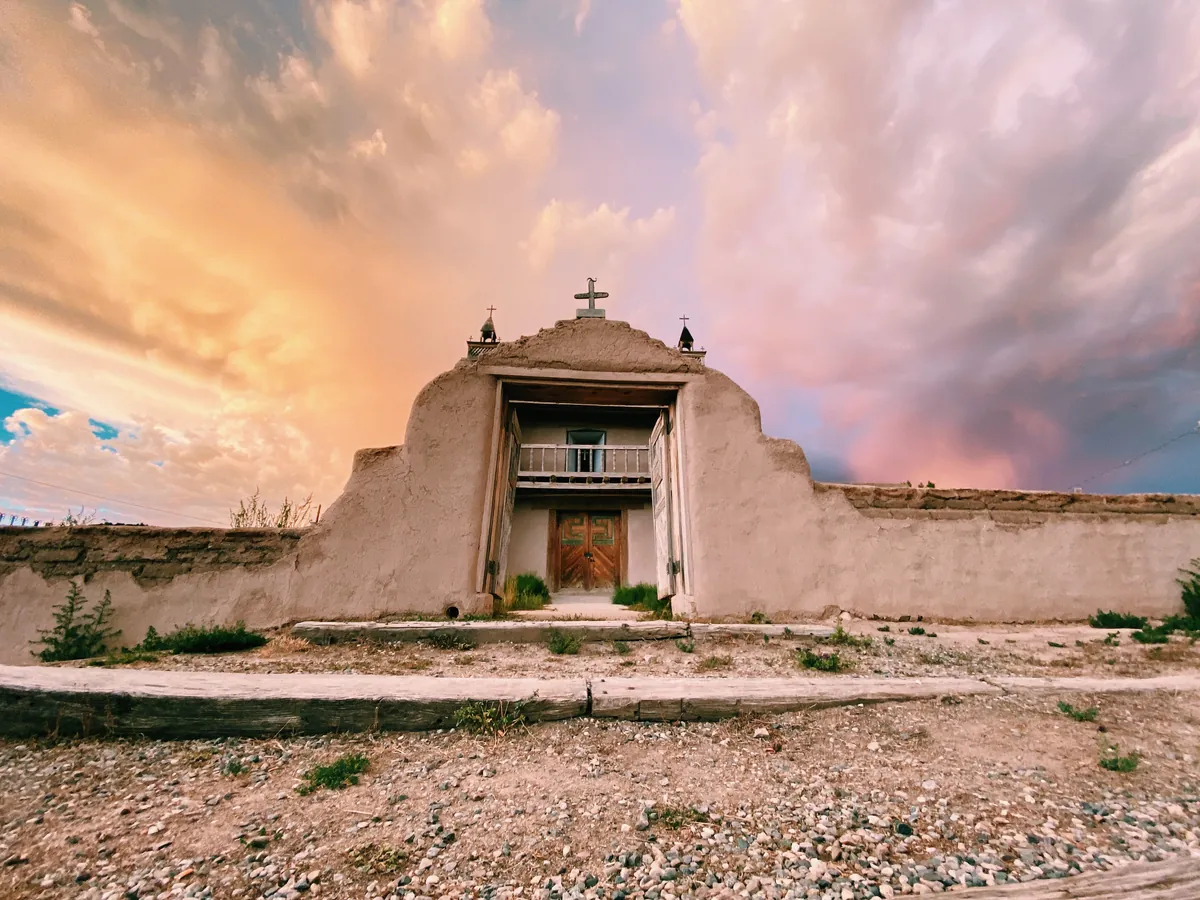
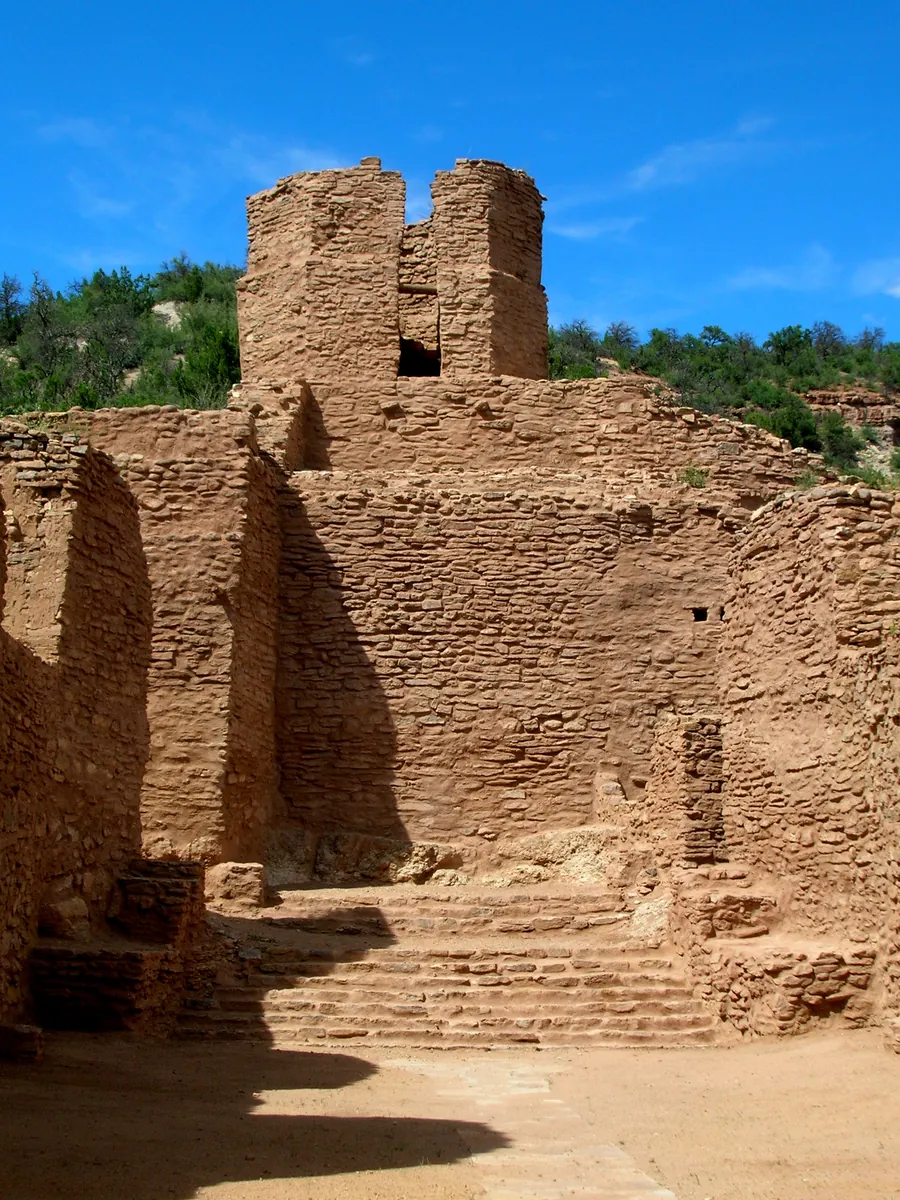
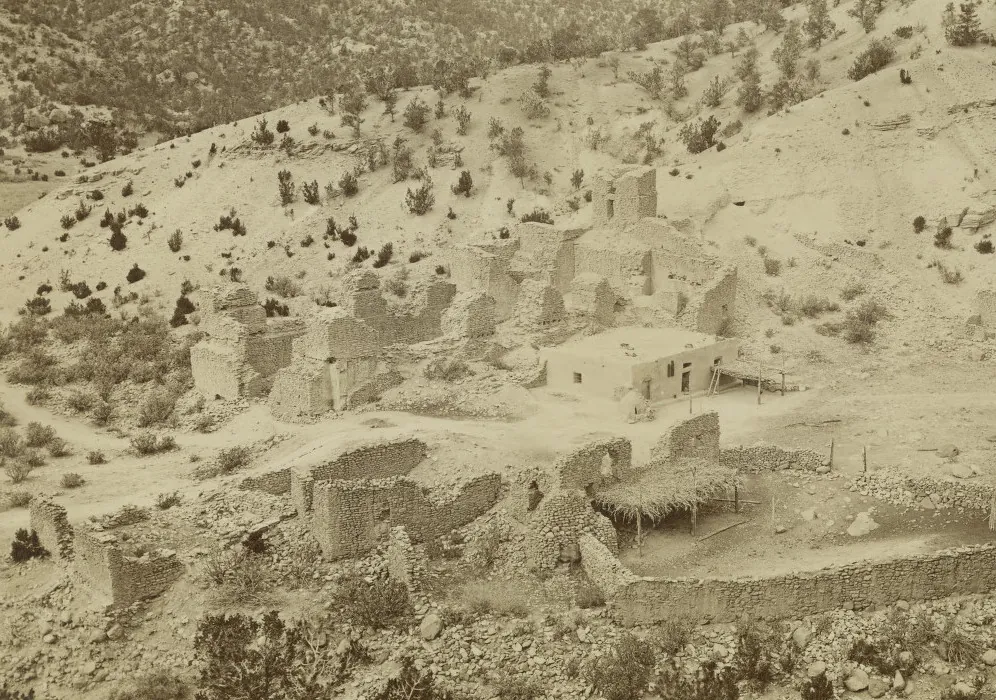
The Royal Road ran from Mexico City north through desert that killed the unprepared, carrying silver and soldiers and missionaries toward a capital that didn't yet exist. Juan de Oñate opened the route in 1598; Governor Pedro de Peralta founded Santa Fe itself in 1610, and from that year forward every government that claimed New Mexico — Spanish, Mexican, American — ran it from the same adobe building on the same plaza. The church built across the river to serve the native population dates to that same founding era; it burned in the 1680 Pueblo Revolt and was rebuilt. The road kept running for centuries. At La Ciénega, south of the city, an official rest stop on that road still stands — 500 acres, listed on the National Register, its acequia irrigation system intact. Three national historic trails terminate at the Plaza. The accumulation is the point: Santa Fe was always where the roads ended.
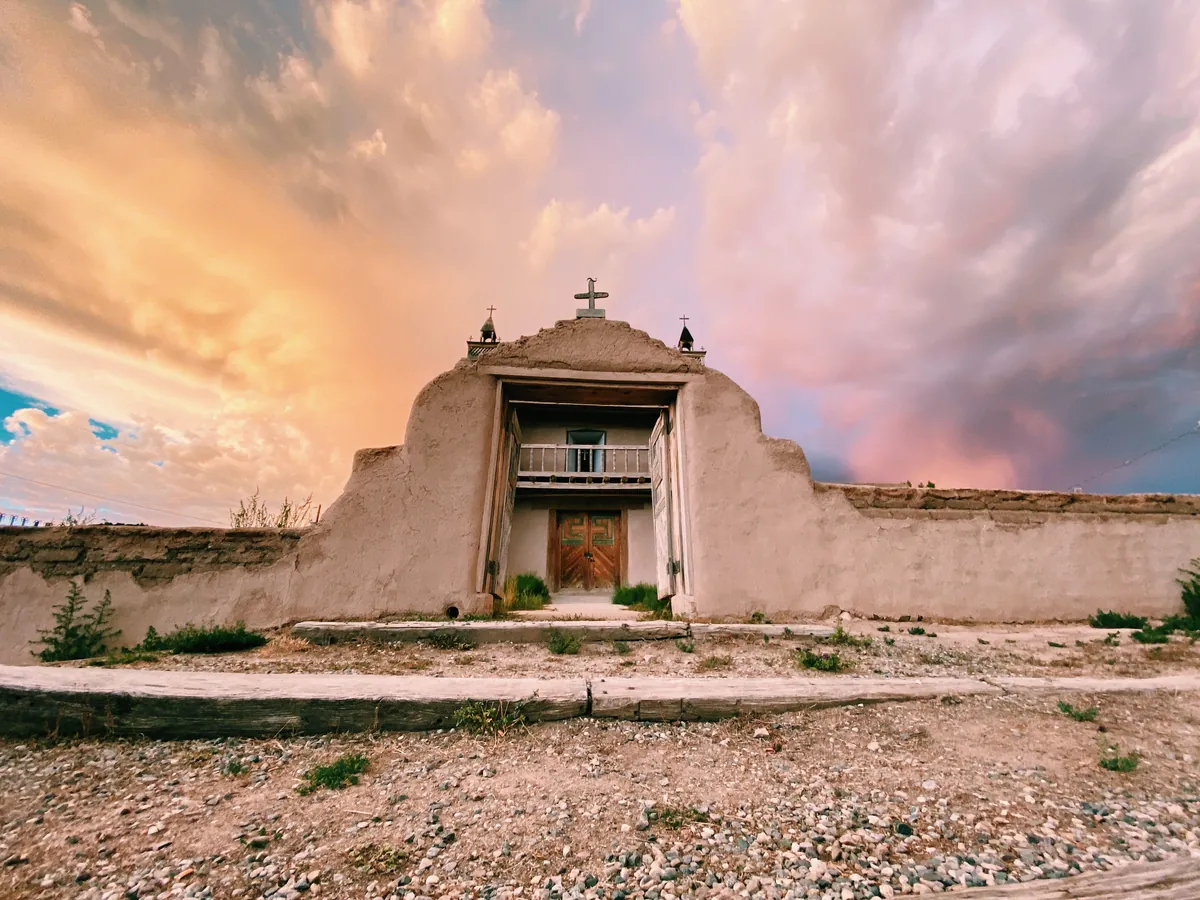
The Taos Pueblo people have lived in this place, in these multi-story adobe homes, for more than a thousand years. That fact sits at the center of everything Santa Fe and the surrounding high desert actually are. Indigenous Tanoan peoples were settled around what is now Santa Fe's Plaza as early as 900 AD — centuries before Governor Pedro de Peralta named the city in 1607, centuries before the Pueblo Revolt of 1680 drove the Spanish out for twelve years, centuries before any of the flags that followed. What endured through all of it was the culture underneath: the building methods, the land, the communities that chose to stay. Taos Pueblo holds both UNESCO World Heritage designation and National Historic Landmark status — not as a relic, but as a living place that opens its doors on its own terms. That distinction matters. The pueblo is still inhabited. The story is still being written.
Tickets & Shows
Before you go
Cather walked this ground. The light, the mesa, the silence — she renders it before tourism existed to soften it.
Six unknown painters arrived in Taos, stayed, and built the art world that still runs the place. Watch this before you walk a single gallery.
Plan your trip
The only thing left to do is go.
Some of these are partner links — if you book through them, Portage may earn a commission at no extra cost to you.
Editorial content compiled with AI assistance. Place details verified against public records.