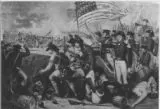
The National Park Service opened a visitor center on the Chalmette Battlefield in 2015 to tell the story of what happened on January 8, 1815. American forces under Andrew Jackson defeated a British assault in slightly more than thirty minutes. American casualties: 13 killed, 39 wounded, 19 missing. British casualties: over 2,000, including Major General Sir Edward Pakenham and Major General Samuel Gibbs, both killed.
The battle was fought 15 days after the signing of the Treaty of Ghent on December 24, 1814, which formally ended the War of 1812. News of the treaty had not reached the United States from Europe. The British came with plans to take New Orleans and possibly the Louisiana Territory. They failed.
The exhibits describe the coalition Jackson assembled: Choctaw scouts, free Black militia, Baratarian pirates, Tennessee frontiersmen, Louisiana Creoles. The center also addresses the enslaved people who lived on the Chalmette plantation where the battle was fought. Jackson's general orders after the battle paid tribute to the Lafitte brothers and the Barataria privateers, among others.
New Orleans in 1815 was the largest port in the South, exporting cotton and farm products to Europe and New England. Losing it would have meant losing control of the Mississippi River Valley. The exhibits go beyond the military victory to explore what the battle meant for New Orleans' identity—a city that had been French, then Spanish, then briefly French again before the United States acquired it in the Louisiana Purchase in 1803. The War of 1812 was the first major test of whether that acquisition would hold.
The federal government established a national historical park at Chalmette in 1907. The site includes the Chalmette National Cemetery and a 100-foot monument. Part of Jean Lafitte National Historical Park and Preserve. Free admission.
- ·A National Park Service visitor center opened in 2015 on the Chalmette Battlefield grounds.
- ·Tells the story of the diverse coalition that fought: Choctaw scouts, free Black militia, Baratarian pirates, Tennessee frontiersmen, and Louisiana Creoles.
- ·Also addresses the enslaved people who lived on the Chalmette plantation where the battle was fought.
- ·The exhibits go beyond the military victory to explore what the battle meant for New Orleans' identity.
- ·Part of Jean Lafitte National Historical Park and Preserve.
- ·Located at 8606 W. St. Bernard Hwy. Open daily 9am–4:30pm. Free admission.
Memories
Editorial content compiled with AI assistance. Place details verified against public records.