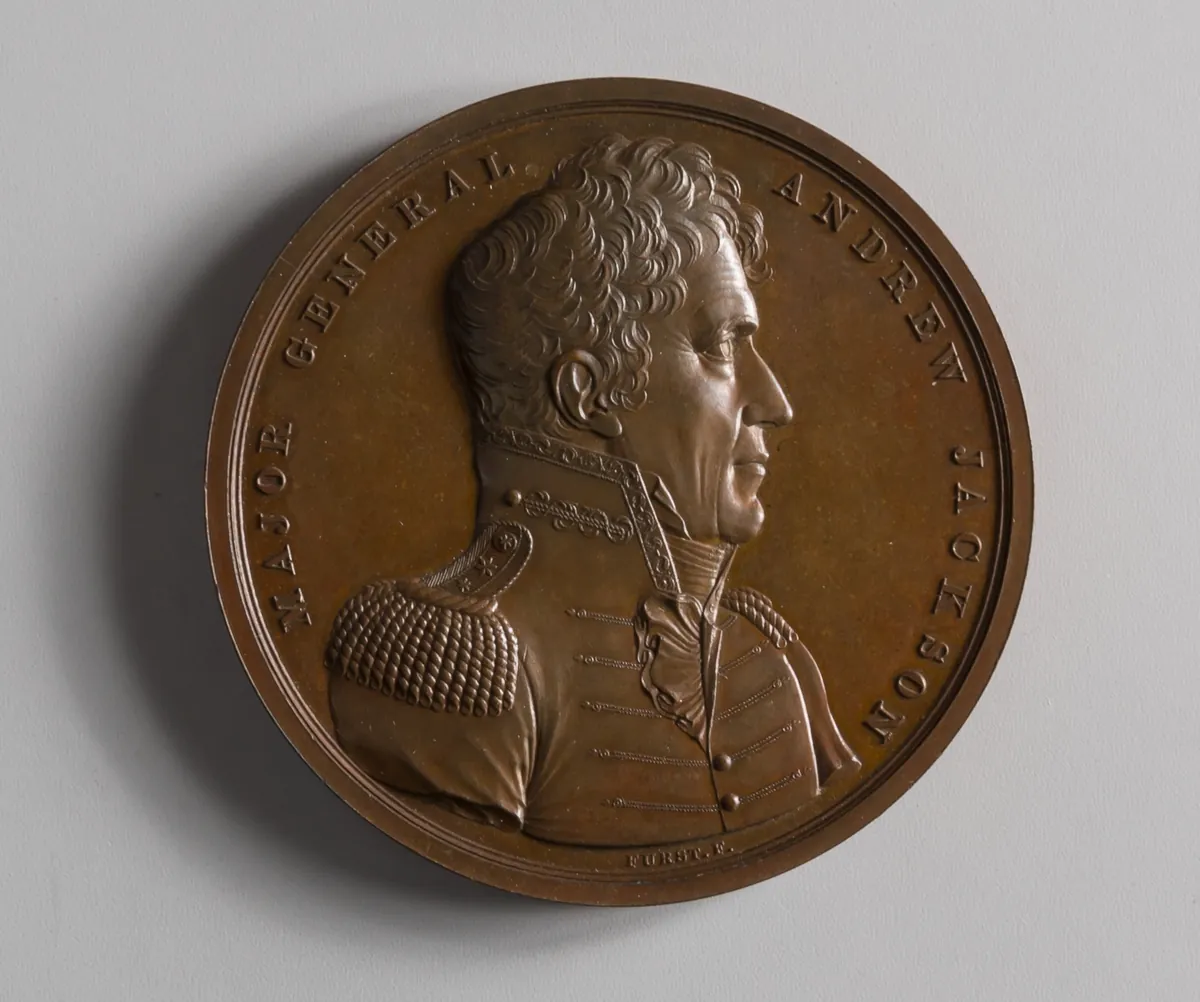
Jackson reached New Orleans in December 1814 with fourteen days to fortify a city against 8,000 British regulars. The stakes were total: control of the Mississippi Valley, access to the Gulf, the legitimacy of a republic that had just burned its own capital. He assembled the most improbable army in American history — Choctaw warriors, the free Black militia of New Orleans, Jean Lafitte's Baratarian pirates, Tennessee riflemen, Louisiana Creoles. It was the city's own diversity, born of centuries as a trading port where many tongues met, that gave Jackson his force.
On the night of December 23, he led 2,131 men in a raid on the British camp nine miles downriver, buying time to transform the Rodriguez Canal into an earthwork fortress. His men dug a timber breastwork studded with eight artillery batteries: a 32-pounder, three 24-pounders, howitzers, field guns. The British had numbers and discipline. Jackson had high ground, a ditch, and gunners who knew their work.
The main assault came January 8, 1815, at first light. Fog concealed the British advance until they were 500 yards out, then lifted to expose neat columns marching toward the American line. The 44th Foot had been tasked with carrying fascines and ladders forward to bridge the ditch and scale the parapet. They failed. The men reached the canal with no way across and stood in the open while American artillery opened fire. Grapeshot tore through the column. Major General Samuel Gibbs fell leading the right wing. Colonel Rennie's men took an advance redoubt by the river but were cut down within half an hour. The assault lasted thirty minutes. British casualties exceeded 2,000. American losses were 71.
The battle was fought fifteen days after the Treaty of Ghent was signed in Europe, though neither side knew. Word of the victory reached Washington as Federalist delegates from the Hartford Convention arrived to air grievances about the war, destroying their party's credibility overnight. The War of 1812 had been a brutal stalemate, but New Orleans let Americans reframe it as a second war of independence. Jackson became a national figure, eventually the seventh president. The Eighth of January was a federal holiday until 1861.
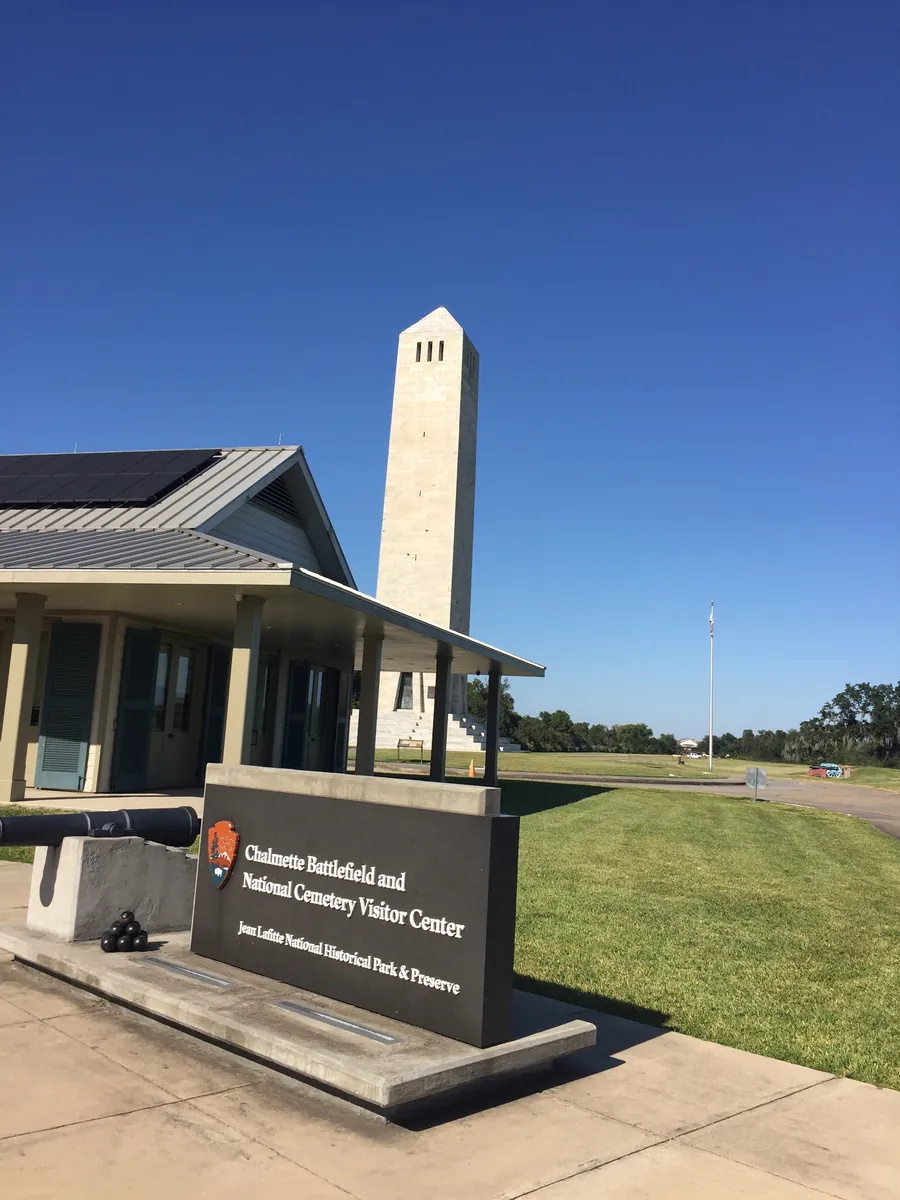
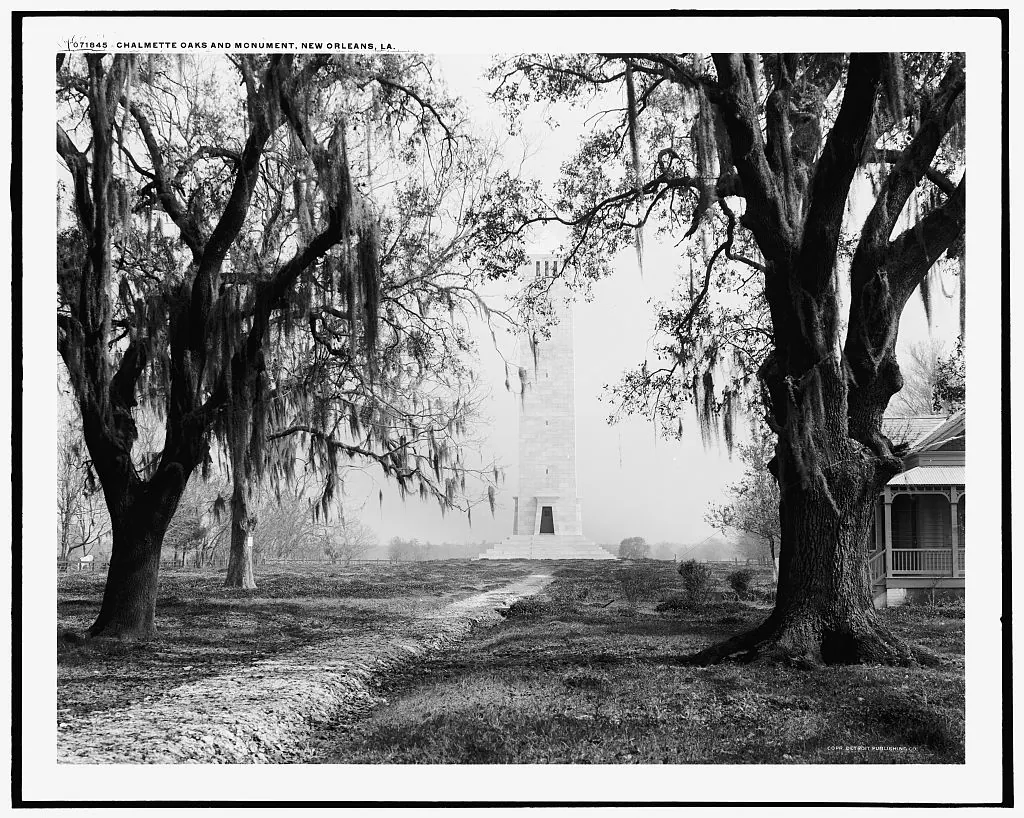
The battlefield is preserved at Chalmette, five miles downriver from the French Quarter, part of Jean Lafitte National Historical Park. A 100-foot monument rises from soil too soft to support the 150 feet originally planned. What holds is this: a city built at a portage, where the river bends and trade routes converge, defended by every people who had reason to call it home.
- ·Jackson arrived in December 1814 with two weeks to prepare for a British invasion force of 8,000 professional soldiers.
- ·He assembled the most diverse fighting force in American history: Choctaw warriors, free Black militia, Baratarian pirates, Tennessee frontiersmen, and Louisiana Creoles.
- ·The British were defeated in under 30 minutes on January 8, 1815 — suffering over 2,000 casualties to Jackson's 71.
- ·The battle was fought two weeks after the Treaty of Ghent was signed, though neither side knew.
- ·The victory made Jackson a national hero and eventually the seventh President of the United States.
More archive
Memories
Editorial content compiled with AI assistance. Place details verified against public records.