Top picks in Northern Arizona
The places most worth your time here.
Connect your Cour circle to see which places friends and family recommend here.
Connect Cour →Landmarks
63 places worth the detour
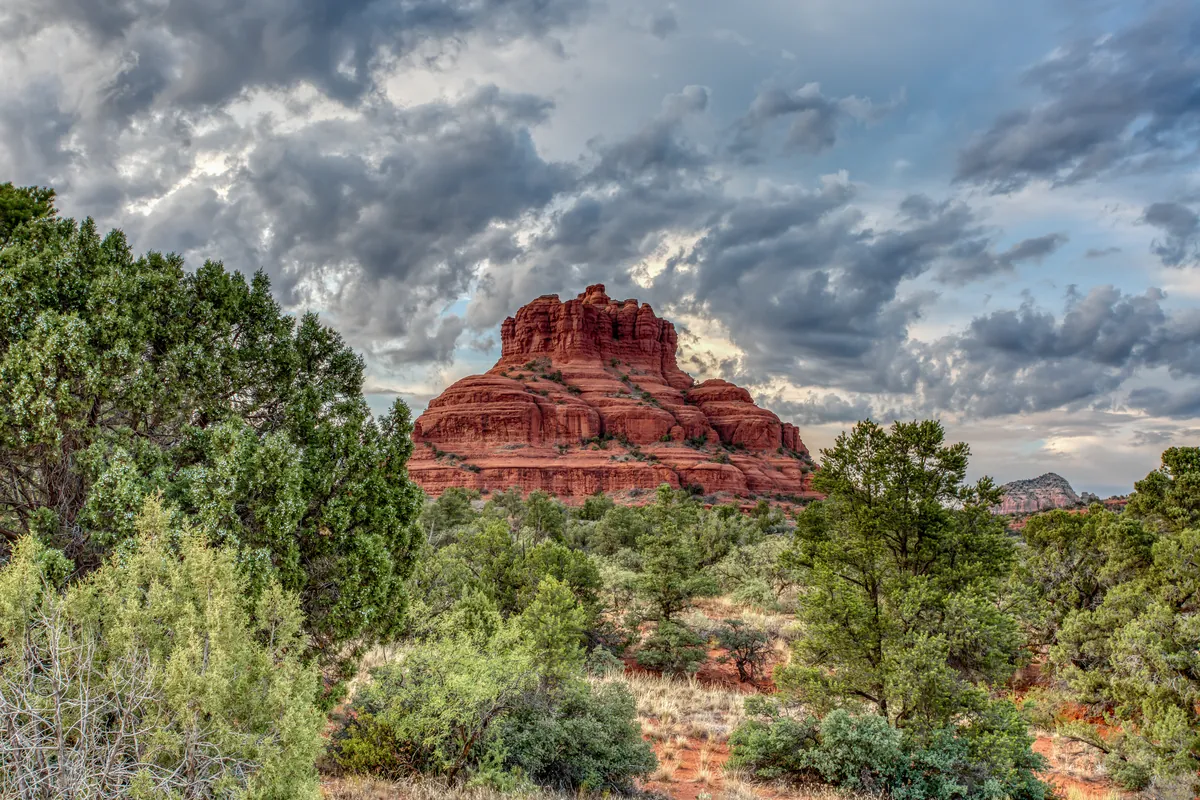
tap the eye to open · swipe or use buttons to browse
Flagstaff sits at 7,000 feet, where the largest contiguous ponderosa pine forest in the continental United States meets the Colorado Plateau. The San Francisco Peaks, Arizona’s highest range, rise…
Read the full storyReading
The Sinagua lived on this land before Flagstaff had a name. The destination context places them here first, and the record traces their likely continuity northward into the Hopi people — a line that held. At Oraibi, Arizona, that continuity became monument: a village occupied without interruption, carrying a National Historic Landmark designation, its staying the whole argument. To the west, the Havasupai built the trail that descends the Bright Angel Fault to Garden Creek — built it for survival, used it for generations, then lost it to miners and tourists and eventually the park itself. The Coconino National Forest takes its name from the Hopi word for the Havasupai and Yavapai. The gorge above the Colorado is managed on tribal terms, by tribal authority. Flagstaff sits inside all of this. The land the city occupies was already a world.
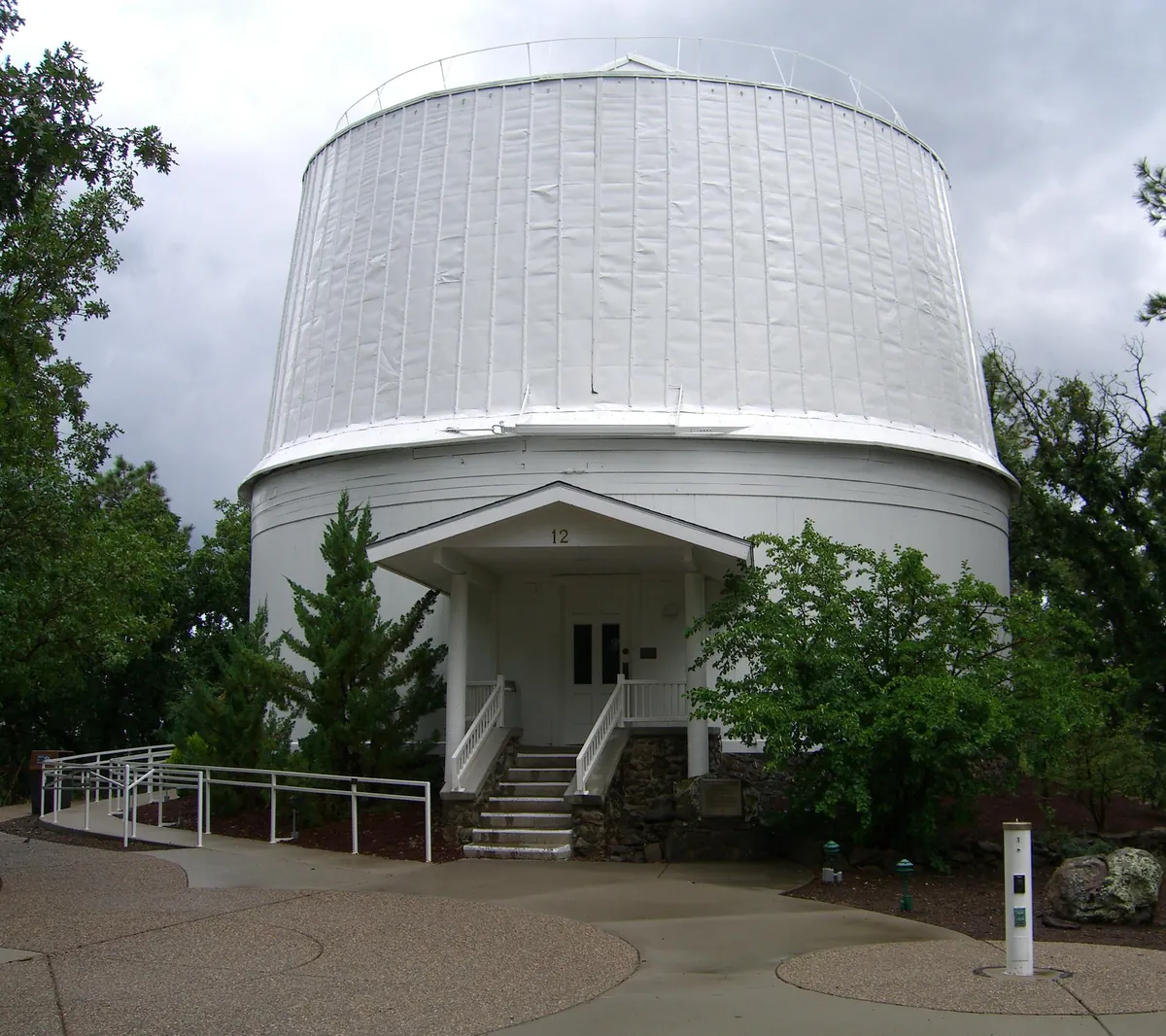
Percival Lowell came to this railroad town in 1894 because it had dark skies and enough elevation to matter. He was wrong about the Martian canals he came to prove. But the observatory he built on Mars Hill — funded from his own fortune, staff salaries and all — outlasted every theory he held. Clyde Tombaugh discovered Pluto here in 1930. Vesto Slipher's data on receding galaxies helped Edwin Hubble build the case for an expanding universe. Astronauts came to map the Moon. The 24-inch Clark Refracting Telescope, installed in 1896, still puts visitors at the eyepiece. Flagstaff's altitude, around 7,000 feet, and its historically clean air made it the kind of place where serious work could happen — and did. What Lowell got wrong turned out to matter far less than what the place made possible after him.
Timothy and Michael Riordan arrived in Flagstaff when Arizona was still a territory, and they didn't leave quietly. The two brothers — who married two sisters and built a single thirteen-thousand-square-foot duplex to house both families — were lumber barons who, alongside the McMillan and Babbitt families, helped shape the early town. For the mansion they commissioned Charles Whittlesey, the same architect behind the Grand Canyon's El Tovar Hotel, who delivered log-slab siding, volcanic stone arches, and hand-split wooden shingles, completed in 1904. The structure still stands as an Arizona State Park, its original family furnishings intact. Flagstaff grew around families like this — people who built in stone and wood and expected the buildings to last. Most of them did.
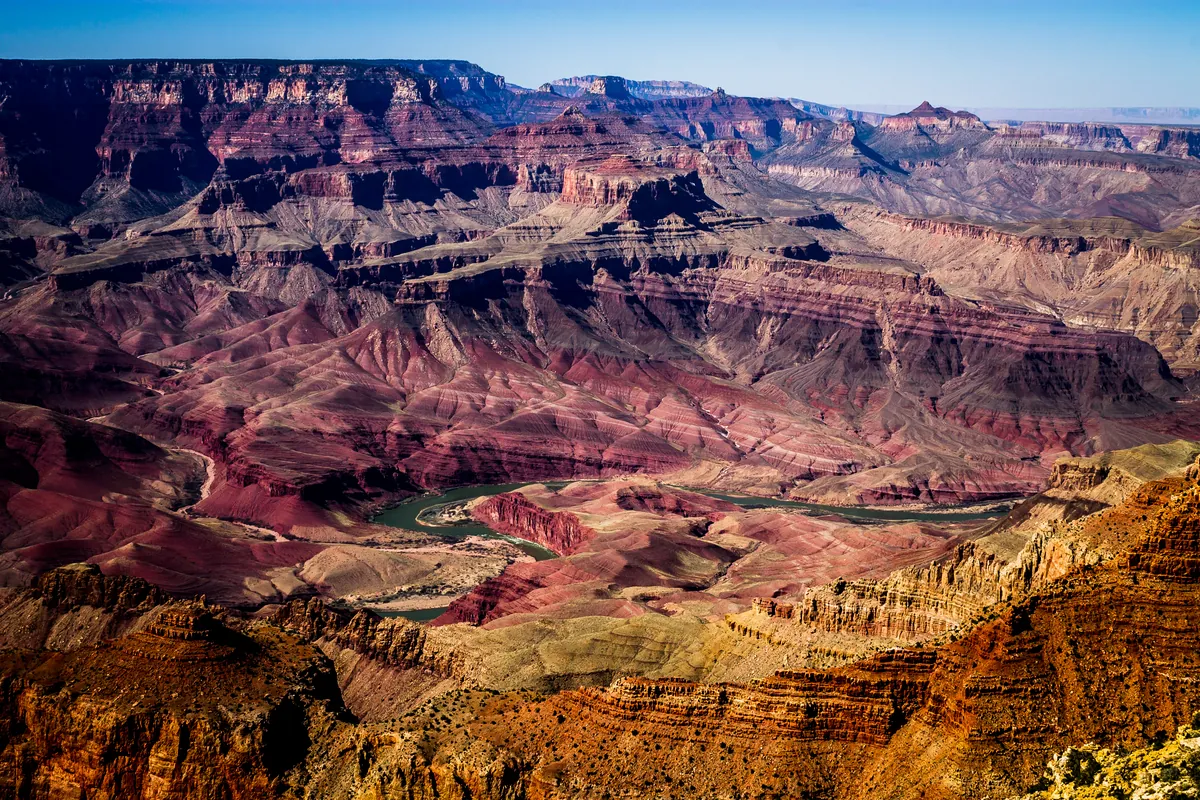
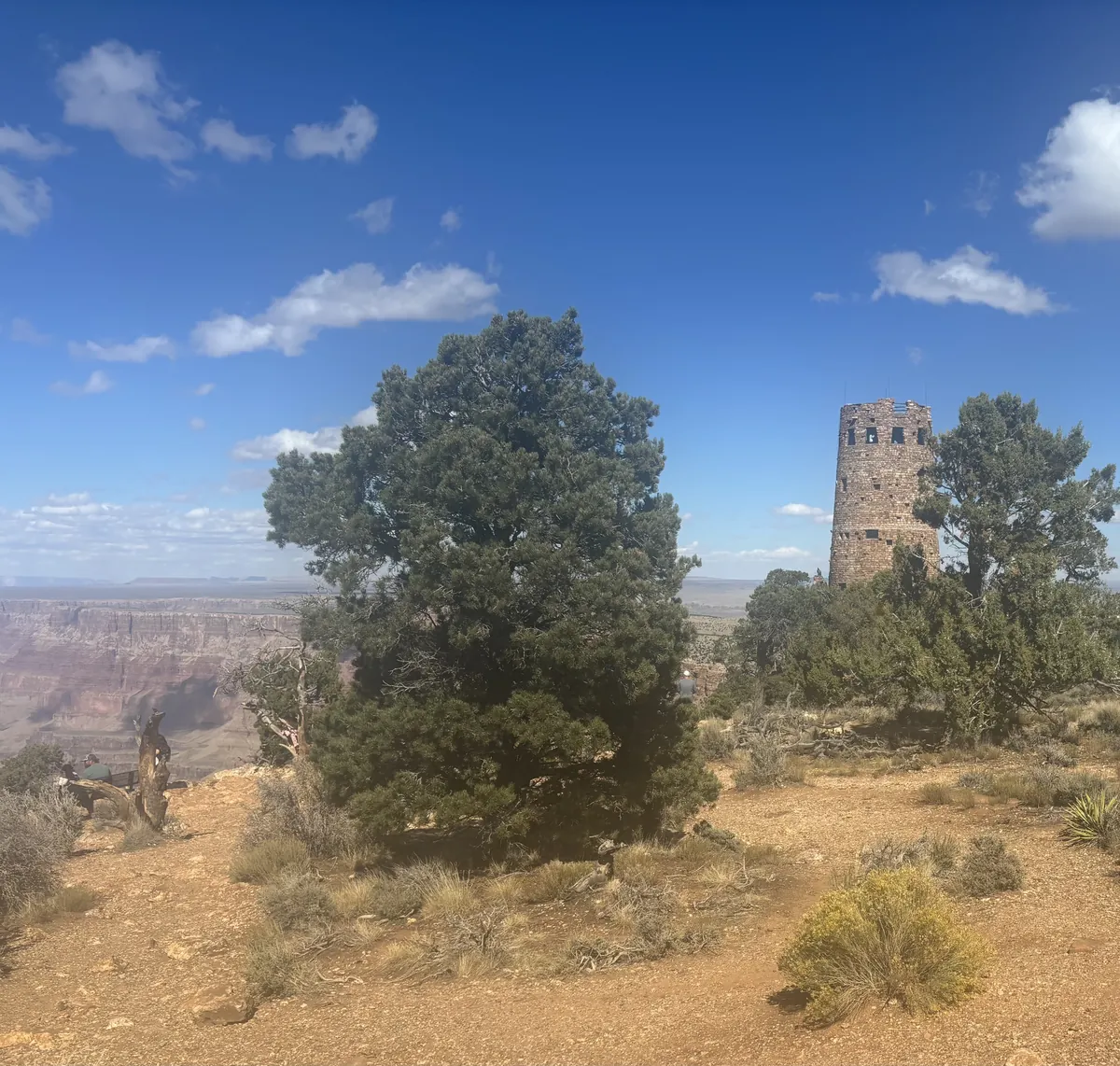
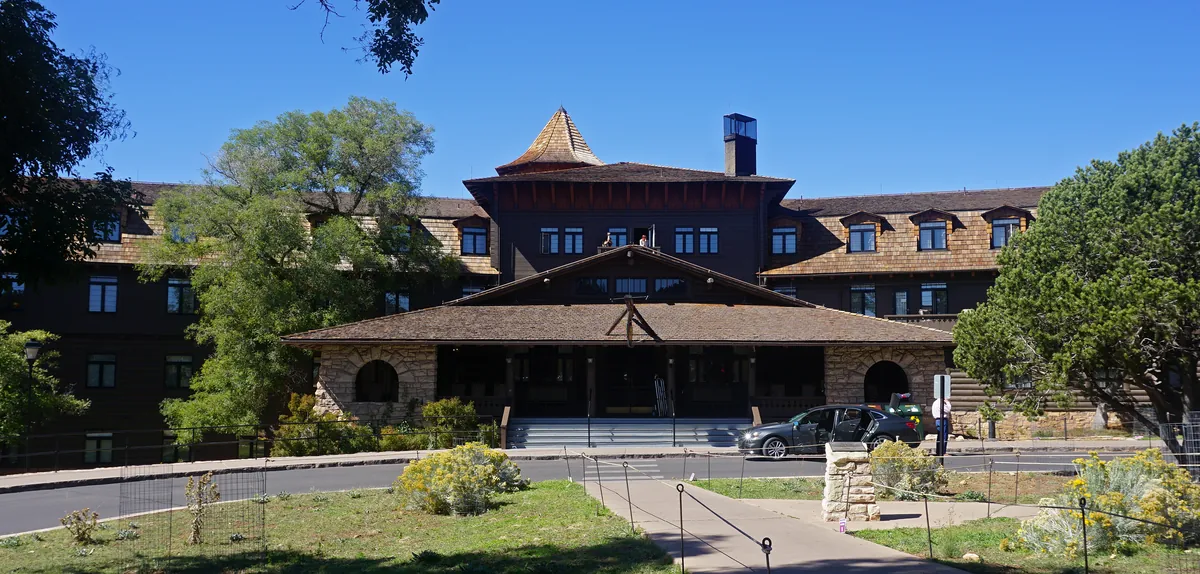
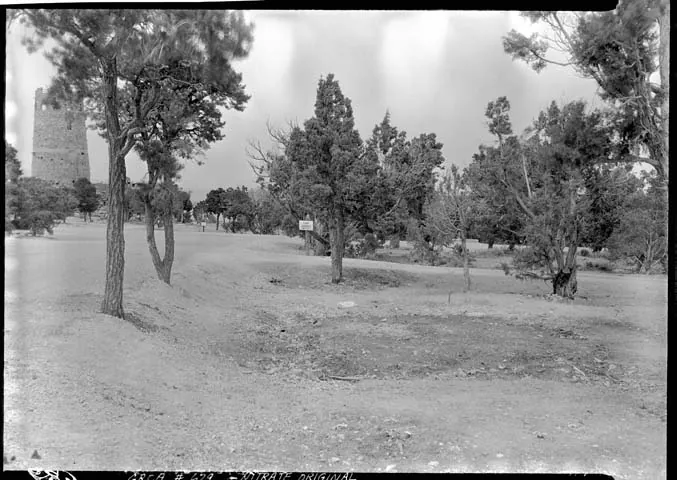
When the Atchison, Topeka and Santa Fe Railway opened its line from Williams, Arizona to the South Rim on September 17, 1901, the Grand Canyon stopped being a rumor and became a destination. The Fred Harvey Company moved in behind it. Charles Whittlesey designed El Tovar — Oregon pine, twenty feet from the edge — and it opened in January 1905, running continuously ever since. That same year, Mary Colter completed Hopi House, a multi-story sandstone building modeled on pueblo structures at Oraibi, where Hopi artist-demonstrators lived upstairs and sold work below. Colter kept building: Hermit's Rest in 1914, Bright Angel Lodge in 1935, and the Desert View Watchtower in 1932 — a 70-foot stone tower she designed only after six months studying Ancestral Puebloan architecture. The canyon made Flagstaff matter. These structures are why the canyon still has a human story worth telling.
Before the Aztec emperor Montezuma was born, the Southern Sinagua had already been gone from the cliff above Beaver Creek for more than forty years. That misidentification — European-Americans arriving in the 1860s and reaching for the wrong name, the wrong civilization — tells you something about how long this land had been waiting to be misread. The Sinagua built between 1125 and 1400 CE across the Verde Valley and beyond: cliff dwellings cut from limestone, pictographs layered across canyon walls, pueblos filled with trade goods from distant places. They left sites that Smithsonian archaeologist Jesse Walter Fewkes documented in the 1890s and named in Hopi — because the Hopi are understood to be their descendants. Flagstaff was built on land the Sinagua shaped. The ruins are not backdrop; they are the earlier city, still standing.
Plan your trip
The only thing left to do is go.
Editorial content compiled with AI assistance. Place details verified against public records.