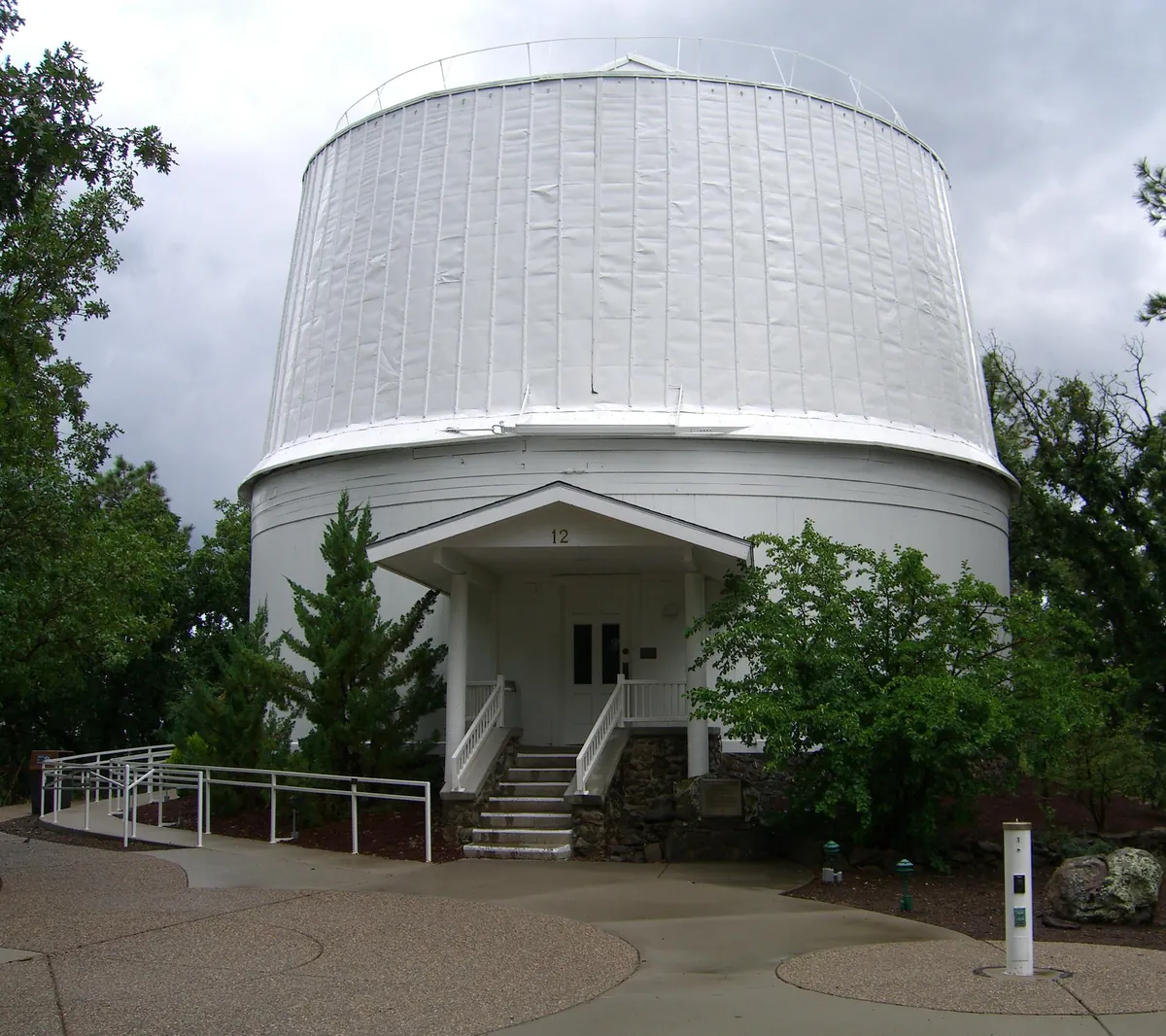
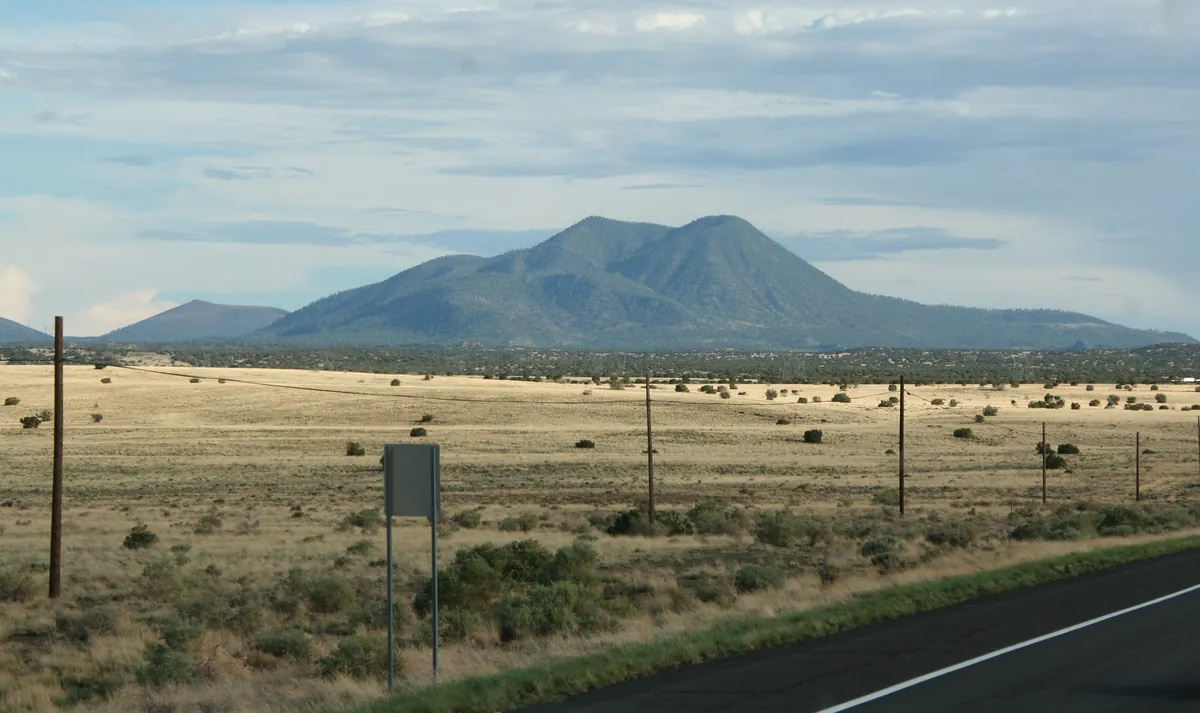
Percival Lowell came to this railroad town in 1894 because it had dark skies and enough elevation to matter. He was wrong about the Martian canals he came to prove. But the observatory he built on Mars Hill — funded from his own fortune, staff salaries and all — outlasted every theory he held. Clyde Tombaugh discovered Pluto here in 1930. Vesto Slipher's data on receding galaxies helped Edwin Hubble build the case for an expanding universe. Astronauts came to map the Moon. The 24-inch Clark Refracting Telescope, installed in 1896, still puts visitors at the eyepiece. Flagstaff's altitude, around 7,000 feet, and its historically clean air made it the kind of place where serious work could happen — and did. What Lowell got wrong turned out to matter far less than what the place made possible after him.