In August 1877, a U.S. Cavalry scout tracking Apaches through the Mule Mountains found an outcrop of ore in what would become Tombstone Canyon. The claim that followed turned into the Copper Queen Mine — an orebody running 23% copper, extraordinary when most mines worked 8-10%. Phelps Dodge acquired it in 1885 and rode that seam hard. By the early 1900s, this was the most productive copper mine in Arizona.
The work underground was brutal. Blasting went on while miners were still in the tunnels. No safety operators on the drills or elevators. Mules spent four years hauling 2,800-pound ore cars through the dark, their eyes going bad before they saw daylight again. In 1917, when the IWW called a strike, Phelps Dodge's private police arrested over 1,300 miners and deported them from Bisbee by rail — a forced expulsion that made national news.
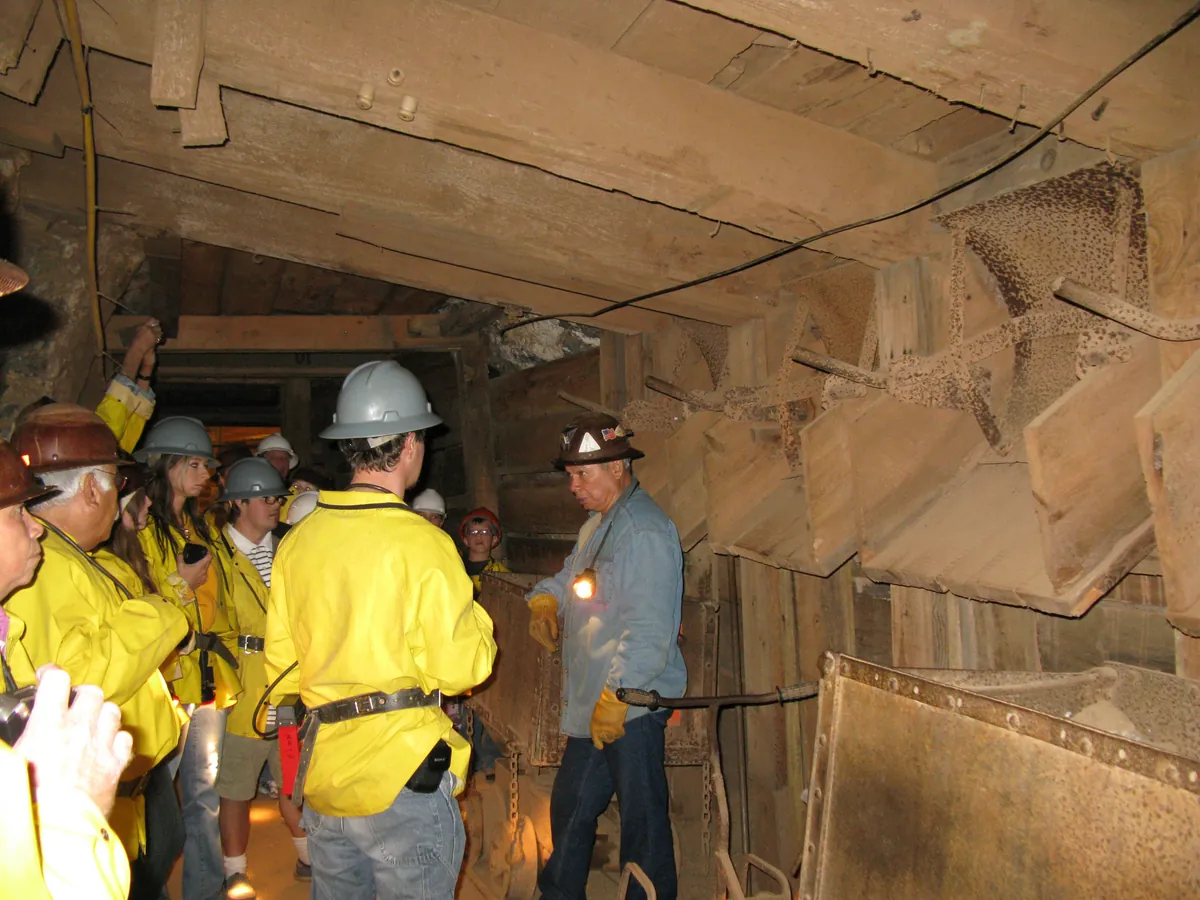
Production ceased in 1975. The town pivoted fast: the Queen Mine Tour opened in 1976, descending into the original workings by mine train. Retired Bisbee miners lead it. Over a million visitors since. The mountain remembers.
- ·Coords from Wikipedia. KEY FACTS: (1) first mining claim filed Aug 2, 1877; (2) acquired by Phelps Dodge in 1885; (3) was the most productive copper mine in Arizona in the early 1900s; (4) IWW strike 1917 → Bisbee Deportation; production ceased 1975; (5) reopened as the Queen Mine Tour in 1976 — over one million visitors since; tour descends into the original workings via mine train, guided by former Bisbee miners. Same Mule Mountains complex as Bisbee townsite.
Memories
Editorial content compiled with AI assistance. Place details verified against public records.