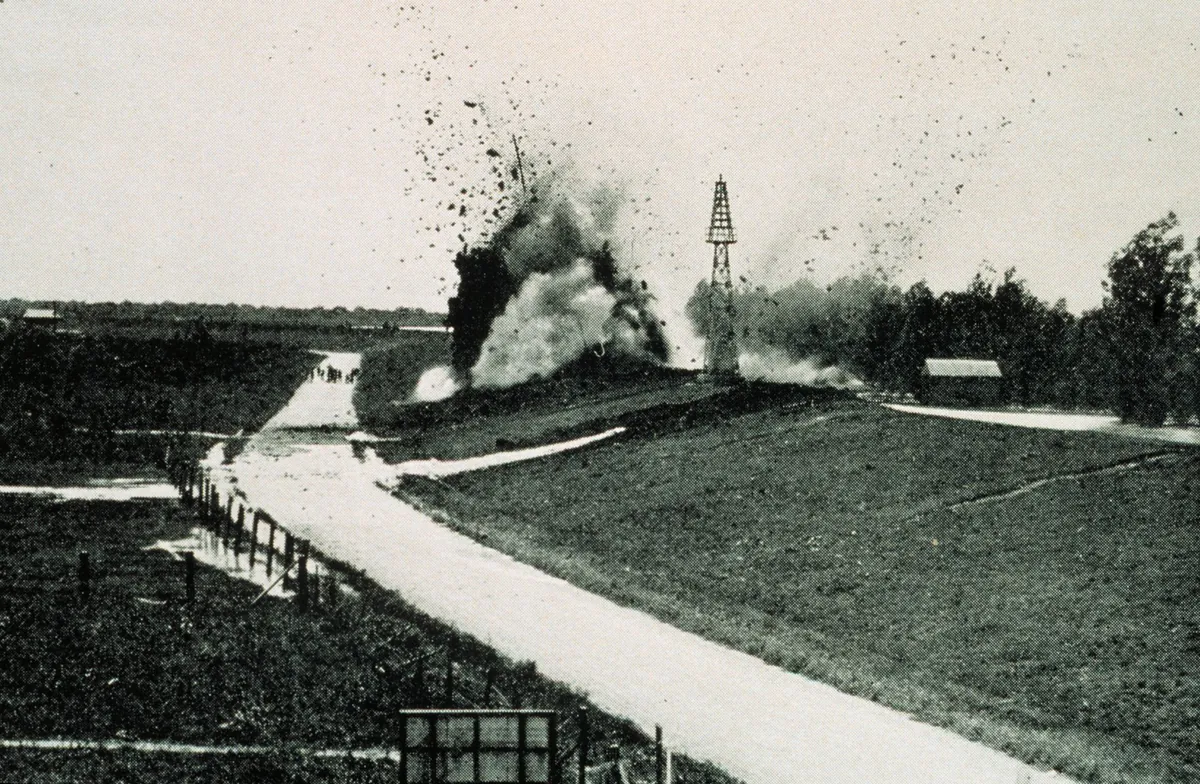
New Orleans has always made its bargains with the river, but on April 29, 1927, business leaders made one in dynamite. Thirty-nine tons of it detonated at Caernarvon, breaching the levee to flood St. Bernard and Plaquemines parishes — the logic being that controlled sacrifice downriver would save the city. William Amos Robinson's canning company stood at the blast site. He relocated operations to Westwego. The river crested naturally before the breach could have made a difference. The sacrifice was unnecessary.
Promised compensation to displaced families was never fully paid. The broken promises to Black communities accelerated the Great Migration northward. The federal response failures helped elect Herbert Hoover. A flood became a turning point in American politics because of what happened afterward — who was protected, who was abandoned, and who remembered.
The site is unmarked and on private land, visible only from the levee road in Caernarvon. There's no plaque, no memorial. Just the levee, holding. The city has always lived by deciding whose land takes the water. This is where that calculus became visible.
- ·39 tons of dynamite detonated on April 29, 1927, to breach the levee at Caernarvon.
- ·The breach was ordered by New Orleans business leaders to protect the city — St. Bernard and Plaquemines parishes absorbed the flood.
- ·William Amos Robinson's canning company stood at the blast site; he relocated operations to Westwego.
- ·The river crested naturally before the breach could have made a difference — the sacrifice was unnecessary.
- ·Promised compensation to displaced families was never fully paid.
- ·The 1927 flood reshaped American politics: the federal response failures helped elect Herbert Hoover, and the broken promises to Black communities accelerated the Great Migration.
- ·The site is unmarked and on private land — visible only from the levee road in Caernarvon.
Memories
Editorial content compiled with AI assistance. Place details verified against public records.