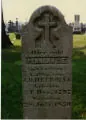
The oldest surviving cemetery in greater New Orleans holds graves from four groups the Spanish colonial authorities tried to bind into a single parish in 1787: Isleños from the Canary Islands, enslaved Africans, Free People of Color, and European settlers. The parish took its name from the patron saint of Bernardo de Gálvez, the Spanish governor — an act of naming that carried both devotion and political weight during the decades Spain controlled Louisiana.
The Isleños were founding families in this territory. Their graves mark one strand of the colonial fabric Spain wove along the lower Mississippi, and the cemetery has remained in continuous use since its establishment. The church at 2805 Bayou Road has been rebuilt multiple times after hurricanes, but the burial ground endures.
You'll find it in the community of St. Bernard, distinct from Chalmette, along the San Bernardo Scenic Byway. The cemetery offers something rare: a material record of who was here at the beginning, and who the Spanish colonial authorities decided belonged in consecrated ground together. That question — who is buried together, and why — is a blunt fact about power. Here the answer is on the headstones.
- ·Established in 1787, making it the oldest surviving cemetery in the greater New Orleans region.
- ·The parish was created by Spanish colonial authorities — St. Bernard is named for the patron saint of Bernardo de Gálvez, the Spanish governor.
- ·Graves include founding Isleños from the Canary Islands, enslaved Africans, Free People of Color, and European settlers.
- ·The church at 2805 Bayou Road has been rebuilt multiple times after hurricanes but the cemetery has remained in continuous use.
- ·Located in the community of St. Bernard, distinct from Chalmette, along the San Bernardo Scenic Byway.
Memories
Editorial content compiled with AI assistance. Place details verified against public records.