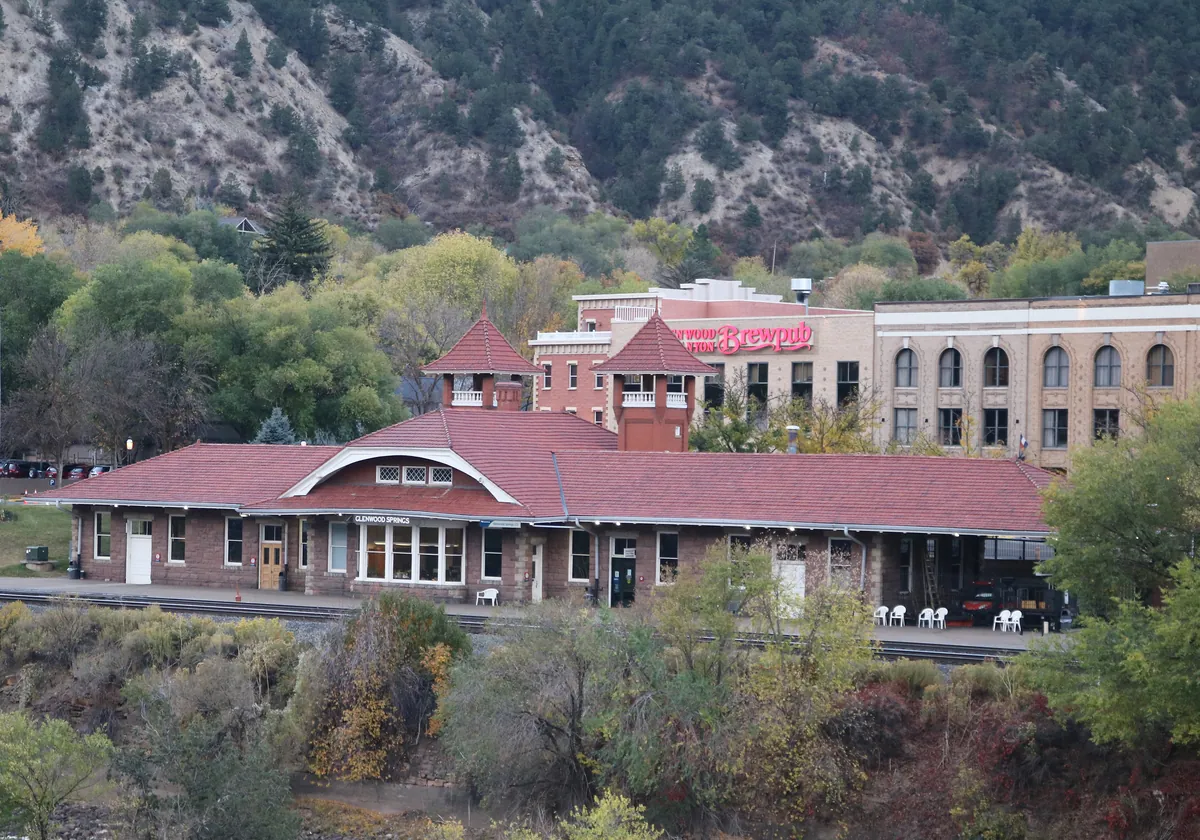
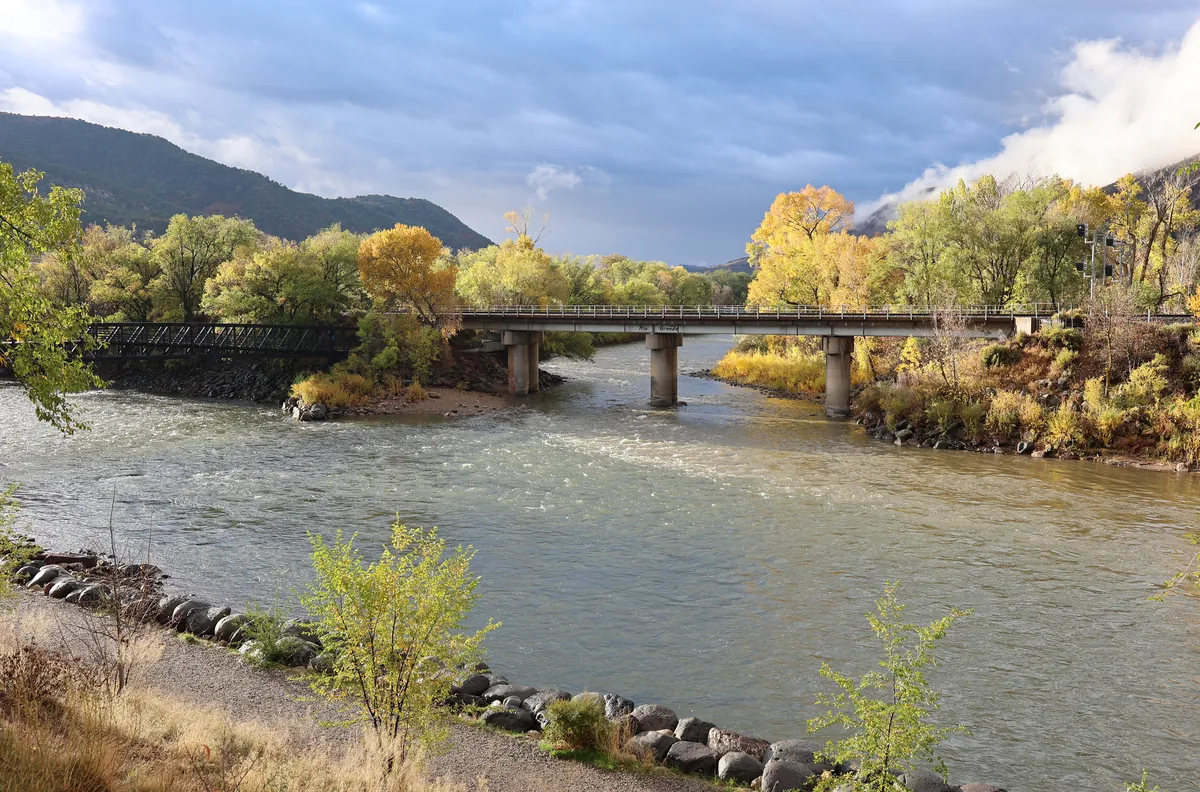
The water came first. Two rivers — the Roaring Fork completing its 70-mile run from Independence Pass, the Colorado pushing west through the canyon — met at the bottom of a mountain bowl, and a town grew up at that junction. Isaac Cooper platted it in 1883; by 1884 it had a name borrowed from an Iowa hometown; by 1885 it had incorporated. Then the Denver & Rio Grande Western Railroad arrived, and what had been a river crossing became a commercial hub. The 1904 station — brick and red sandstone, medieval towers, pyramidal roofs — still stands close to the Colorado's southern bank, and the California Zephyr still stops there daily on its run between Chicago and Emeryville. By Amtrak's 2019 count, it ranked as Colorado's second busiest station. The rivers made settlement possible. The railroad made it matter beyond itself.