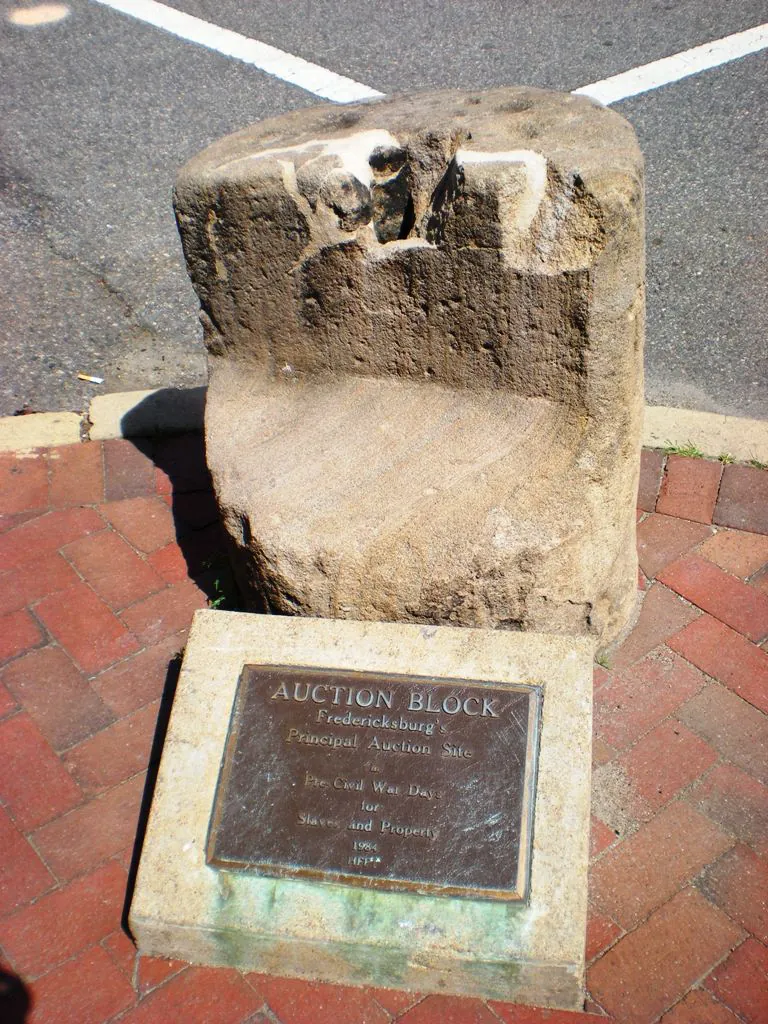
The sandstone block sits today at the Fredericksburg Area Museum. The block was removed from its downtown location, where it had stood in what became part of the town's commercial district.
Fredericksburg developed as a port at the head of navigation on the Rappahannock River, positioned where the river crosses the fall line. During the colonial period and into the antebellum decades, the town functioned as a hub for exporting tobacco and receiving manufactured goods. The block stood at the center of that economy, in a town established as a trading center by the Virginia General Assembly in 1728.
In December 1862, during the Battle of Fredericksburg, the town sustained significant damage from Union bombardment and looting. That same engagement witnessed something else: nearly 10,000 enslaved people left area plantations and city households to cross the Rappahannock and join Union lines. John Washington, who crossed to freedom and settled in New York, wrote later about watching Union troops approach from across the river: "No one could be seen on the street but the colored people. and every one of them seemed to be in the best of humors."
Washington's manuscript was discovered in the 1990s and published as the basis of two books. In 2010, the National Park Service, Stafford County, and the City of Fredericksburg collaborated to post historical markers on either side of the Rappahannock as part of a "Freedom Trail" marking that exodus.
The museum exhibit preserves the stone itself.
- ·Originally at corner of William and Charles streets. Now at FAM. Part of NRHP Fredericksburg Historic District.
Memories
Editorial content compiled with AI assistance. Place details verified against public records.