Halfway between Richmond and Washington, Fredericksburg sat at the fall line of the Rappahannock River — the practical limit where larger vessels ceased to be navigable. In 1728, the Virginia General Assembly named it for Frederick, Prince of Wales, and set it to work as a port town for exporting tobacco and receiving manufactured goods. George Washington's family bought Ferry Farm across the water in 1738. His mother moved into town. His sister Betty lived at Kenmore. Thomas Jefferson wrote the Virginia Statute for Religious Freedom here. Fielding Lewis ran an arms factory for the Continental Army during the Revolution. The county court met in town from 1732 to 1780, long enough for Fredericksburg to secure its own charter when it incorporated in 1781.
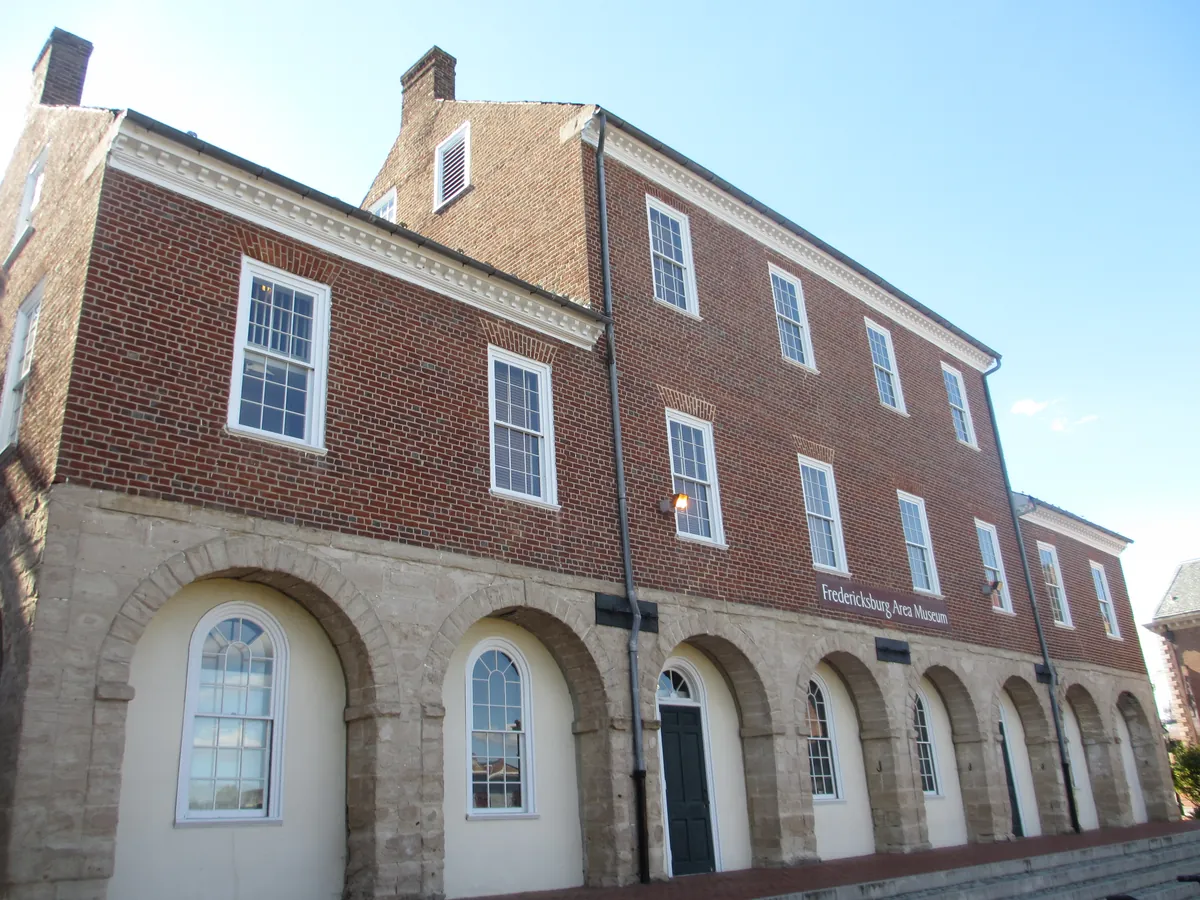
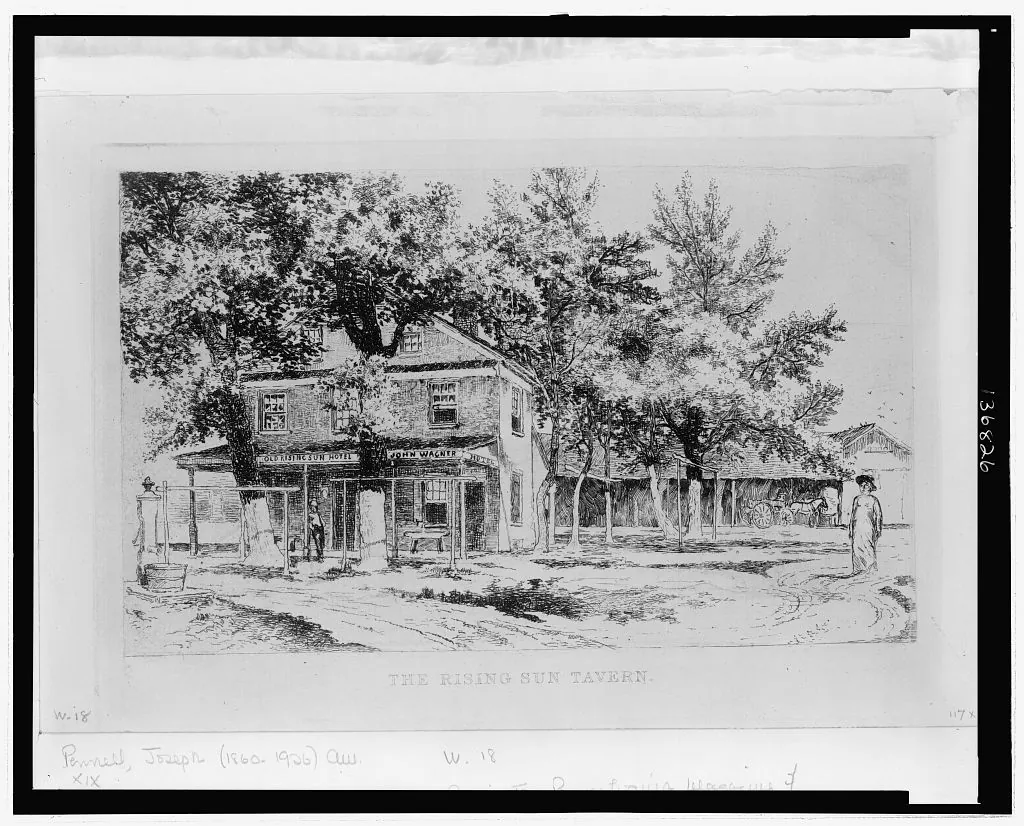
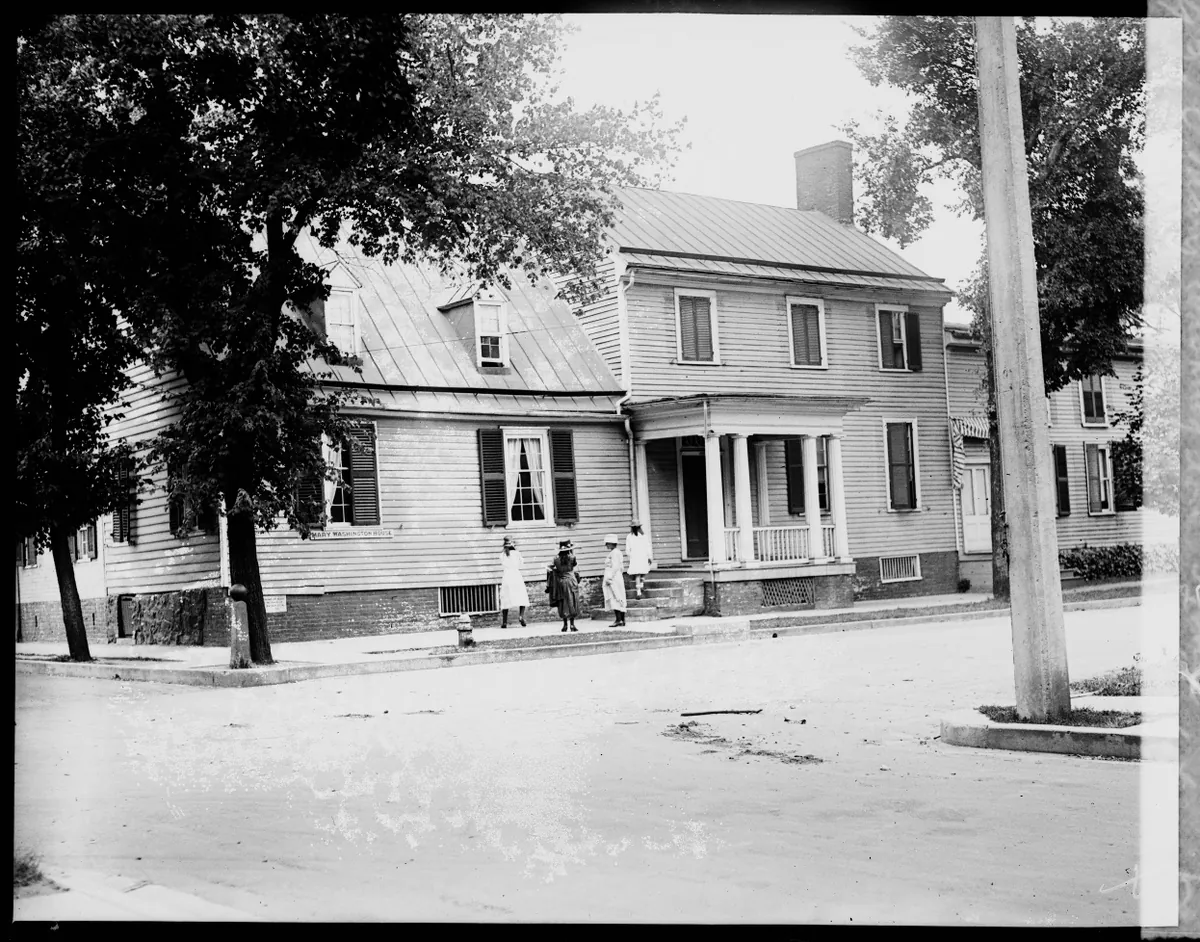
What the town built then is still standing. The 40-block Fredericksburg Historic District — now a National Historic Landmark — contains more than 350 buildings from the 18th and 19th centuries. The 1816 town hall and market house anchors the district and now operates as the city's museum. James Renwick, architect of the Smithsonian Castle and St. Patrick's Cathedral, designed the 1852 courthouse. St. George's Church holds its ground. The Mary Washington House, the Rising Sun Tavern, and the Hugh Mercer Apothecary Shop preserve the Colonial streetscape as it functioned.
On December 11, 1862, Union artillery opened fire from across the Rappahannock, and the downtown took the bombardment for four days. Federal troops looted the streets afterward. The town survived that winter and the battles to come — Fredericksburg, Chancellorsville, the Wilderness, Spotsylvania Court House — because it rebuilt slowly as a local trade center and the surrounding counties didn't regain their 1860 population levels until the 20th century. The buildings stood because slow growth left them standing.
Roughly 1.5 million visitors pass through annually, many drawn by the battlefield park. The district itself is the other half of the story: what a port town looked like when the fall line governed the frontier, and how those buildings withstood the war that nearly erased them.
- ·Listed 1971. Covers the original 1728 town site. Caroline Street corridor is the core.
More archive
Memories
Editorial content compiled with AI assistance. Place details verified against public records.