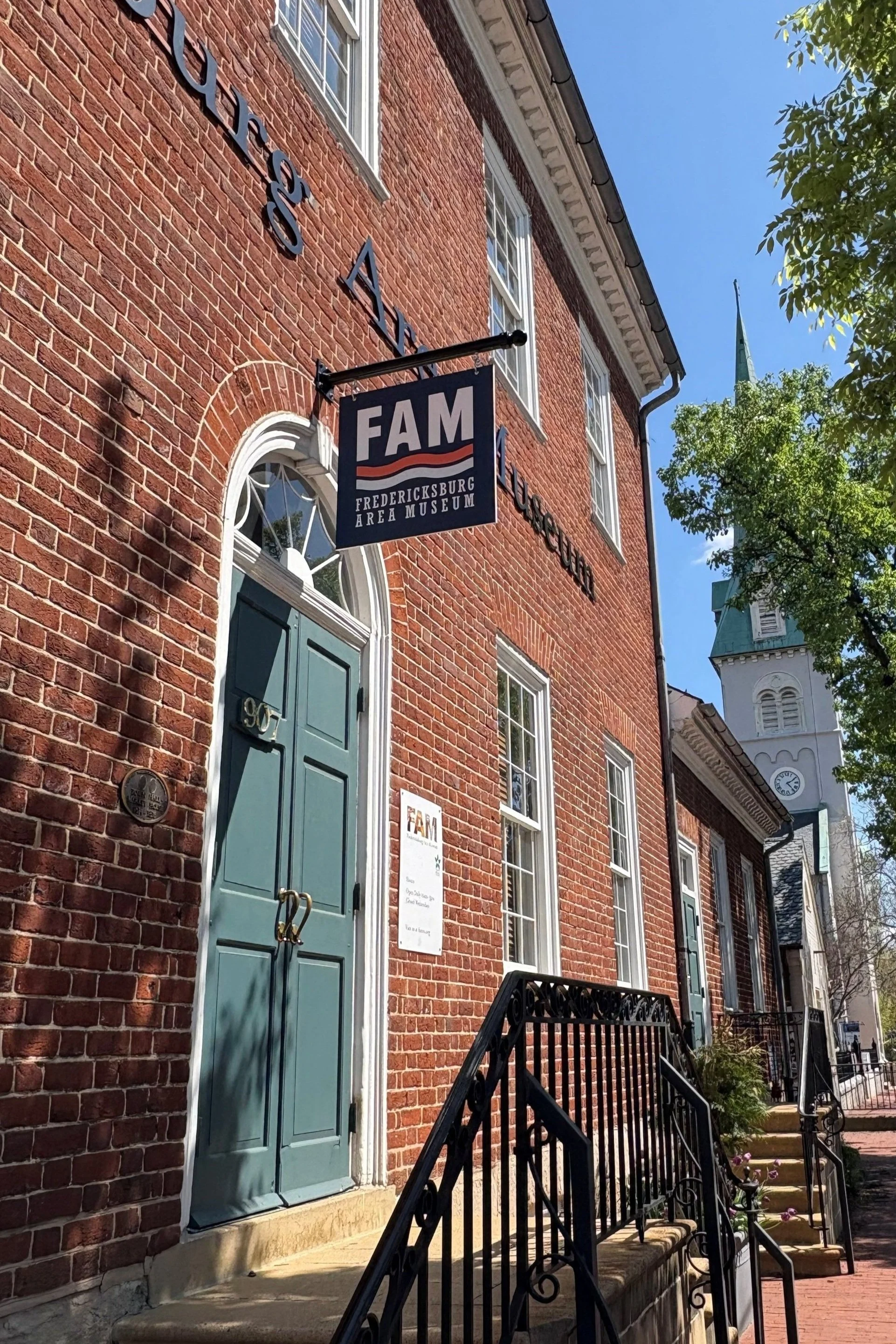
The 1816 town hall and market house now operates as the Fredericksburg Area Museum. It sits within a 40-block historic district listed on the National Register of Historic Places — a district that includes more than 350 buildings and locations dating to the 18th and 19th centuries, among them the former site of the Slave Auction Block.
Fredericksburg wasn't born gently. Positioned at the fall line on the Rappahannock River, it was halfway between Washington and Richmond when the Civil War came through. The Union bombardment in December 1862 left the town destroyed. During that battle, more than 10,000 enslaved people crossed the river to Union lines — one of the largest exoduses from slavery during the war. Among them was John Washington, a literate man from Fredericksburg who later wrote an account of watching Union troops approach: "No one could be seen on the street but the colored people. and every one of them seemed to be in the best of humors." His manuscript was discovered in the 1990s and published as the basis of two books: David W. Blight's *A Slave No More* (2007), and *John Washington's Civil War: A Slave Narrative* (2008), edited by Crandall Shifflett. In 2010, the National Park Service, Stafford County, and the city posted markers on either side of the Rappahannock as part of a "Freedom Trail."
The museum's collection spans more than ten thousand years — ranging, according to its own description, from Native American artifacts to Black Lives Matter posters. The objects support the stories of those who paddled the river, walked the streets, worked the fields, ran the businesses and government, attended the schools and churches.
Go for context on the town's formative violence and what came after. The recovery took until well into the 20th century — neither the city nor the surrounding counties reached their 1860 population levels until then.
- ·907 Princess Anne St. The 1816 building is NRHP-listed as 'Fredericksburg Town Hall and Market Square' (1994).
Memories
Editorial content compiled with AI assistance. Place details verified against public records.