Salem was built as a single argument: a Moravian congregation town where the church owned the ground and every building answered to the community. This walk is that argument, still standing — the house where the trades were taught, the tavern that was the town's one door to the outside world, the graveyard where the dead lie by choir and not by family, the bakery still firing its 18th-century oven, and the church where a Union chaplain read freedom aloud in 1865. Park once; it's all within a few blocks.
The route
 1Museum·1766·NHLOld Salem Museums & Gardens
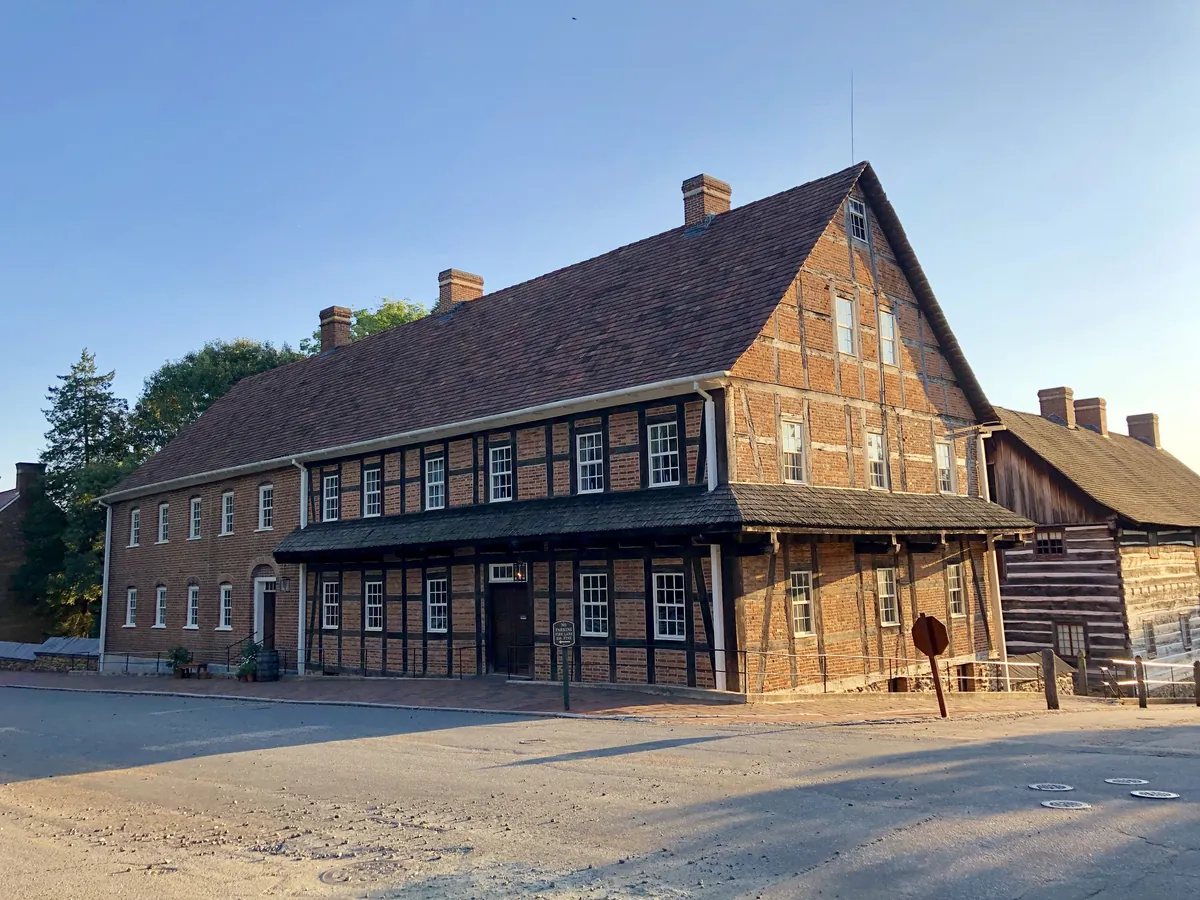
Salem was not rebuilt. That distinction matters. When Old Salem Inc. formed in 1950 to protect what had become a depressed stretch of Winston-Salem, the Moravian settlement founded in 1766 was still substantially there — roughly 70 percent of the buildings in the historic district are original. You don't get that anywhere. You walk on uneven brick and it's genuinely old. The Moravians who laid this out were methodical people. They purchased just under 99,000 acres in the Carolina Piedmont, named the tract Wachovia, and built Salem as its central economic, religious, and administrative center — a congregation town where the church owned the property and kept meticulous records of everything. Those records became the blueprint for restoration; many of the original documents still sit in the Moravian archives. Salem merged with neighboring Winston in 1913 and receded into the city, but the bones held. What Old Salem runs now is a living-history museum with real stakes. Interpreters work the trades — tinsmithing, blacksmithing, cobbling, gunsmithing, baking — in buildings where those trades were actually practiced. The Single Brothers' House, completed in 1769, is the largest half-timbered building in the Carolinas, a National Historic Landmark that housed craftsmen and their apprentices, with individual trade shops, a kitchen, a dining room, and a Saal for worship. The Salem Tavern, built in 1784, is where George Washington spent two nights — May 31 and June 1, 1791 — during his Southern Tour. The harder history is here too. St. Philip's Moravian Church — the brick building completed in 1861 to replace the congregation's original 1823 log church — is the oldest surviving African American church building in North Carolina; the congregation itself, organized in Salem in 1822, is older still. The Emancipation Proclamation was read there in 1865 by the chaplain of the 10th Ohio Regiment. Go on a weekday. The interpreters are working, not performing.
 2Architecture·1769·NHLSingle Brothers' House
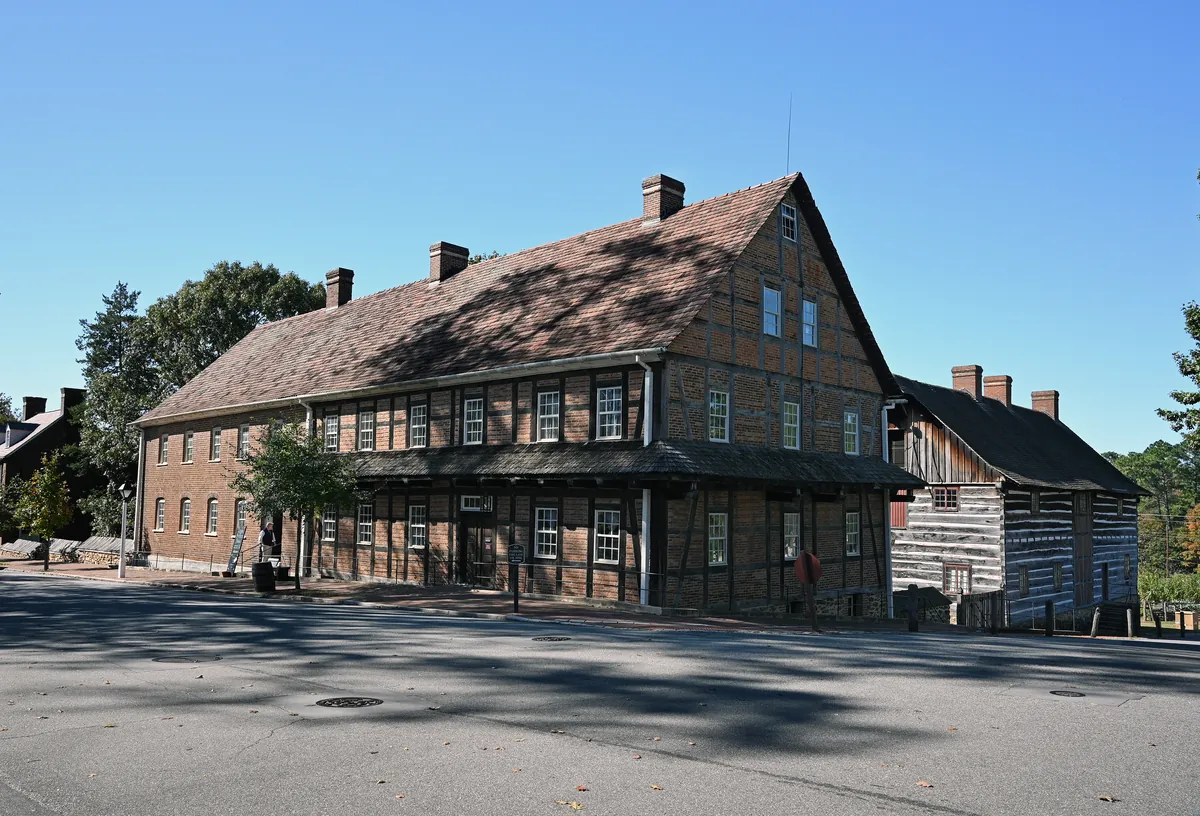
Salem was designed from the start as a Moravian congregation town — every building with a purpose, every purpose accountable to the community. On the southwest corner of South Main and Academy Streets, the Single Brothers' House makes that logic visible in wood and brick. The first section went up in 1769, built by master mason Melchior Rasp in traditional Germanic half-timber framing — exposed brick noggin, clay tile roof, pent eave. The carpentry was done by Christian Triebel. In 1786, Rasp's successor Johann Gottlob Krause extended the building south in brick. Two construction campaigns, two materials, one continuous idea: house the unmarried men of the congregation, teach them trades, keep the work inside the community. The building held craftsmen and their apprentices, with individual trade shops, a kitchen and dining room, administrative offices, and a Saal — a worship and meeting space — all under one roof. Behind it, a workshop built in 1771 provided additional space; a brewery, slaughterhouse, distillery, and tannery occupied the larger parcel. The gardens have been partially restored. The Single Brothers' House closed in 1823. The older half became apartments, the brick addition a Boys' School for six years, then the building drifted into primarily residential use — known eventually as the Widow's House, occupied mostly by single women and widows of the congregation. The Single Sisters later took control. It was restored in 1964 and remains the property of the Salem Congregation. The building holds National Historic Landmark status, individually designated in 1970. Today it operates as a tour building within Old Salem Museums & Gardens, where working craftspeople still practice Moravian trades on site. During Advent, the Women's Fellowship of Home Moravian Church holds the Candle Tea here — a fundraiser, still running, for local nonprofits. The continuity is not incidental. It's the whole point.
 3Food & Drink·1799C. Winkler Bakery
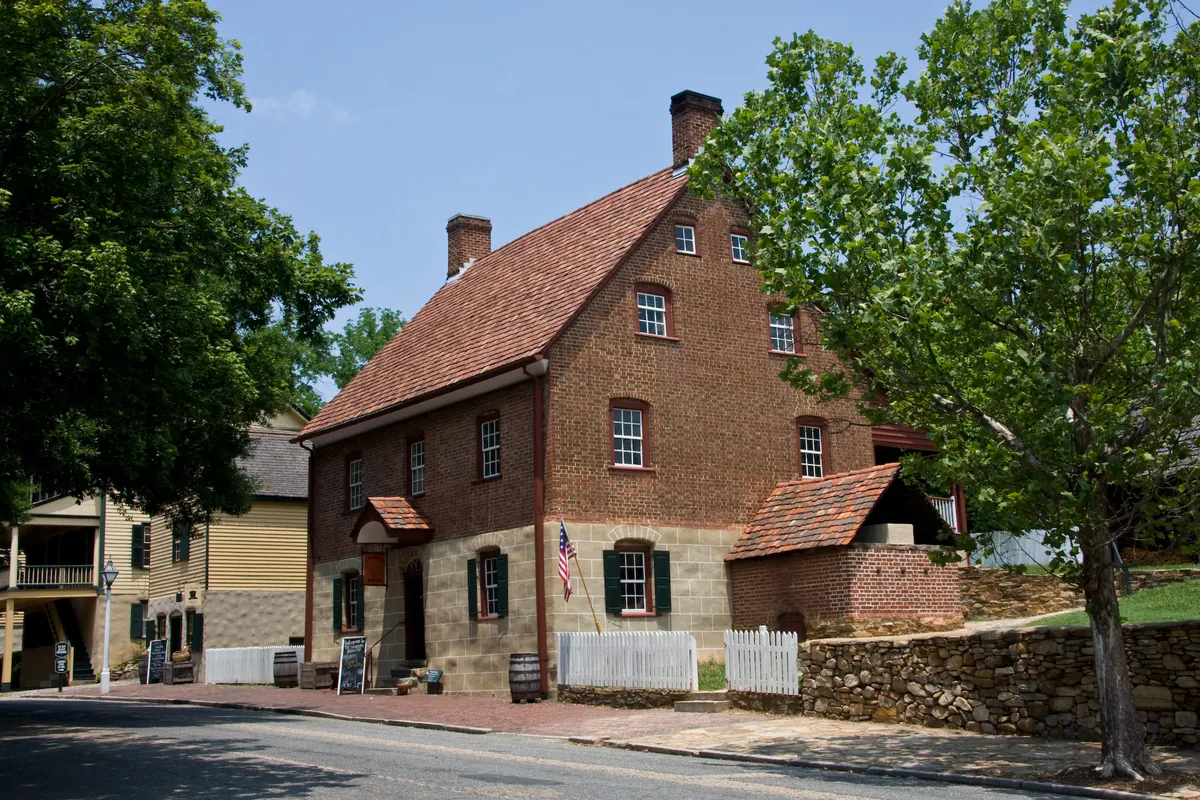
Before dawn, someone arrives to start the oven. That oven has been burning wood since 1799, when the Moravian Church built this bakery on South Main Street in Old Salem — a working hearth below, a living quarter for the baker above. The Church ran it that way until 1807, when a Swiss-born baker named Christian Winkler took over from the original baker, Thomas Butner Jr., and made it his own. Winkler, his third wife Elizabeth, and their six children lived and worked here for the rest of their lives. His descendants kept it in the family through 1926 — a span that included his grandson Charles and Charles's wife Alice, who added a front porch and second-floor balcony, and then Alice's daughter Bessie and her husband Robert Spaugh, who ran it until the end. After 1926, the building drifted. A tea room, then a coffee house, apartments upstairs, an antiques store, a knitting shop, a sewing shop. The slow dispersal that swallows most old buildings whole. Old Salem Museum and Gardens acquired it in 1963 and restored it to its original appearance in 1968. The building itself was constructed by Salem's master builder and mason Johann Gottlob Krause, shortly before his death — uncut stone on the first story, hand-made brick above. The oven is the point. Workers arrive before dawn, start the fire, and by around 7:30 am the flames have faded and the bricks hold the heat — around 700°F at peak, then left to fall to around 400°F before baking begins. Wikipedia names it the oldest continually operating bakery in North Carolina. The most popular thing that comes out of it is Moravian sugar cake. Salem was built on the idea that a community could hold something in common and make it last. The bakery on South Main Street is the oldest proof they were right.
 4Architecture·1784·NHLSalem Tavern
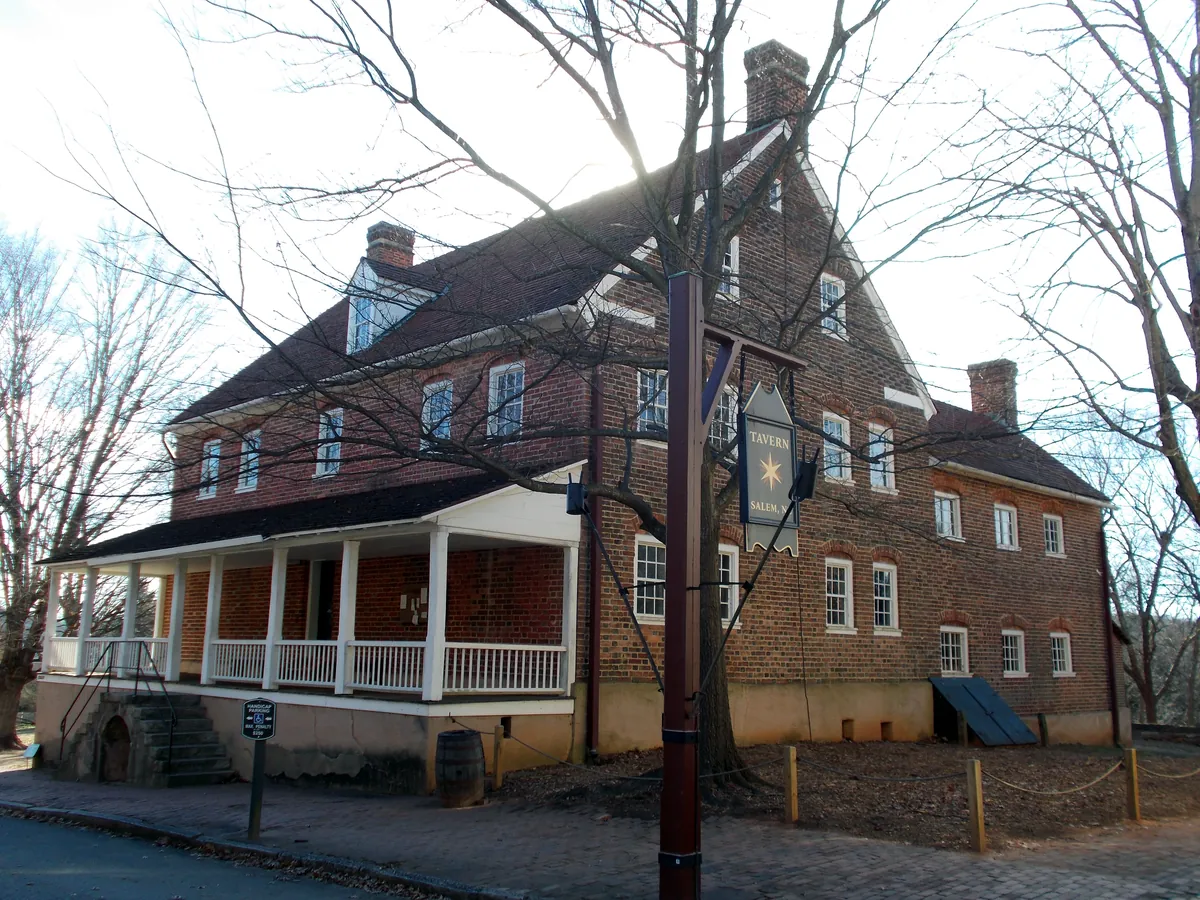
Built in 1784 on the foundations of a frame tavern that burned that same year, the Salem Tavern was the first entirely brick building in what is now Old Salem — and, according to Wikipedia, one of the oldest surviving brick tavern buildings in the United States. The Moravian community that built Salem positioned the tavern on the southern edge of town, where it served as the primary point of contact between the congregation and the outside world. It was where travelers lodged. Everyone else lived by different rules. George Washington slept here during his Southern Tour in 1791 — two nights, by the record. That visit alone would have earned the building its National Historic Landmark designation. But the tavern's place in the city's story runs deeper than a presidential stopover. Salem was the commercial and civic heart of what would eventually become Winston-Salem, a city that grew by merger and reinvention, absorbing its Moravian origins into something larger and louder. The tavern outlasted all of it. Restored to its 1784 appearance — the brick building and the wood-frame annex added in 1815 both intact — it stood for decades as a museum building inside Old Salem Museums & Gardens. Then, in fall 2025, it reopened as a working restaurant: period-dressed staff, a menu that draws from Moravian and soul food traditions. History made edible, which is either the best version of this idea or the worst, depending on your tolerance for living history. The walls have earned their stories. The food is new. Go find out which one carries more weight.
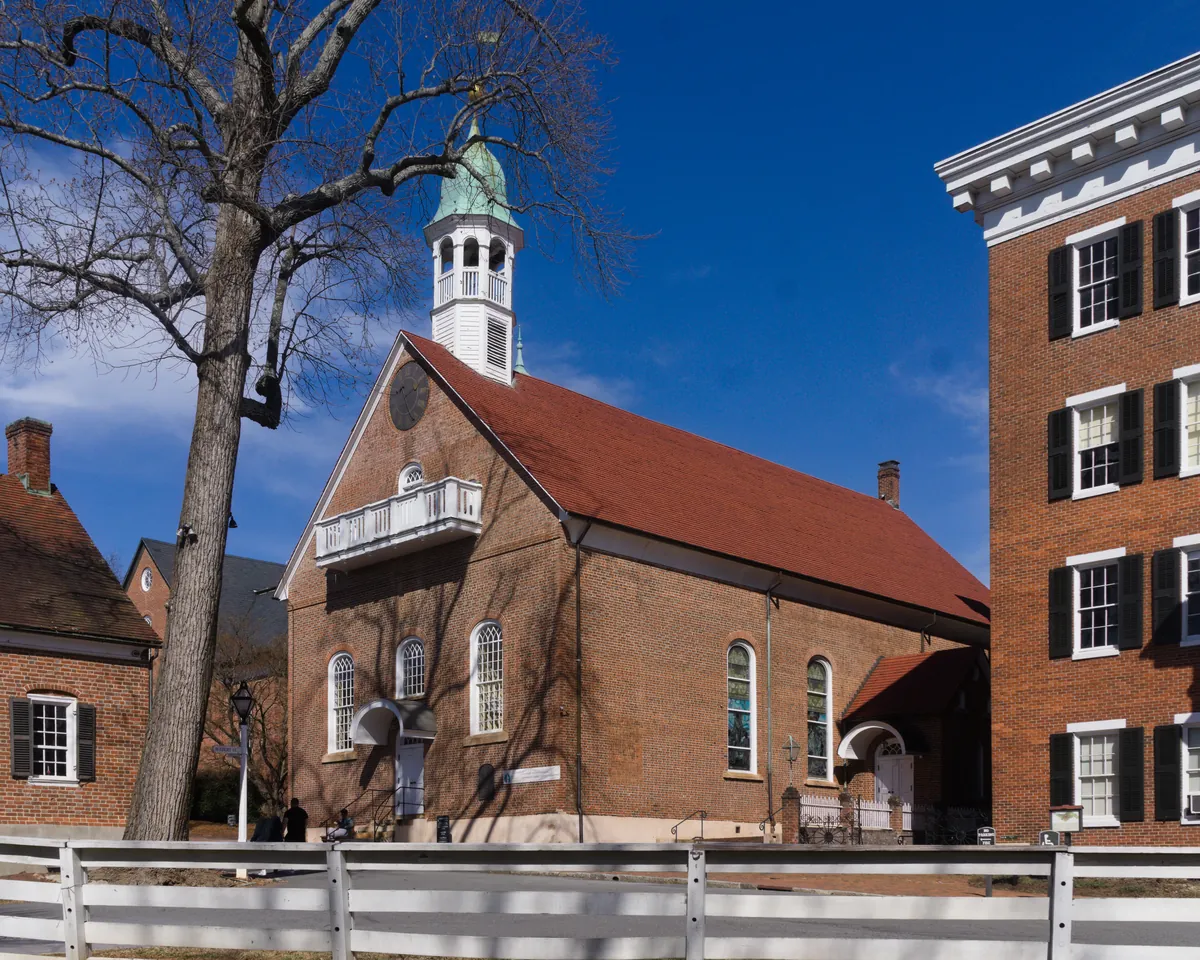 5Architecture·1800·NRHPHome Moravian Church
The Salem Congregation was formally organized on November 13, 1771, before this city existed, before the county existed, before Winston and Salem had grown close enough to merge. The Moravians had already been here nearly two decades by then — they purchased nearly 99,000 acres in 1753 and called it Wachovia, laying out Salem as the central town, grouping the congregation's public buildings around a square. The sanctuary at the heart of that plan was consecrated November 9, 1800, plans completed two years before that. It has been the worship home ever since. The name came from what the congregation did next. As its Sunday School programs spread into the surrounding towns, this building became what people called the home church. The name stuck, and it holds now: Home Moravian Church, at 529 South Church Street. God's Acre Cemetery sits roughly 100 yards to the north. Salem Square and that cemetery have held the Moravian Easter Sunrise Service every year since 1772 — the tradition itself reaches back further, to Herrnhut, Germany, in 1732. Thousands gather each Easter. Some come from overseas. The sanctuary has a distinctive belfry. Inside there is a pipe organ and stained-glass windows. From March through November, Wednesday through Saturday, members open the building and speak informally with anyone who walks in — about Moravian history, about what it has meant to belong to a congregation this old. Sunday worship is open to all, no credentials required. This is one of those places where the institution and the building have lasted long enough to become the same thing. You don't come to see it from the outside. You come because something is still happening here, the same as it has been since before the country finished becoming a country.
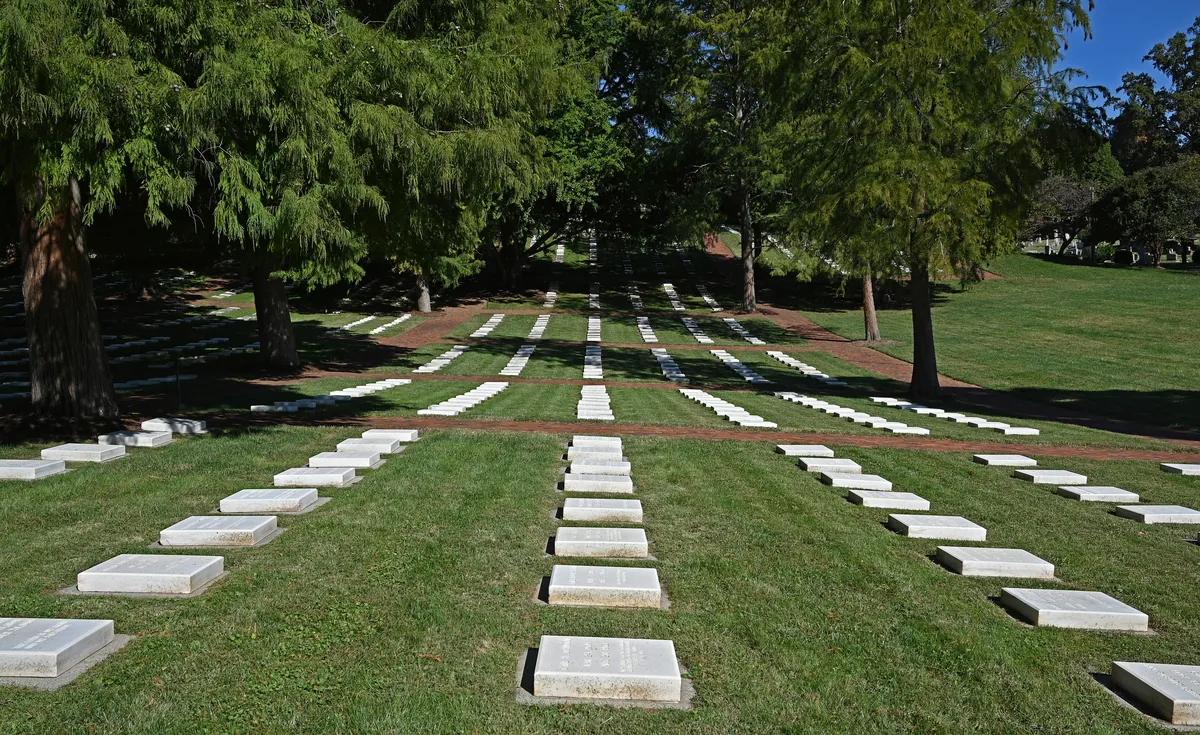 6Cultural Heritage·1771God's Acre (Salem Moravian Graveyard)
The Moravians called it *Gottesacker* — God's Field — and the name tells you everything about how they understood death. Not a memorial, not a monument park. A field. Something planted, something waiting. Salem's God's Acre sits within the Old Salem district of Winston-Salem, established in 1771, and it operates on a logic that cuts against almost every convention of American burial. There are no family plots. No towering stones for the wealthy, no modest markers for the poor. Every grave gets the same recumbent white marble stone, the same dimensions. The theology is literal: in God's sight, the dead are equal, and the ground makes the argument plainly. The arrangement follows the choir system — not music, but the Moravian practice of dividing a congregation by age, sex, and marital status for mutual spiritual care. In life, the married men sat together at worship; the single women sat together; the children by age. In death, they stay that way. Buried chronologically within each choir section, in the order they were called home. The graveyard is not a family tree. It is a congregation, still assembled. Salem Congregation — thirteen Moravian churches across Winston-Salem — still uses the ground and still buries according to the choir system. Every year on the Saturday before Easter, congregation members place flowers on the graves until the whole field turns to something close to a garden. Then Easter morning arrives, and the congregation walks here for the Sunrise Service: the Church Militant moving among the graves of the Church Triumphant, affirming a resurrection they intend to take seriously. The tradition behind that service traces back to Herrnhut, Saxony, the Moravian mother congregation, long before Salem existed. Come before Easter if you can. The flowers will be out, and the argument the stones make — stubborn, quiet, still unrefuted after two and a half centuries — will be easier to hear.
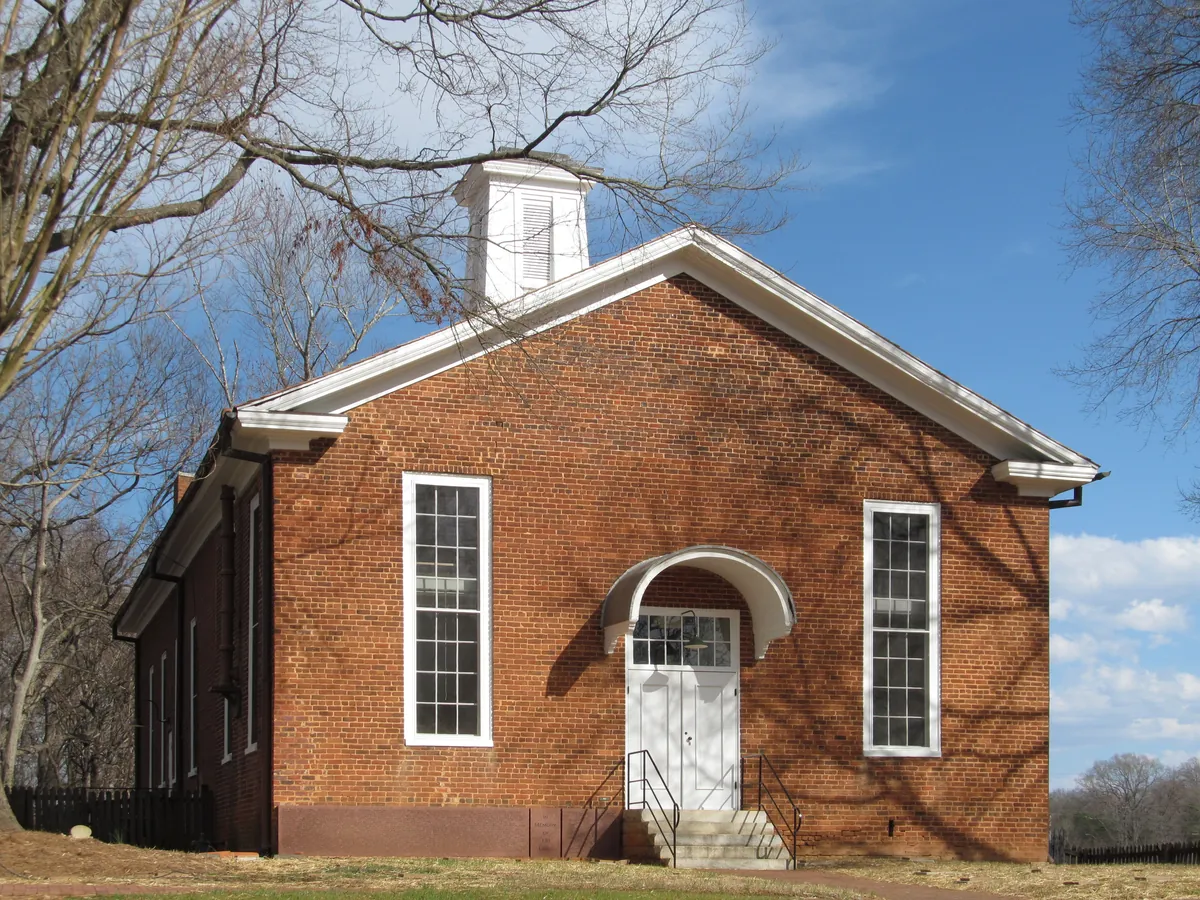 7Civil Rights·1822·NRHPSt. Philip's Moravian Church
On May 21, 1865, a Union chaplain — Rev. Seth G. Clark of the 10th Regiment, Ohio Cavalry — stood at the pulpit of a Black Moravian church in Old Salem and read General Orders 32 aloud. Freedom, announced here, in this building, to the congregation that had built it. That congregation organized in 1822, after white Moravians stopped welcoming Black worshippers into their services around 1820. The following year, they built their own log church south of the Strangers Graveyard — the cemetery that had served Salem's African American dead since 1816. Between 1827 and 1831, white Single Sisters taught a Sunday school here, until a state law ended the teaching of literacy to enslaved people. The congregation kept going anyway. The brick church that stands today went up in 1861 — the oldest surviving African American church building in North Carolina. In 1890 it was enlarged with a central hall, classrooms on the lower level, and a large room above that could open onto the sanctuary. The congregation worshipped here under the blunt institutional label "Negro congregation" until December 1913, when Bishop Edward Rondthaler gave it a name at a lovefeast service: St. Philips. The 1823 log church was reconstructed on its original site in 1999. The entire complex is part of Old Salem, and the grounds were restored by Old Salem Museums and Gardens in 2004 for interpretive use. St. Philips is the only historically Black Moravian congregation in the United States. The brick church was added to the National Register of Historic Places in 1991. Worship services are still held here. Salem was a Moravian settlement built on the idea that only church members could live within its boundaries — a controlled, hierarchical community that owned its own property and governed its own life. St. Philips is what happened when that community decided some of its members didn't count. The congregation counted anyway, and built something that outlasted the people who excluded them.
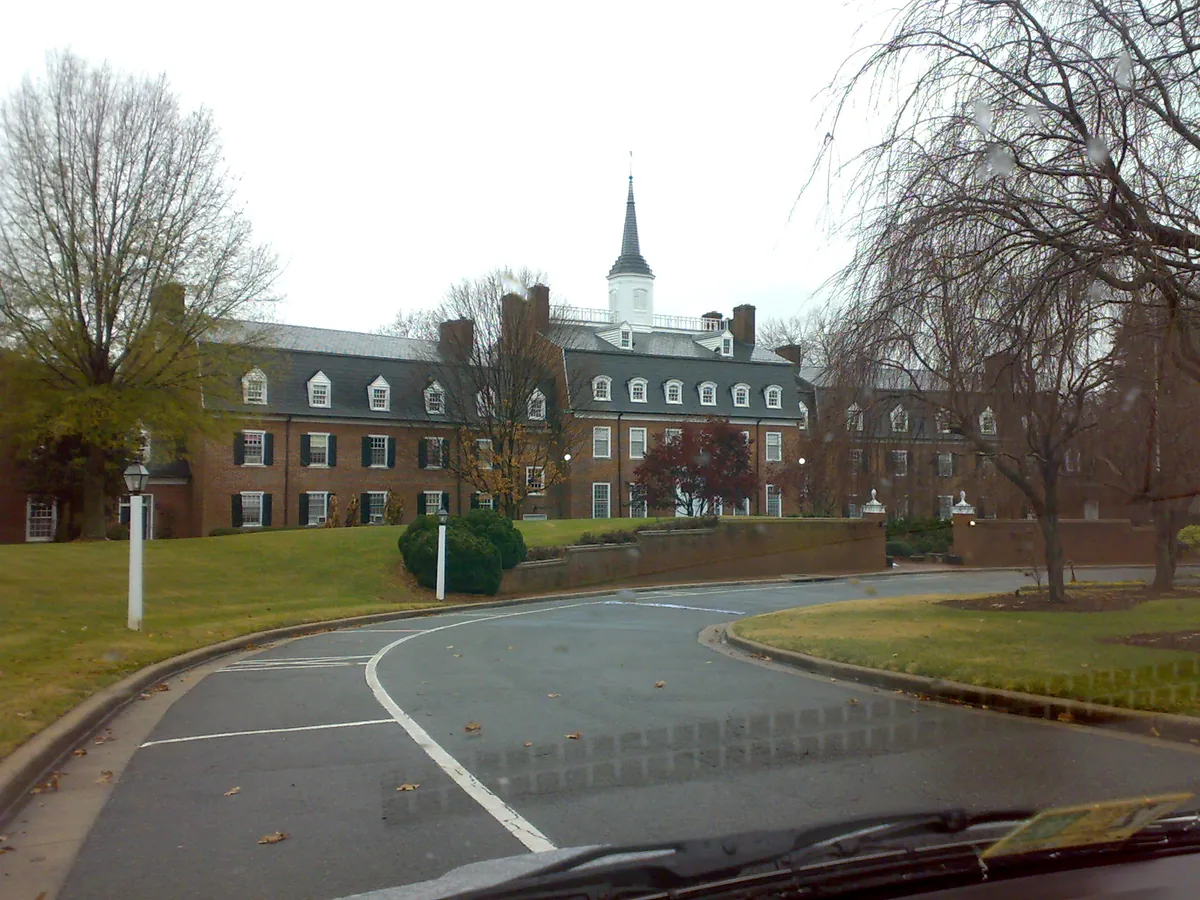 8Historic Site·1772Salem College and Salem Academy
The oldest female educational institution still operating as a women's college in the United States sits inside a historic Moravian district, which tells you something about what kind of place this is. Salem College traces its founding to April 22, 1772, when the Moravian community established a girls' school in Salem, North Carolina. Elisabeth Oesterlein, who had traveled from Bethlehem, Pennsylvania, was its first teacher. The school was run in its early years by the Single Sisters — the unmarried women of the Moravian community — who lived together and were economically self-sufficient, which was uncommon for women in the eighteenth century. The record of who actually attended tells you what kind of institution this was willing to be. Moravian records show that two enslaved African-American girls were accepted at Salem — Hanna in 1785, and Anna Maria Samuel in 1793. In 1826, Sally Ridge, daughter of Cherokee leader Major Ridge, became the first American Indian student. Jane Ross, daughter of another Cherokee chief, also attended — and left in 1838 to join her family on the Trail of Tears. The oldest building on campus is the Single Sisters' House, constructed in 1785 and the oldest building in the United States dedicated to the education of women. Its original 1785 datestone is in the fourth-floor attic. During a renovation completed on April 22, 2007 — the institution's 235th anniversary — workers uncovered graffiti that had been plastered over. The building shares the campus with Salem Academy, which carries a North Carolina state historic marker. That continuity — from a Moravian settlement school to an operating college with more than 250 years of unbroken connection to its founding community — is the reason to go.