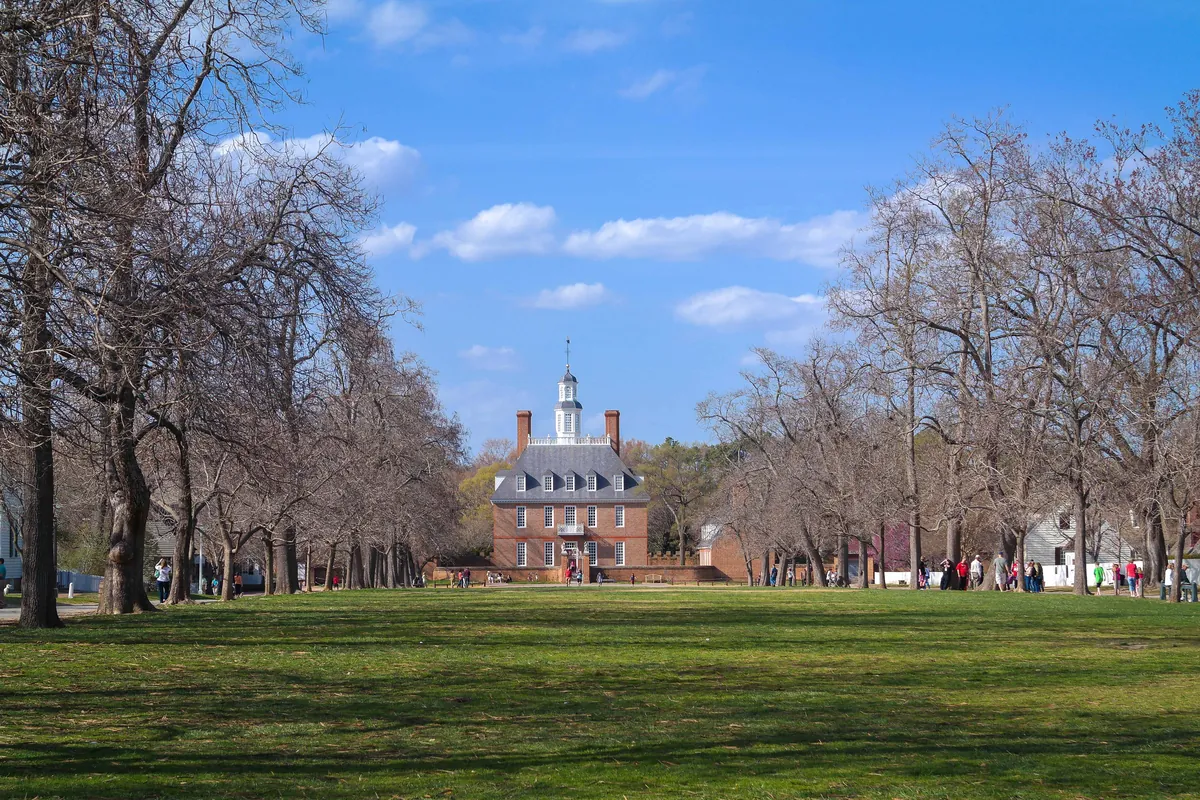
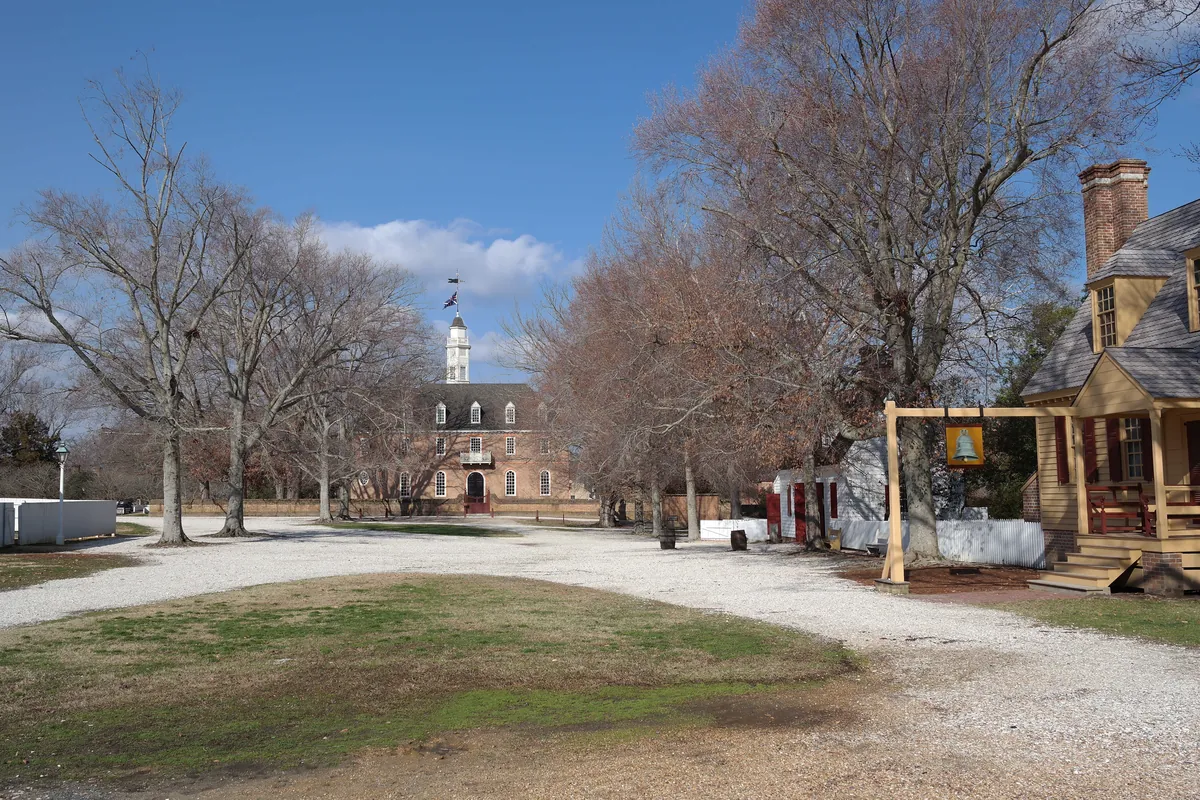
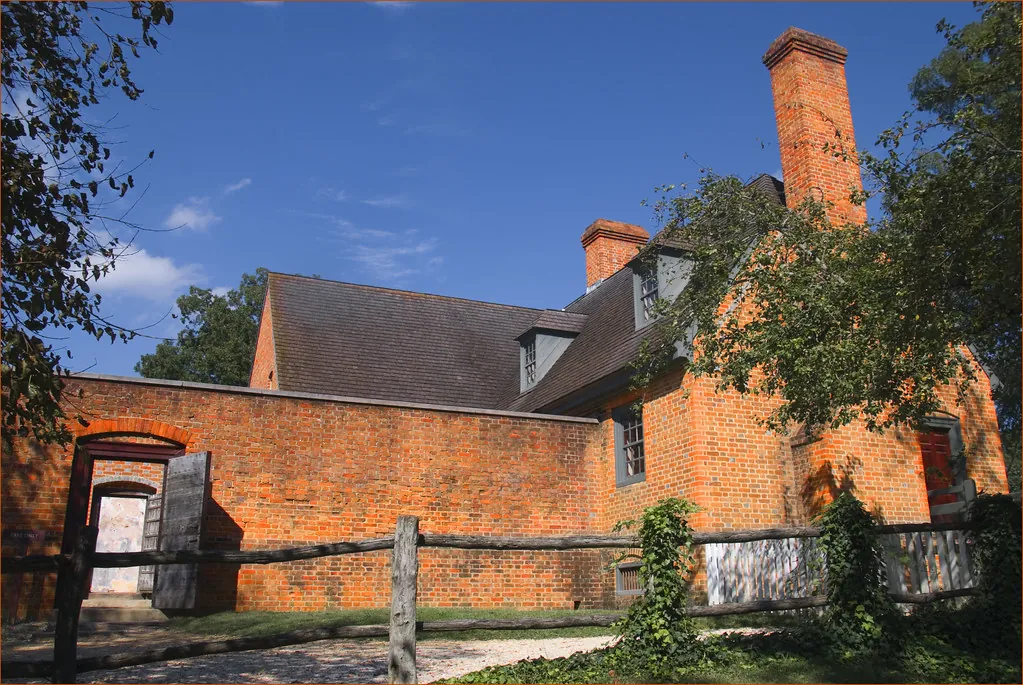
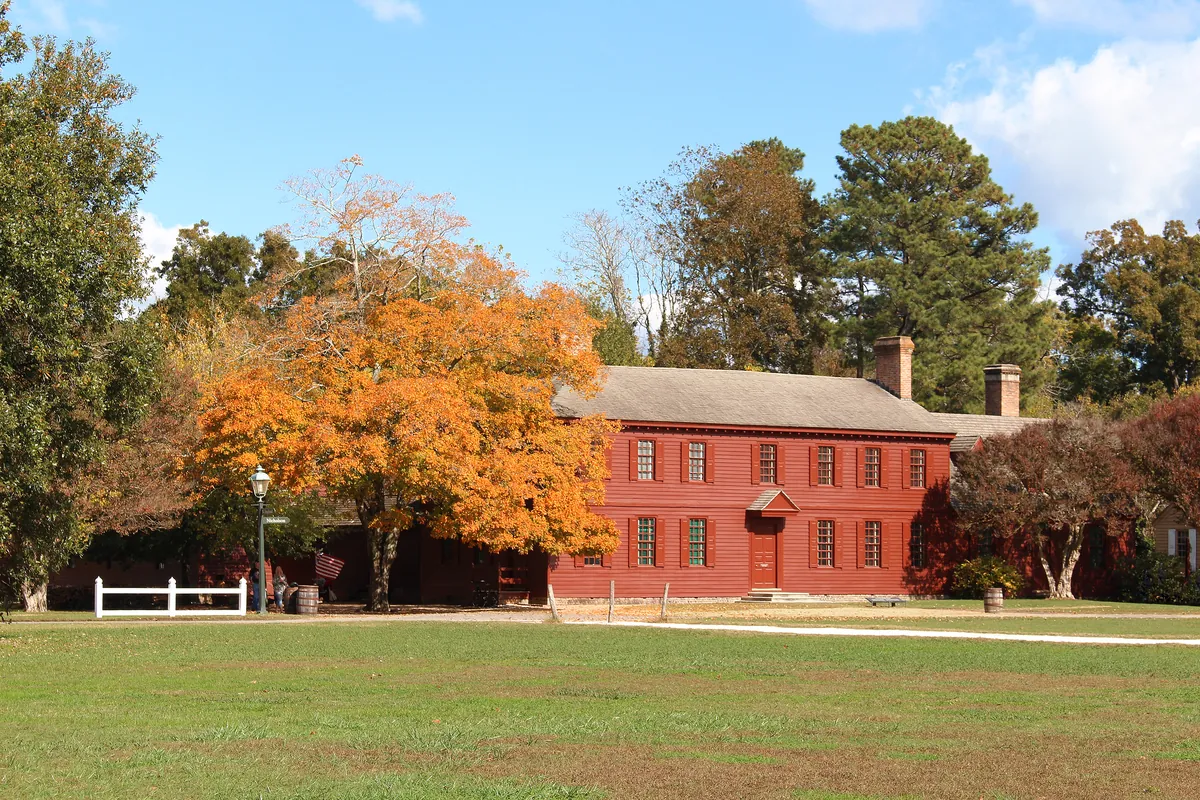
Middle Plantation became Williamsburg in 1699, and the renamed city wasted no time building an argument in wood and brick. The Governor's Palace made that argument loudest — seventy years as the physical address of British authority in Virginia, used by Washington and Rochambeau before it burned in 1781 in the chaos after Yorktown. The H-shaped Capitol made it another way: Patrick Henry delivered his Caesar-Brutus speech in that building in 1765, and Washington, Jefferson, and Richard Henry Lee all worked those rooms before Virginia declared independence here on June 29, 1776. The Public Gaol, built 1704 and still standing, held a different accounting — debtors, the enslaved, Tories, Continental soldiers, and Blackbeard's surviving crew after 1718, all shackled in the same walls. And the Randolph house, built around 1715, held the republic's founding contradiction without flinching: the man who presided over the First Continental Congress in 1774 owned enslaved people who lived and worked on that property. Williamsburg kept all of it.