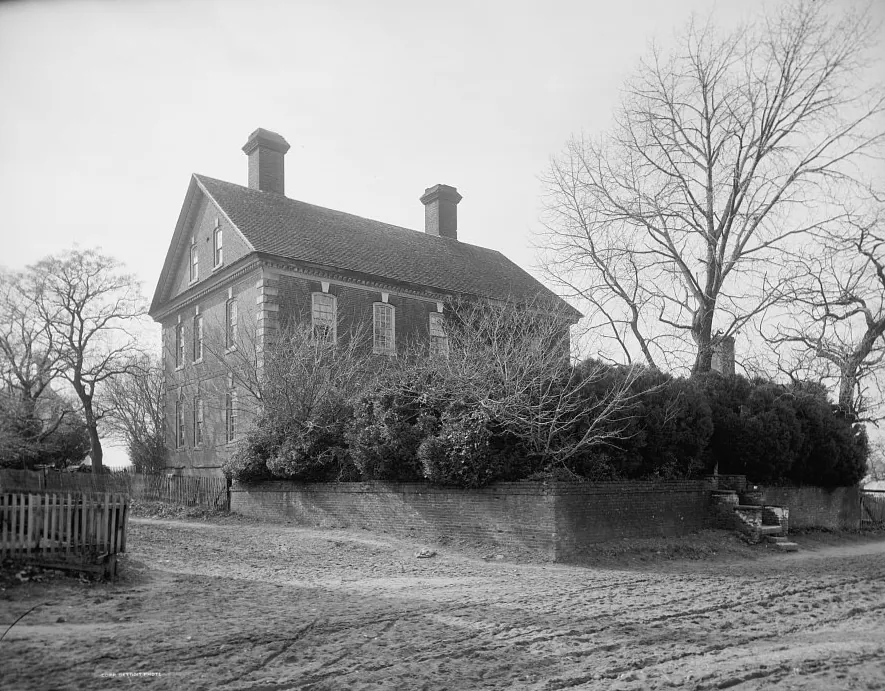
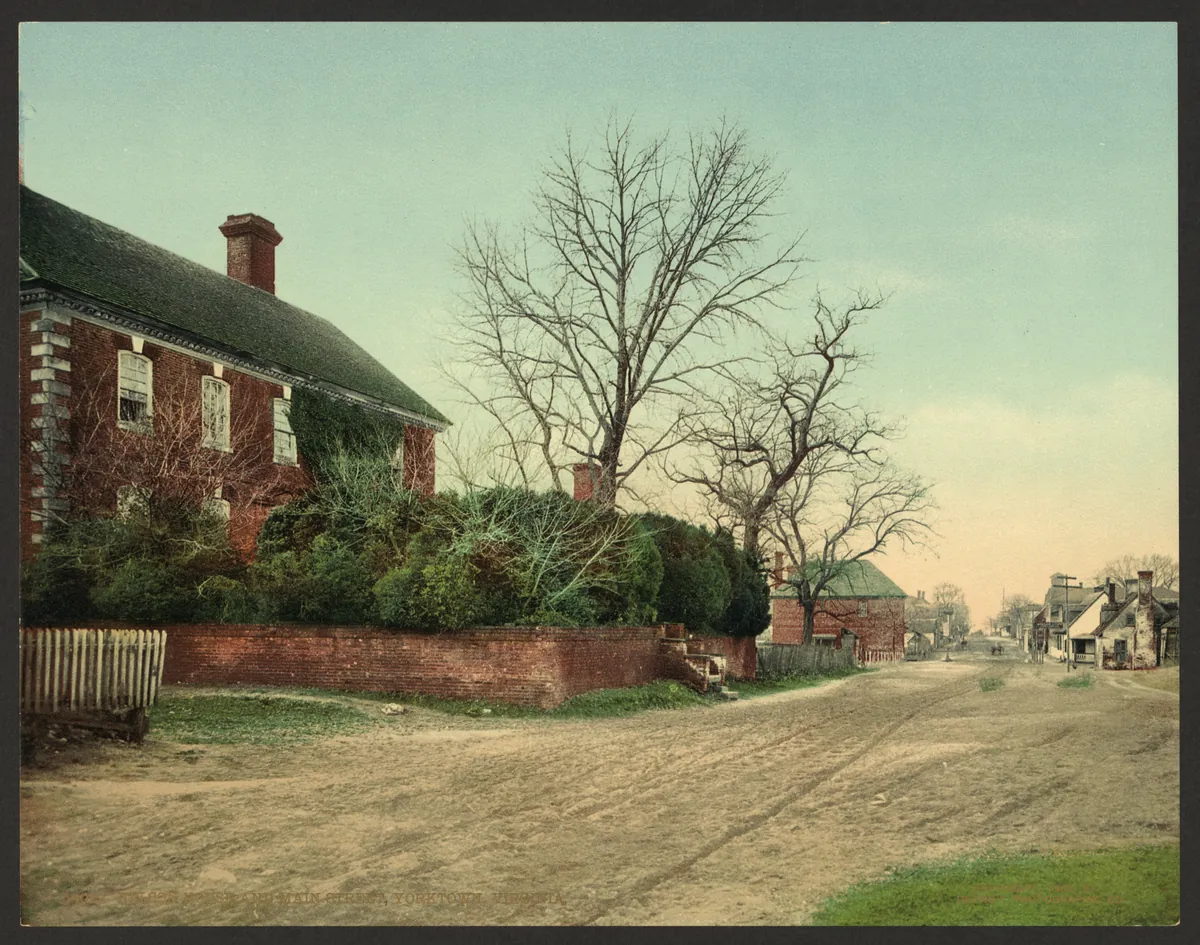
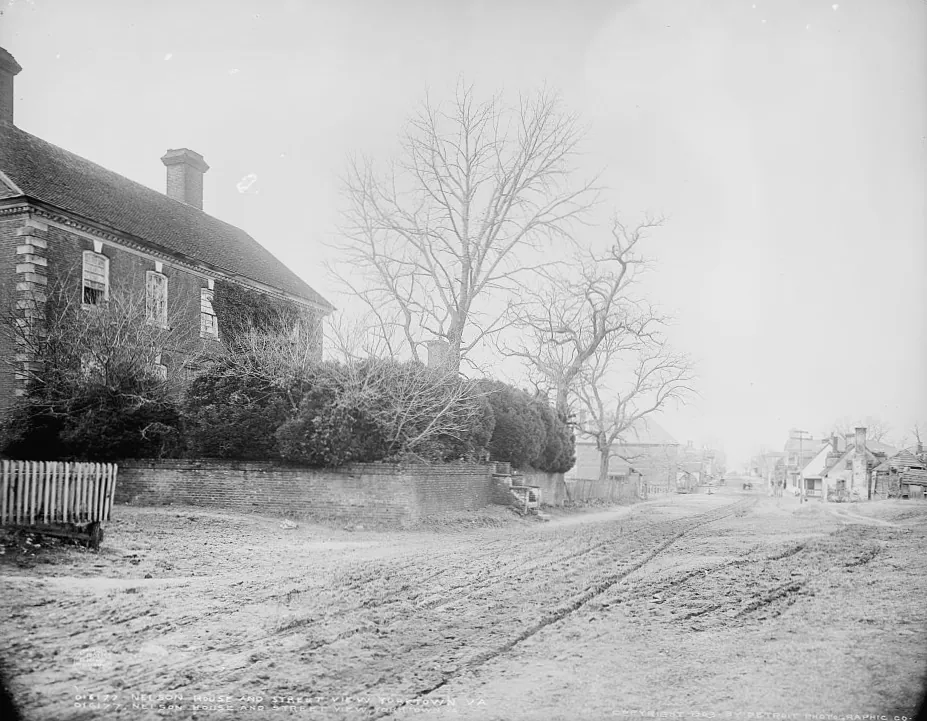
The house was built around 1730, and it belonged to a man who would sign the Declaration of Independence, serve as Virginia's governor, and command the militia at the final battle of the Revolution. That's Thomas Nelson Jr.'s biography in one sentence. The house in Yorktown tells a harder story.
Cannonball damage is still visible in the east wall — a physical fact the building has carried for nearly two and a half centuries. How one cannonball made it to the inner side of an outer wall, historians still don't fully understand.
The legend, though, is what stays with you. Local tradition holds that Nelson himself directed French cannon fire at his own home during the siege of Yorktown, because British officers had quartered there — that he offered a reward to the first man to hit it. Whether that story is documented history or something that grew in the telling, the wall still bears the mark. The house did not escape the war. That's the point.
It's maintained by the National Park Service, which means it endures. Go see what a man's choices left standing.
- ·1730 Georgian mansion of Thomas Nelson Jr. — Virginia governor, signer of the Declaration of Independence, and commander of Virginia militia at Yorktown. Nelson reportedly directed French cannon fire at his own home during the siege because British officers had quartered there. Cannonball damage still visible in the east wall.
More archive
Memories
Editorial content compiled with AI assistance. Place details verified against public records.