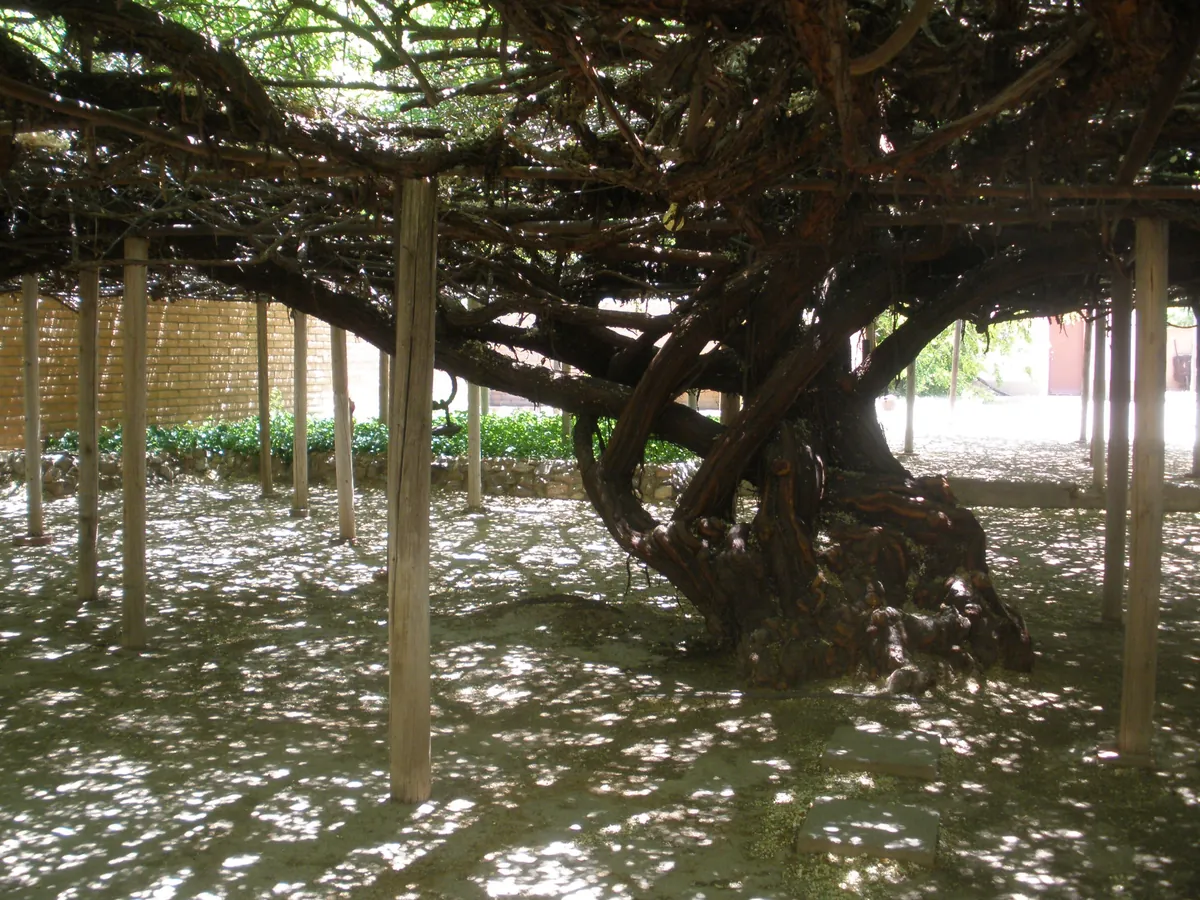
In spring 1885, a cutting of White Lady Banksia rose traveled from Scotland to a woman named Mary Gee, who passed one along to Amelia Adamson, keeper of a Tombstone boarding house. Adamson planted it. The desert did the rest.
By 1920, when James and Ethel Robertson Macia bought the property — then known as the Arcade Boarding House — the rose had grown large enough that they built a trellis to hold it. The rose kept going. In 1933, writer John Hix declared it the world's largest rose tree. Ripley's "Believe It or Not" featured it in 1937. The Macias renamed the place the Rose Tree Inn in 1936. Their family had helped settle Tombstone during its silver-boom years and never left — through boom, bust, the long quiet after the mines gave out. In 1964, their children and grandchildren opened the Rose Tree Museum as a tribute to those pioneer years, to James and Ethel, to the families who made Tombstone the town too tough to die.
The rose still lives in the backyard. Proprietress Dorothy Devere gave it the nickname that stuck: Tombstone's Original Shady Lady. It blooms roughly six weeks each spring, mid-March through April, when the museum holds its annual Rose Festival. Inside, you'll find memorabilia from Tombstone's early days, Robertson-Macia family collections, and dioramas of the Lucky Cuss Mine and the gunfight at the O.K. Corral. The museum's descendants still live in Tombstone and still maintain the place — which tells you something about what this building actually is.
Come during bloom season. The shade is real. The history inside runs deeper than the gunfight, which is the whole point.
- ·Coords from HMDB marker (31°42.723'N 110°4.043'W = 31.71205, -110.06738) + Google Maps. Rose: cuttings of the White Lady Banksia sent from Scotland to Mary Gee in spring 1885; she gave one to boarding-house keeper Amelia Adamson. Ethel Robertson Macia & husband James bought the Cochise boarding house in 1920 and built the trellis; Ripley's 'Believe It or Not' featured it in 1937; John Hix first called it the world's largest rose tree in 1933; renamed Rose Tree Inn 1936; museum opened 1964. Blooms ~6 weeks each March-April; annual Rose Festival. 5+ specific facts.
Memories
Editorial content compiled with AI assistance. Place details verified against public records.