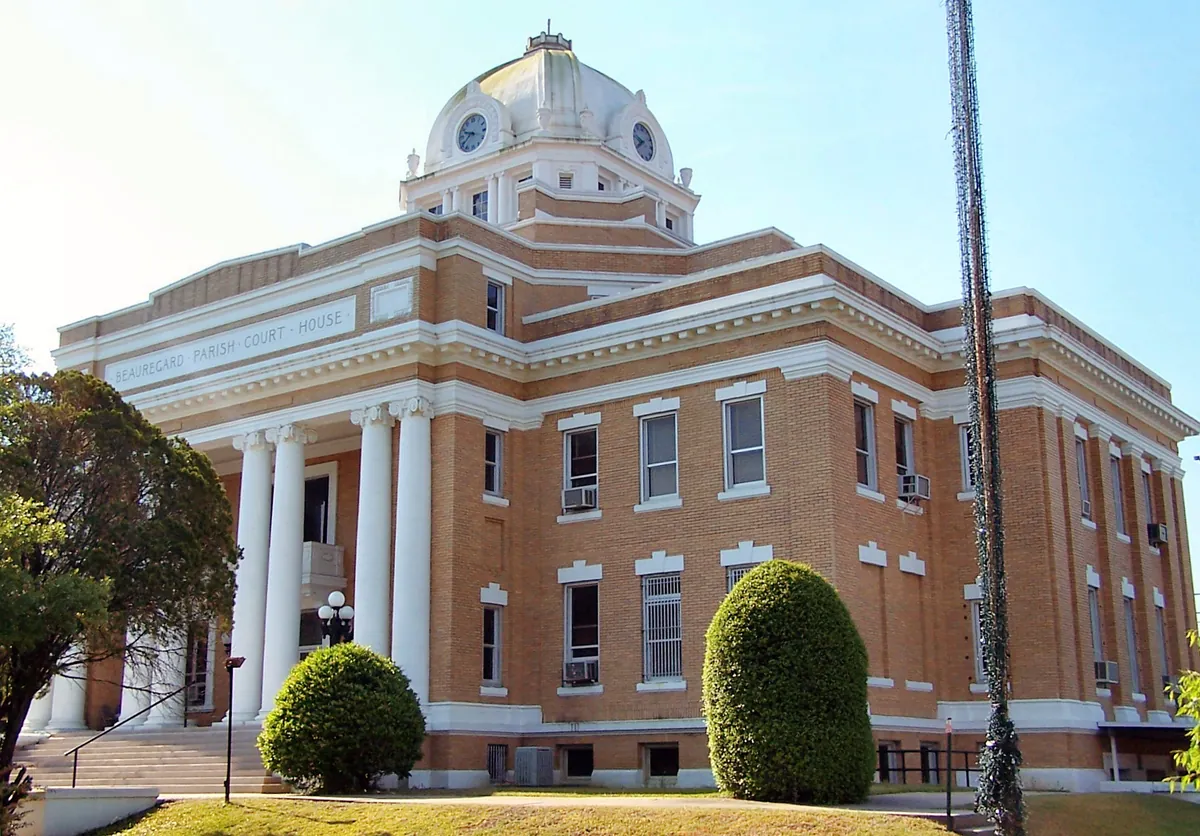
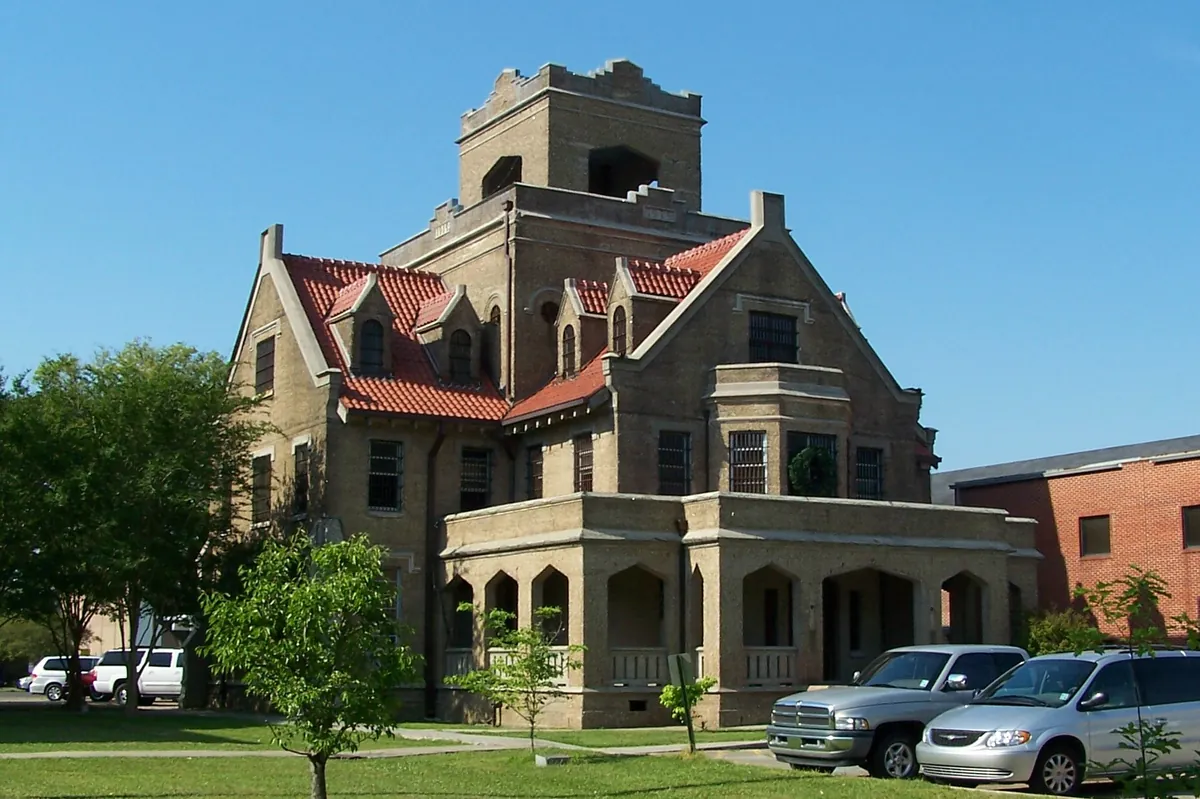
The Kansas City Southern Railway platted DeRidder in 1898 and named it for a Dutch investor's sister-in-law — a town conjured from longleaf pine and the promise of moving lumber south. By 1920 the population had reached 5,400, nearly every paycheck tied to sawmill and tie-mill work. When the longleaf ran out by the mid-1930s, the mills closed within months of each other. What the boom left behind was a grid, a courthouse square, a Kansas City Southern depot, and a jail built in collegiate Gothic style — the kind of architecture reserved for colleges and churches, here holding prisoners behind walls thirteen to twenty-one inches thick. That jail saw the only double hanging in Beauregard Parish history, on March 9, 1928. The gallows remain intact on the third floor. The historic district and the jail are both on the National Register. Ten minutes on foot shows you exactly how much town a timber boom could buy, and how much of it stayed.