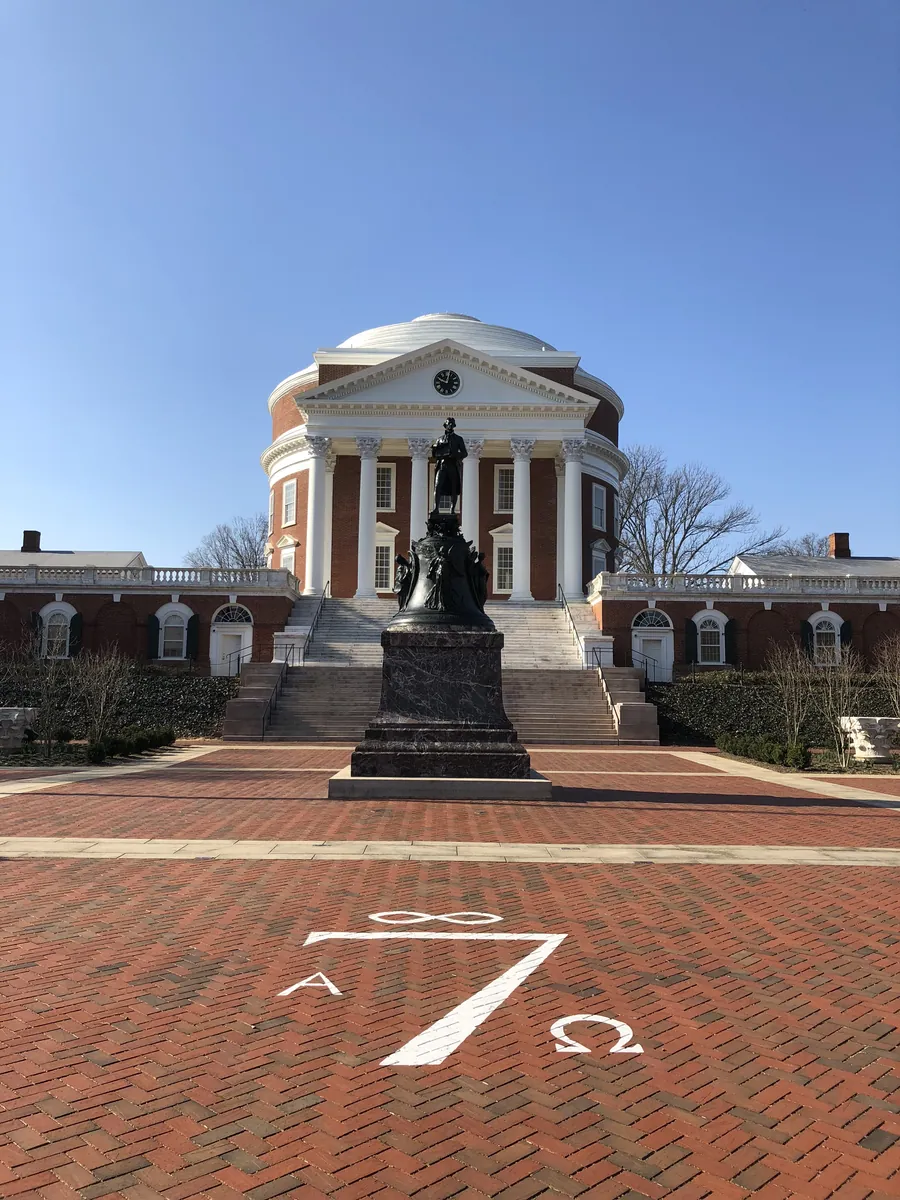
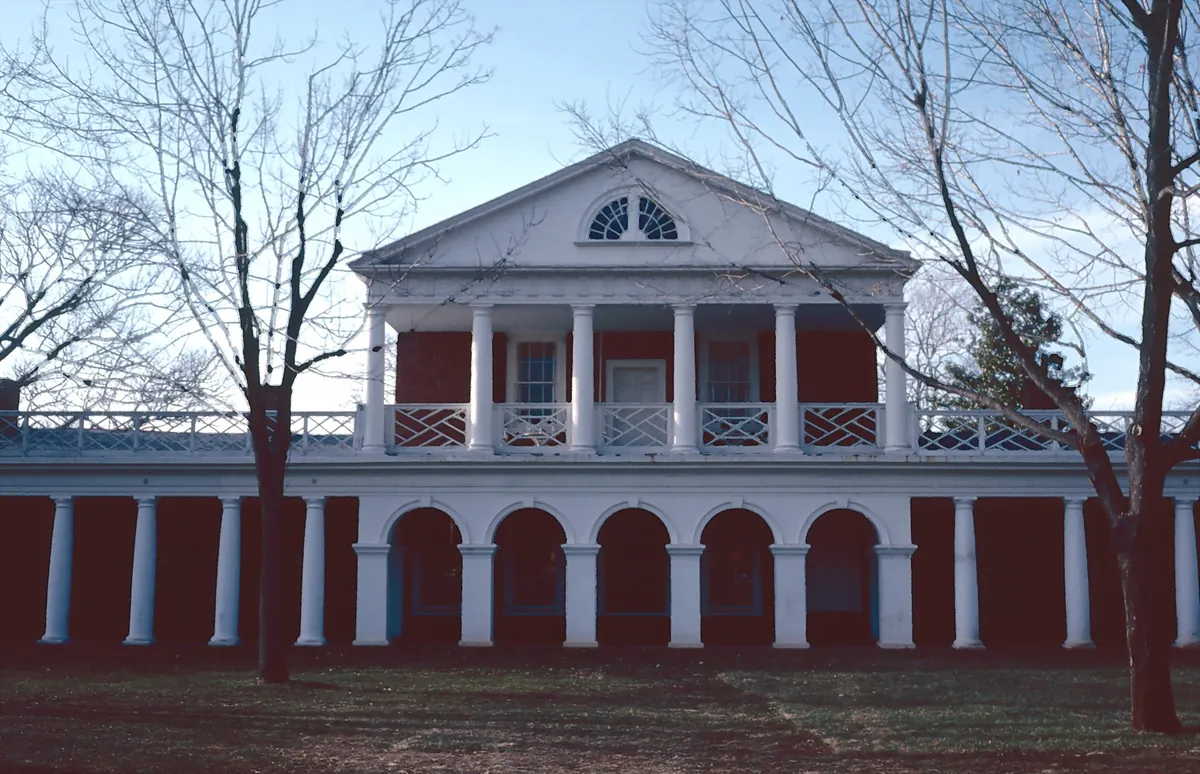
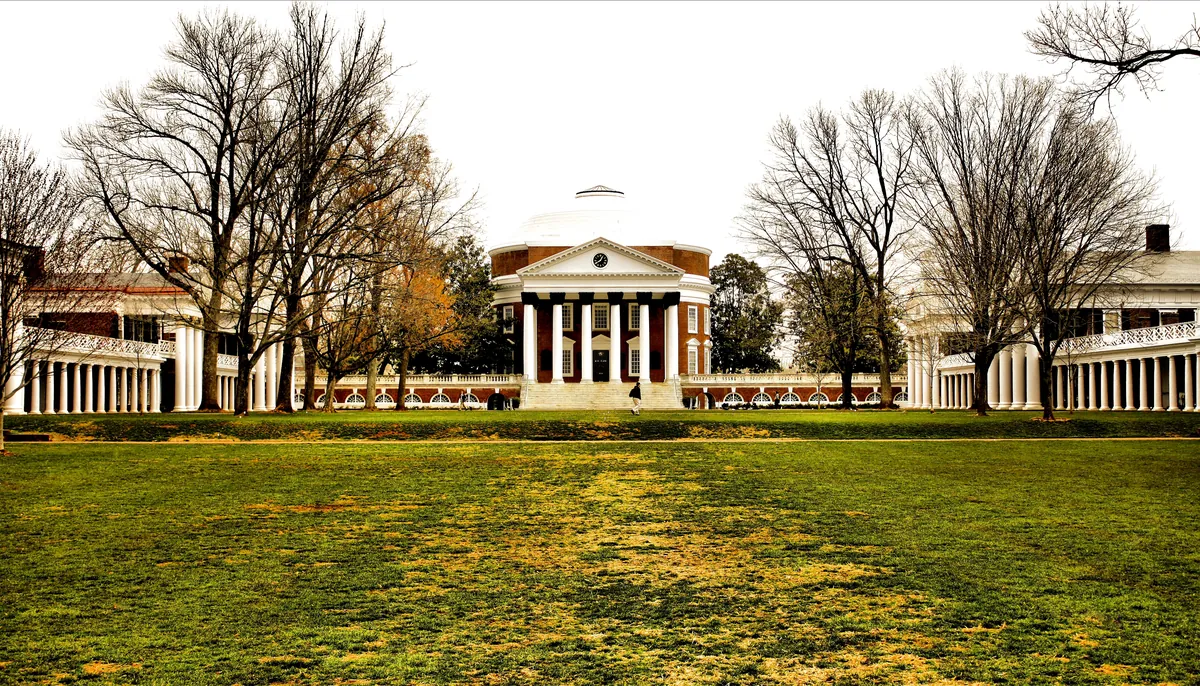
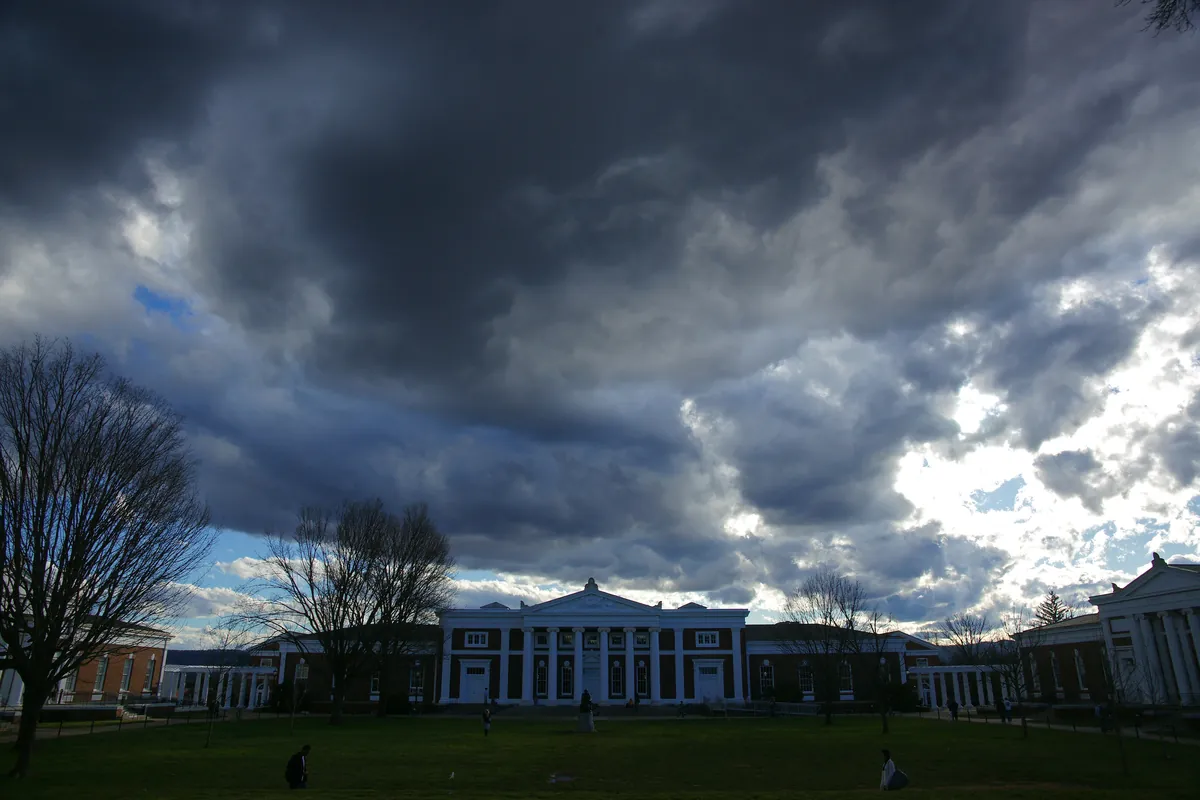
James Monroe laid the cornerstone for Pavilion VII on October 6, 1817 — the first of ten pavilions along Jefferson's Lawn, the start of the Academical Village that became the University of Virginia. Jefferson wanted a library at the center, not a church. He modeled the Rotunda on the Pantheon in Rome, half its diameter, and put students and faculty side by side along a terraced green that opens at one end to the Blue Ridge Mountains. Enslaved laborers built it. Jefferson died in 1826, before the Rotunda was finished, and three years later, in January 1829, thirty-three enslaved people from Monticello were auctioned at the Eagle Hotel to settle his debts. The Lawn still holds students in their final-year rooms, the fireplaces and outside bathrooms Jefferson drew, unchanged. UNESCO named the Lawn and Monticello a World Heritage Site in 1987. The mountains he left open are still there.