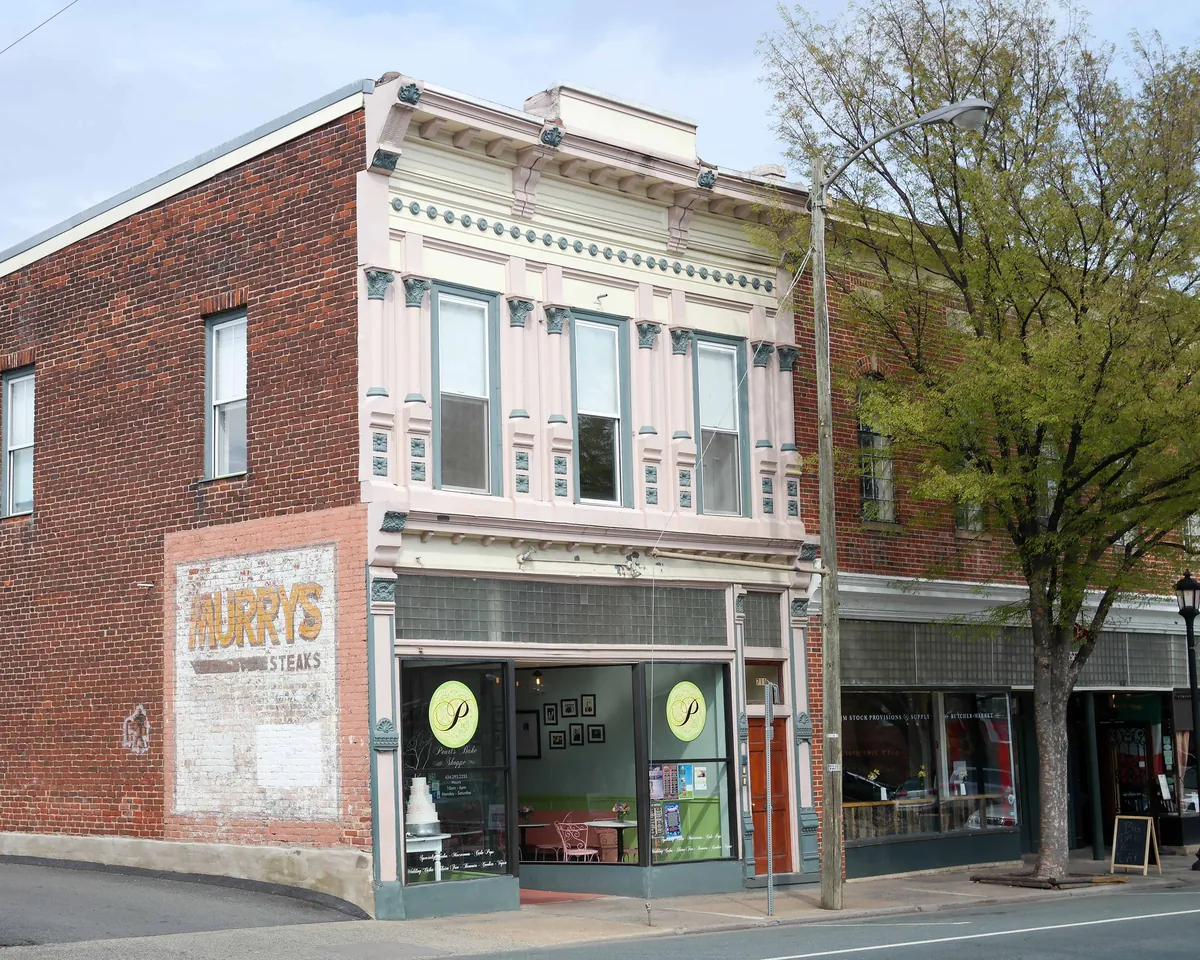
West Main Street runs between Charlottesville's downtown and the University of Virginia, and that geography is the whole story. For well over a century this corridor moved people — by carriage, rail line, trolley, and automobile — and the buildings it collected along the way tell you who those people were and what they needed. Commercial storefronts, boarding houses, hotels, mixed-use retail: the district holds contributing structures built across a span from 1820 to 1970.
What the district preserves most honestly is the record of Charlottesville's Black community. Small-scale retail services along this route served both African American and white residents going back to the 19th century. Three large African American churches anchor the corridor, and several historic Black neighborhoods border it. The Inge building — purchased in 1890 by George P. Inge, an African American businessman who ran a grocery and lived there for years — is the district's most specific inheritance. His family eventually lost the building. It later survived a fire and became a restaurant. The building still stands.
That continuity, contested and imperfect, is what the designation protects.
- ·NRHP-listed.
Memories
Editorial content compiled with AI assistance. Place details verified against public records.