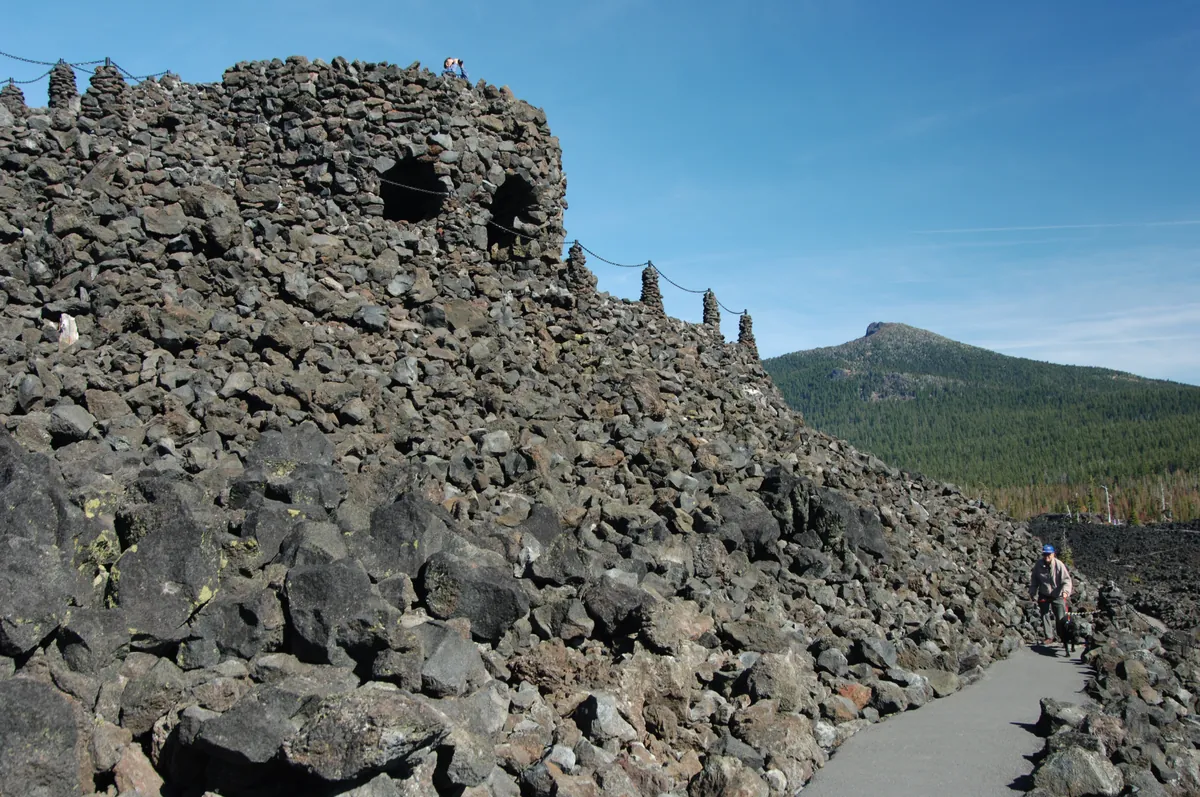
The foreman died the year before it was finished. That's who they named it for — Dee Wright, Forest Service packer and crew foreman, 24 years in the backcountry, gone in 1934. His crew completed the observatory in 1935 anyway, cutting and stacking basaltic andesite lava pulled straight from the ground they were building on.
The Civilian Conservation Corps built this during the Depression, at the summit of McKenzie Pass, 5,325 feet up in the Cascades. The viewing windows aren't decorative — each one is cut to frame a specific peak. On the roof, a 36-inch bronze peak finder identifies the surrounding mountains by name. Mount Hood sits 78.5 miles to the north and still makes the list on a clear day.
The lava flows surrounding the structure date back 2,000 to 2,700 years. The highway below follows an 1860 wagon route. None of this was made comfortable for early travelers — the lava beds forced most of them to find another way over the range. The observatory doesn't soften that history. It just gives you a better view of it.
Memories
Editorial content compiled with AI assistance. Place details verified against public records.