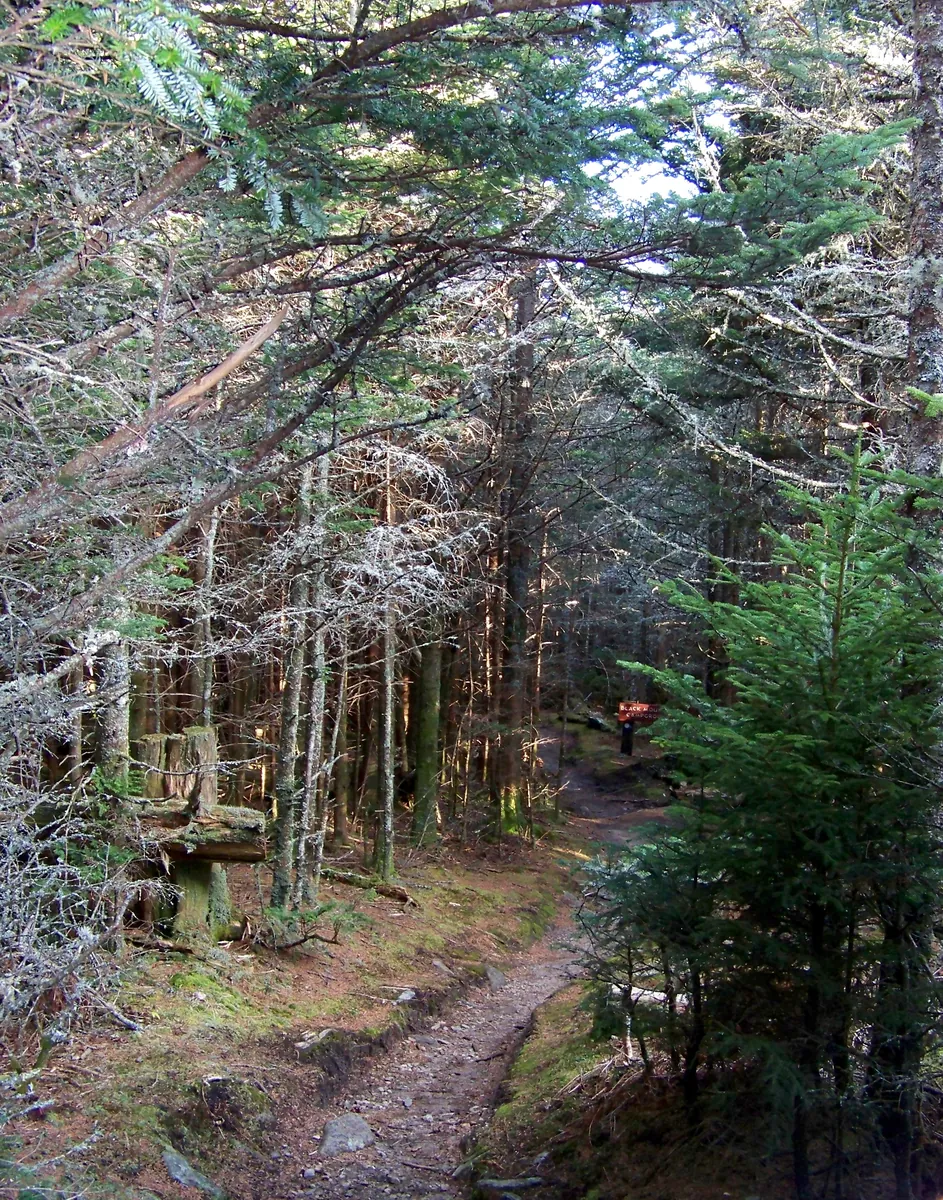
The Mountains-to-Sea Trail spans 1,175 miles across North Carolina, from Clingmans Dome to Jockey's Ridge — the state designated it officially in 2000. The 31-mile stretch through Asheville carries a peculiar footnote: sixteen of those miles follow what George Vanderbilt built as a bridle path in the 1890s, a private route linking Biltmore House to his Buck Spring Lodge near the summit of Mount Pisgah. They called it the Shut-In Trail.
Vanderbilt's original path was never meant for public walking. It was infrastructure for moving between properties — estate business dressed as wilderness access. That it now anchors a segment of the state's longest trail is the kind of conversion that happens when private holdings outlive their makers. The bridle path becomes the hiking corridor. The carriage route becomes the National Recreation Trail.
This Asheville section — Segment 7 in the trail's numbering — crosses the French Broad River and continues along the Blue Ridge Parkway to the Folk Art Center. Trailheads appear at the Folk Art Center itself, at the North Carolina Arboretum, and at multiple Parkway overlooks, offering entry points for day hikers unwilling to commit to the full distance between mountains and sea.
The trail holds National Recreation Trail designation, a federal acknowledgment of established use and maintained access. What it doesn't promise is solitude — the Parkway draws crowds, and the overlook trailheads see weekend traffic. But the Shut-In Trail portion, the old Vanderbilt section threading through forest between the estate's former outposts, still reads as backcountry even when it's not. Sixteen miles of walking someone else's commute, a century after the fact.
- ·National Recreation Trail designation. Trailheads at Folk Art Center, NC Arboretum, multiple Parkway overlooks.
Memories
Editorial content compiled with AI assistance. Place details verified against public records.