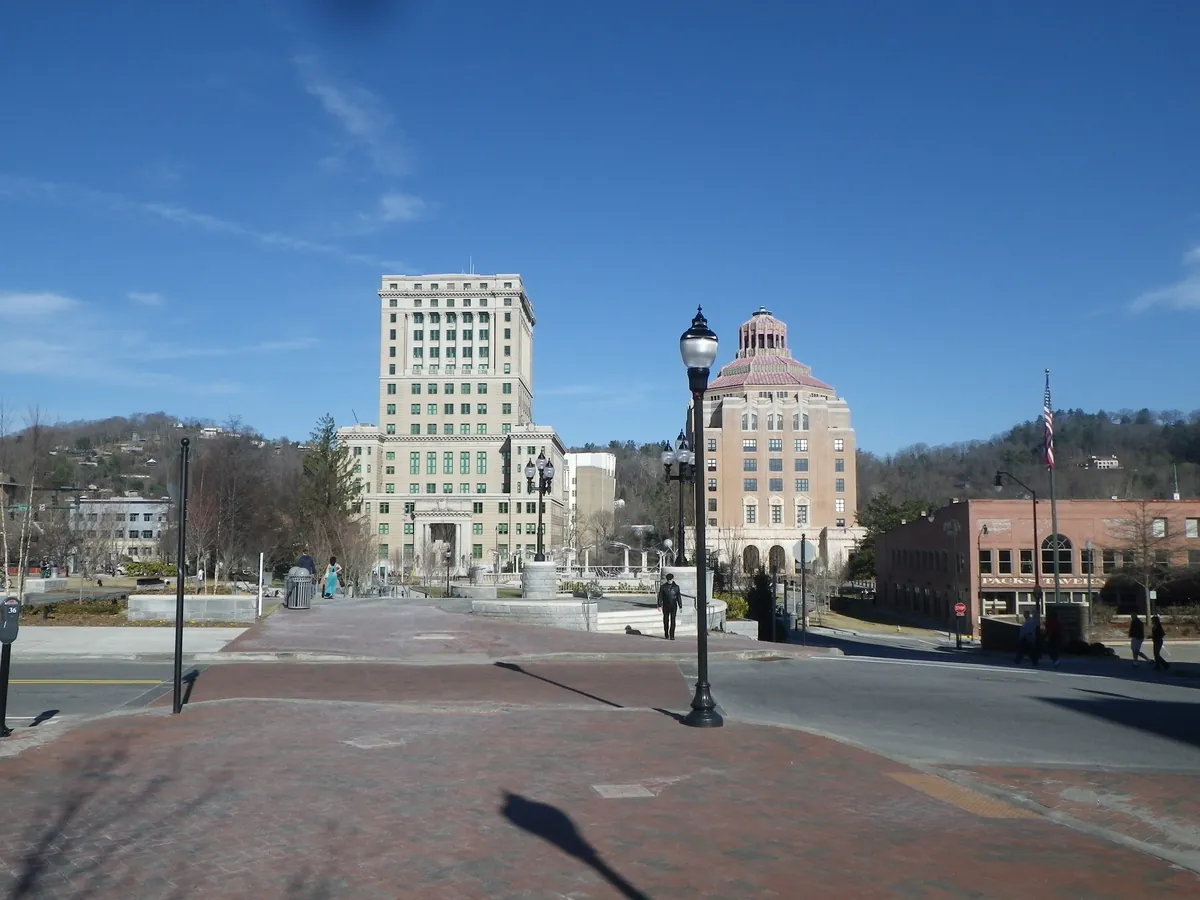
The land where Pack Square stands — two ancient Cherokee trails crossing on a plateau — was hunting and meeting ground, what the Cherokee called Untokiasdiyi: "Where they race." Spanish explorer Hernando de Soto recorded a town at the river confluence in 1540; his expedition brought the first Europeans and the diseases that decimated the native population. European Americans arrived in 1784. Colonel Samuel Davidson built a log cabin at Christian Creek; Cherokee hunters resisting encroachment killed him soon after. His family fled on foot through the night. By 1790 the U.S. census counted a thousand settlers here, the Cherokee excluded as a separate nation. The town incorporated in 1797 as Asheville. The Buncombe Turnpike, cut in 1828, followed long-established Indigenous routes. Today the Eastern Band of Cherokee Indians hold the Qualla Boundary an hour west — 56,600 acres, descended from some eight hundred who hid along the Oconaluftee River in 1838 and avoided the Trail of Tears.
- ·No standalone Asheville-specific Cherokee landmark — the EBCI cultural sites at Cherokee NC are the destination interpretation point. Worth including as historical context.
Memories
Editorial content compiled with AI assistance. Place details verified against public records.