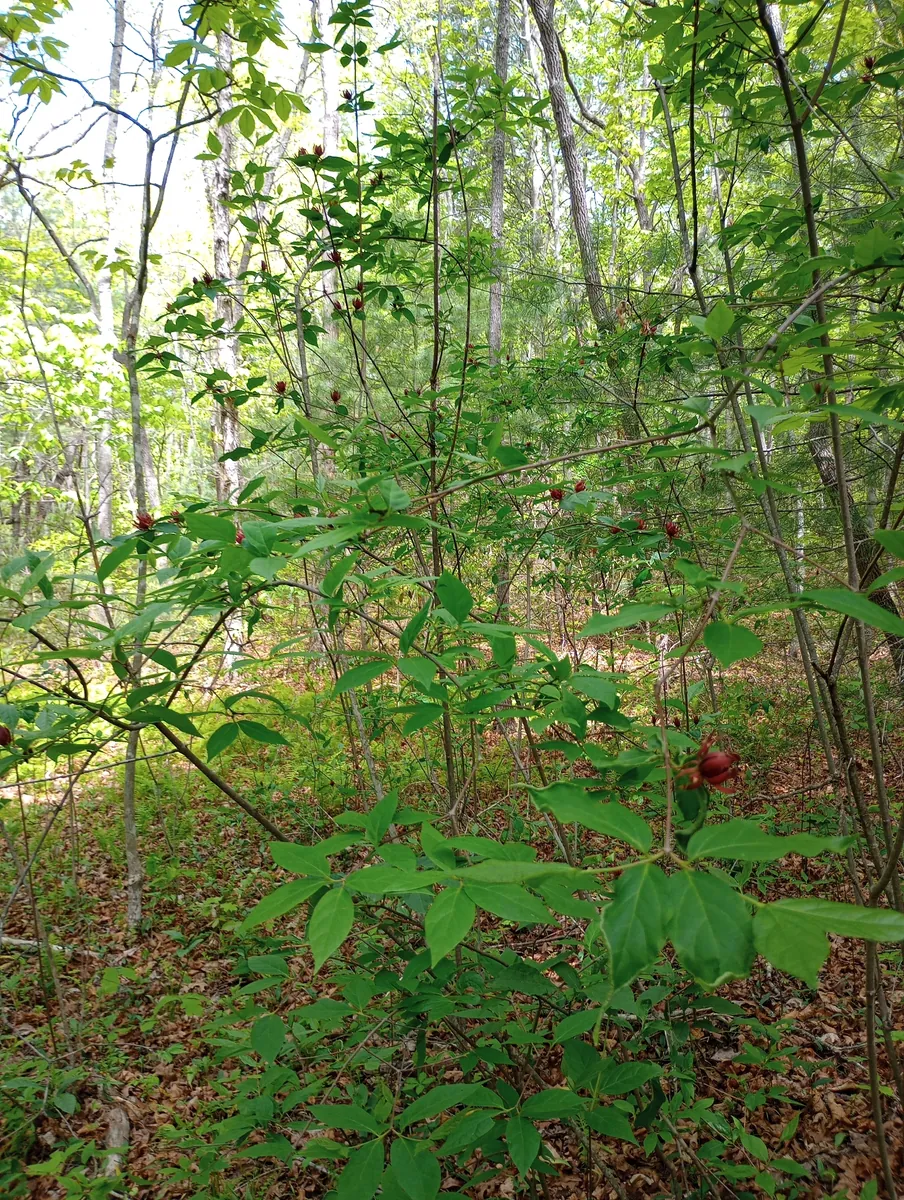
The oldest federal experimental forest east of the Mississippi sits in the Pisgah backcountry a few miles southwest of downtown Asheville — 6,000 acres established in 1925 to answer the question of what happens after you ruin a forest and whether you can bring it back. The land had been logged, grazed, burned. George Washington Vanderbilt II had bought 1,383 acres of it in 1900 at five dollars an acre for a hunting preserve; before that it had been farmland and mill country, self-sufficient in the way mountain communities were when they had no choice. A century later, the rehabilitation work holds. The forest is dense again. The creeks run clear. The trails — 35 miles of them, open to mountain bikers, hikers, runners — cut through second-growth hardwood that now looks like it was always meant to be here.
The research never stopped. Study sites are marked; you're asked not to disturb them. But the practical truth is that most people come here to ride. Bent Creek is one of Asheville's top mountain-biking destinations — technical enough to matter, accessible enough that you don't need to plan a full day around it, close enough to town that you can be on the trail in twenty minutes. Lake Powhatan, the swim beach and picnic area near the trailhead, anchors the southern end. The North Carolina Arboretum shares a boundary to the east.
What makes the place work is the layering. The land was wrecked, then studied, then opened. The trails were built for access, not glory. You ride through a working forest that remembers when it wasn't one. The federal foresters still have first claim on the ground, but they share it now. The experiment proved something: cutover land can heal if you let it. The question after that is whether people will come back and whether they'll stay careful. So far they have.
- ·Adjacent to NC Arboretum. One of Asheville's top mountain-biking destinations.
Memories
Editorial content compiled with AI assistance. Place details verified against public records.