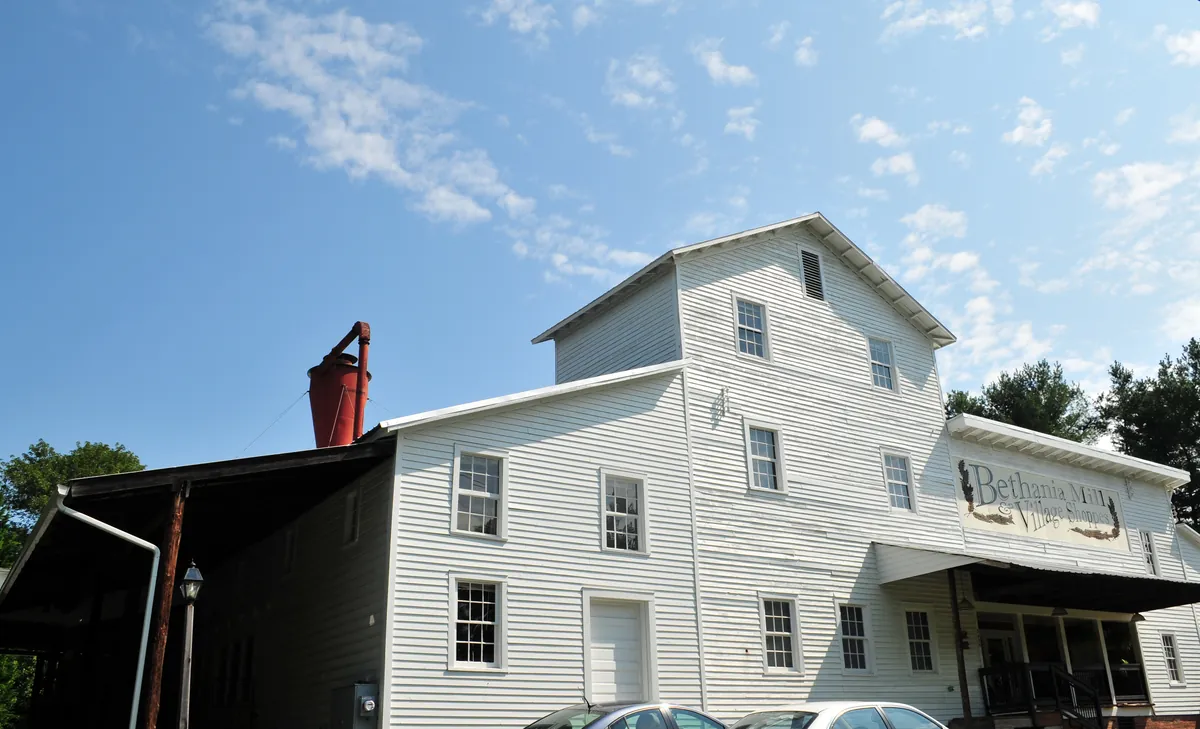
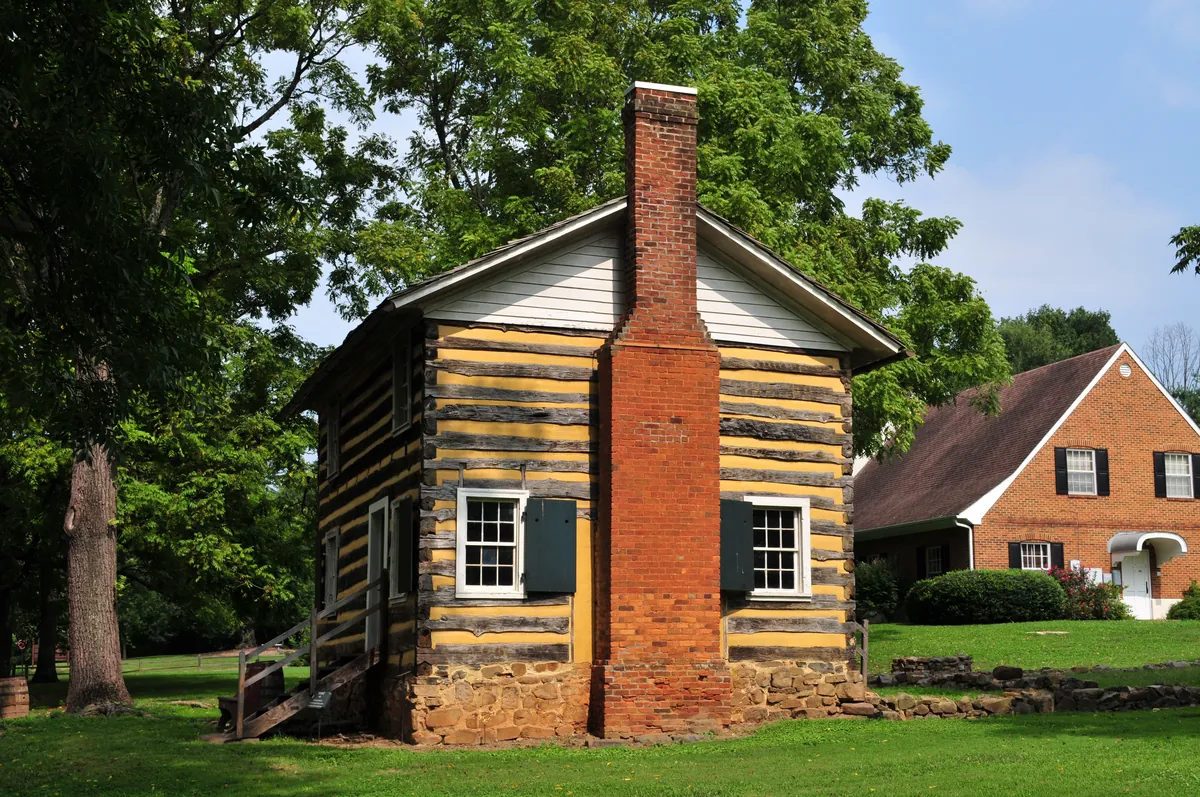
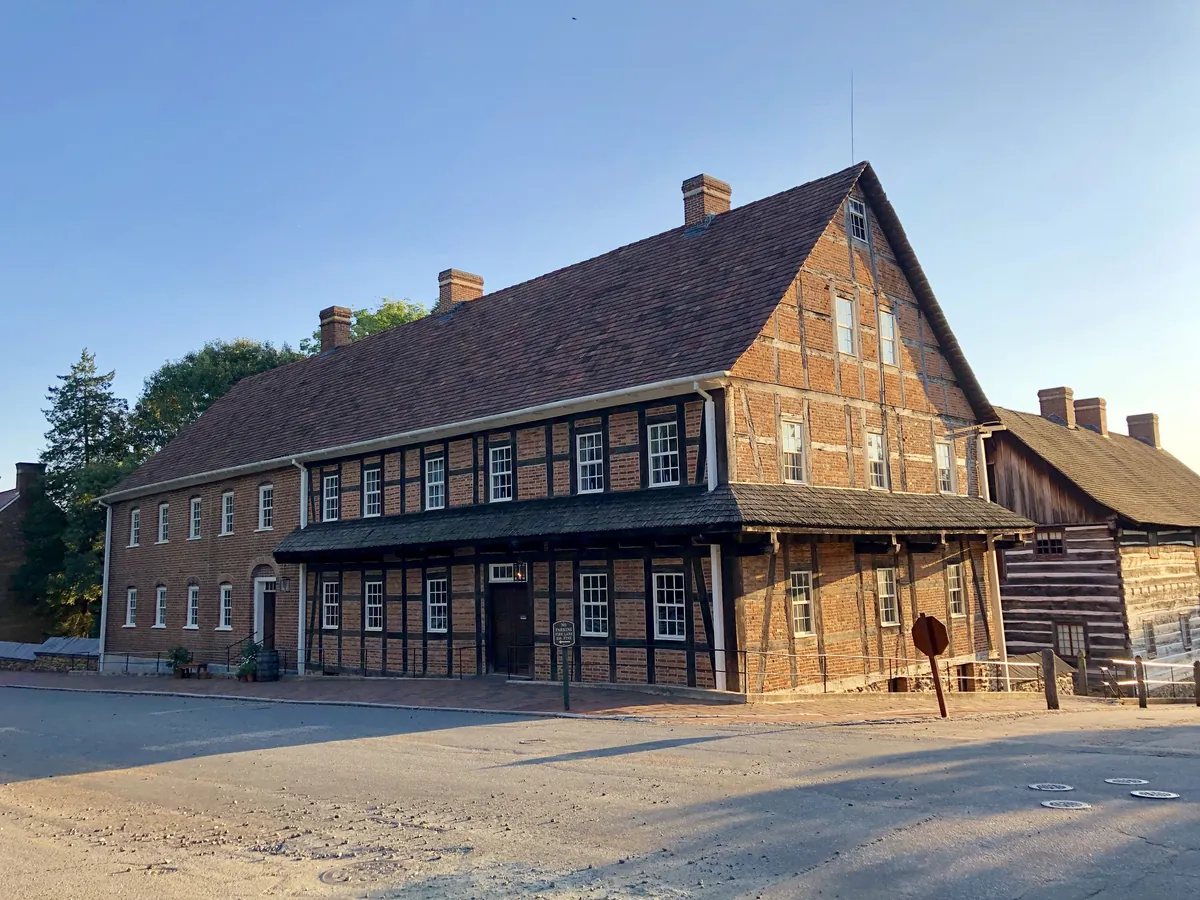
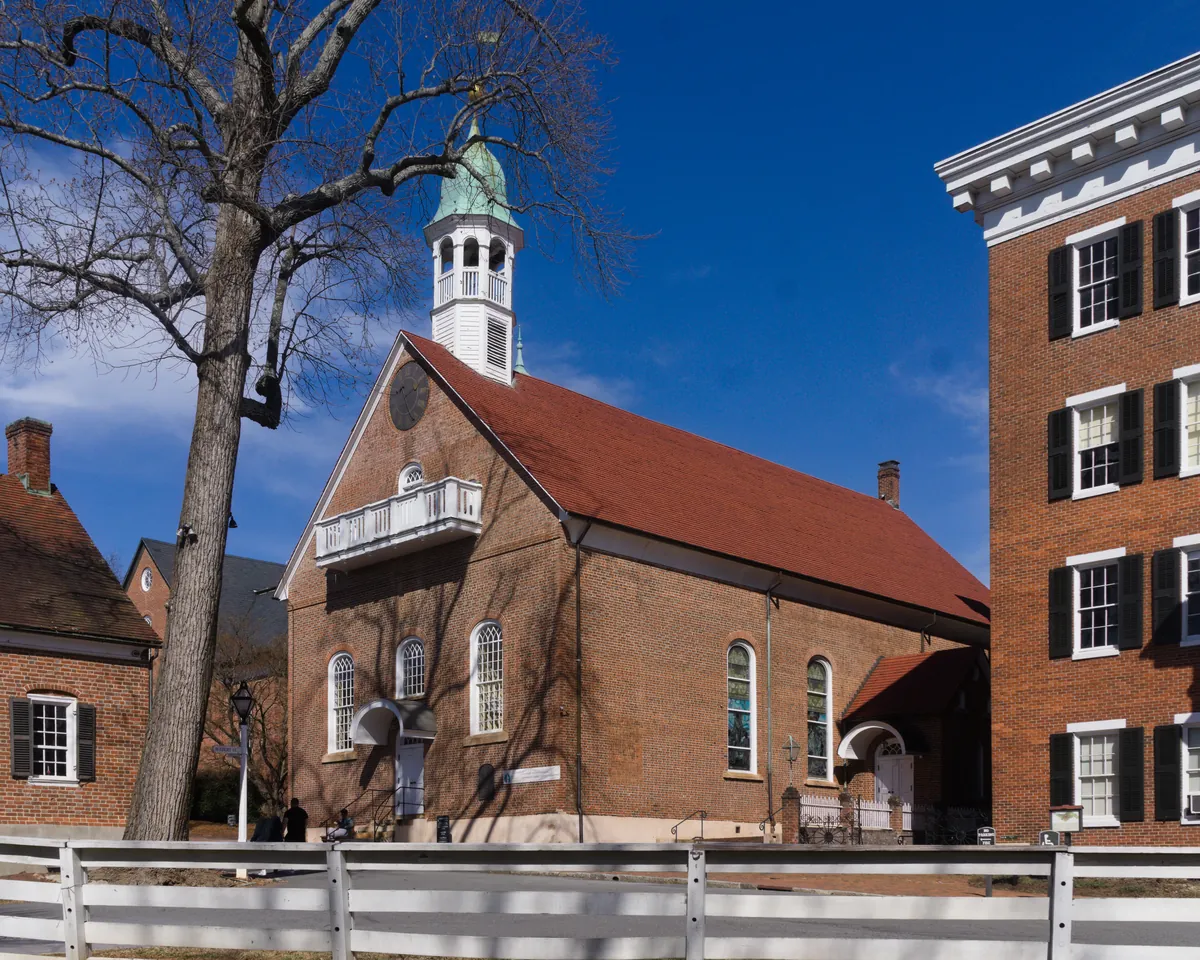
Fifteen Moravians came down the Great Wagon Road in November 1753 and stopped at a place in the Muddy Creek forks, calling it Bethabara — house of passage. They had purchased nearly 99,000 acres they named Wachovia, and they meant to build something deliberate on it. By 1766, Salem was laid out around a square, congregation-owned, its church the anchor of everything. For a century Salem was one kind of place — ordered, closed to outsiders, keeping meticulous records of every trade and deed. Just north, Winston grew up differently: a county seat, then a tobacco town, with R.J. Reynolds and Pleasant Hanes establishing operations in the 1880s and reshaping what the Piedmont meant. By 1913, the two towns voted themselves into one city. The name they chose held both halves — neither absorbed the other, at least not on paper — and that tension between the planned congregation town and the industrial boomtown is still what you're navigating when you walk Winston-Salem today.