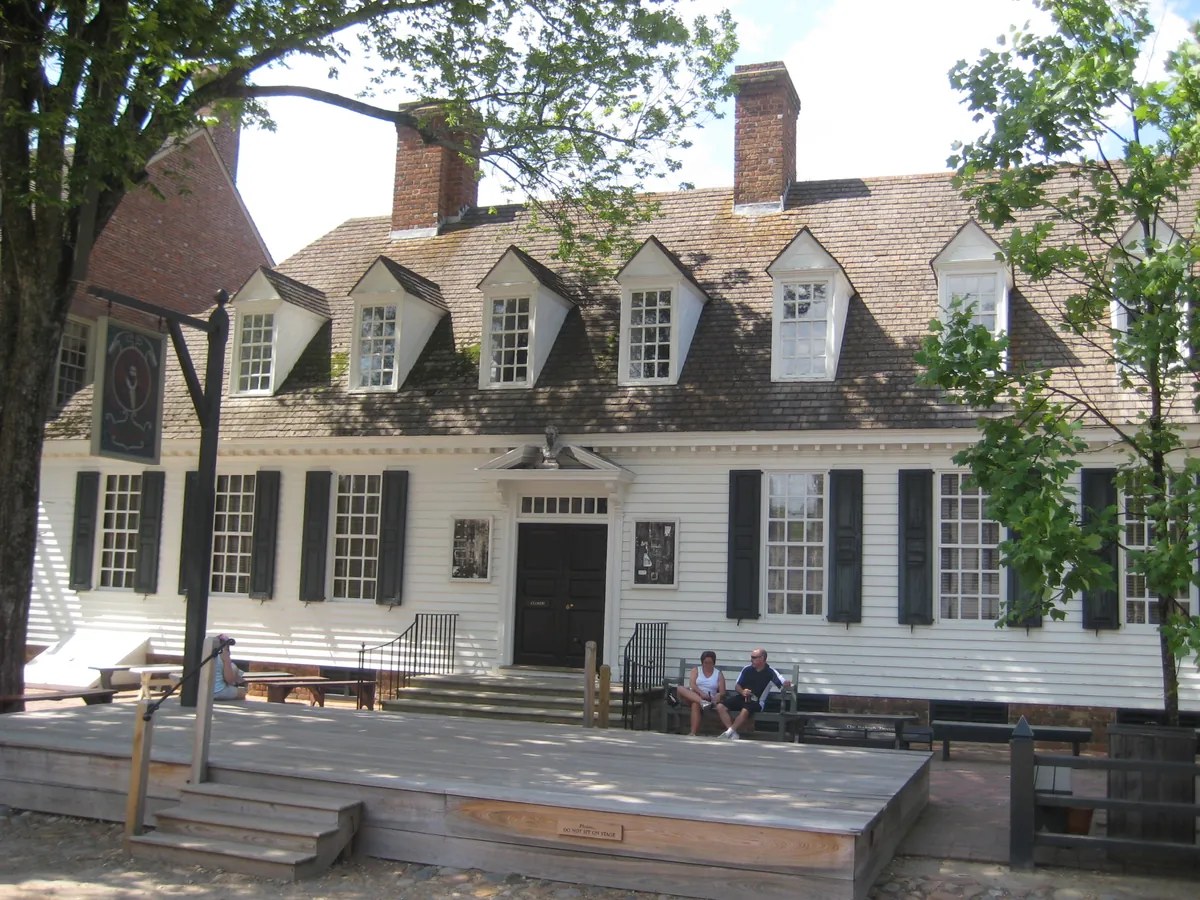
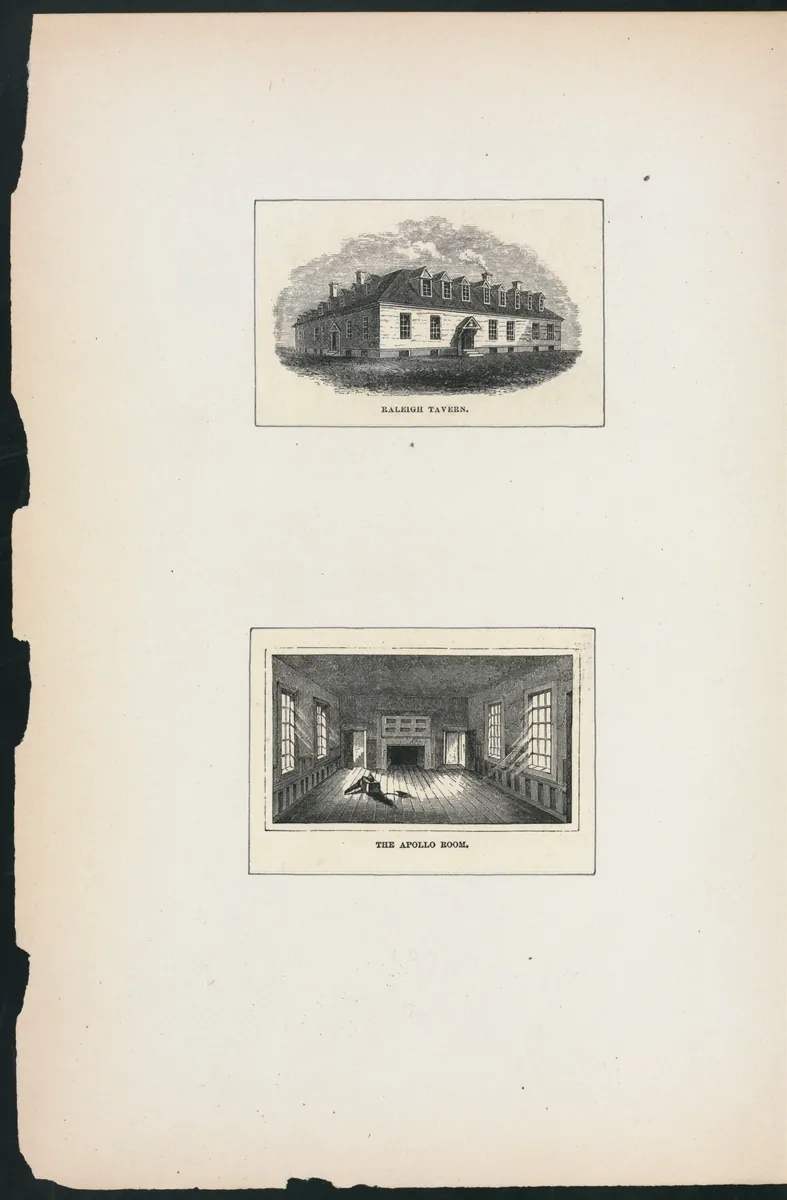
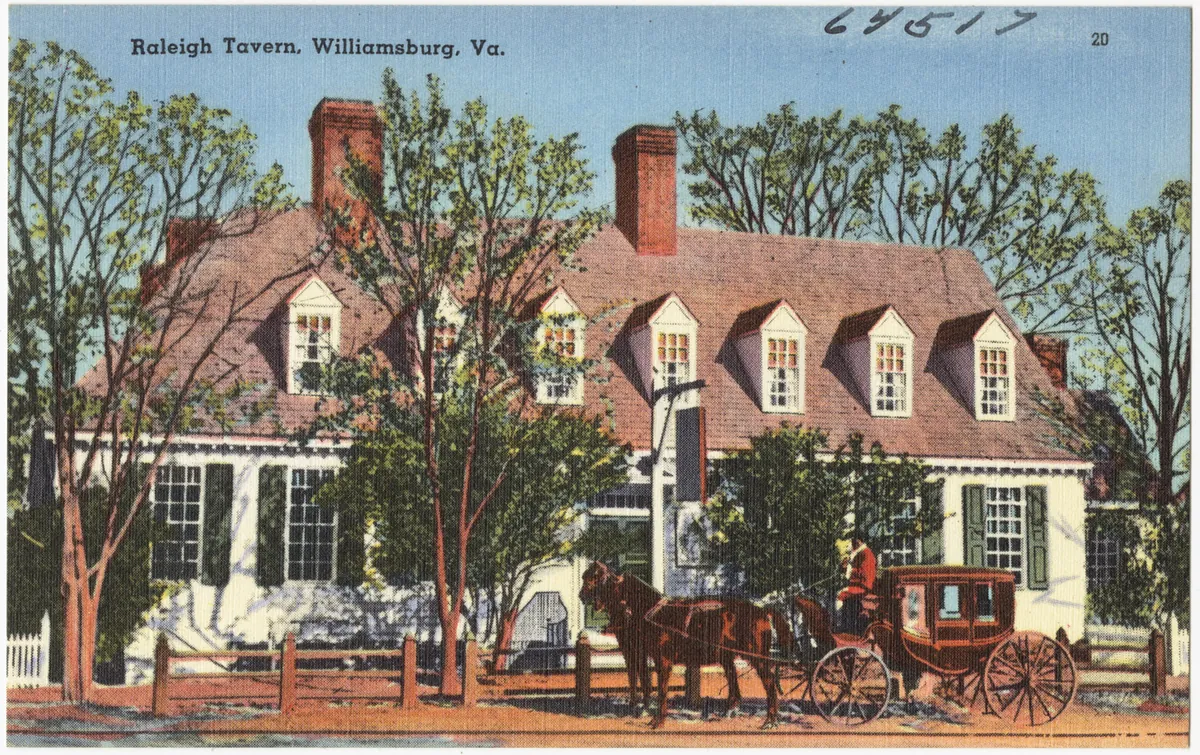
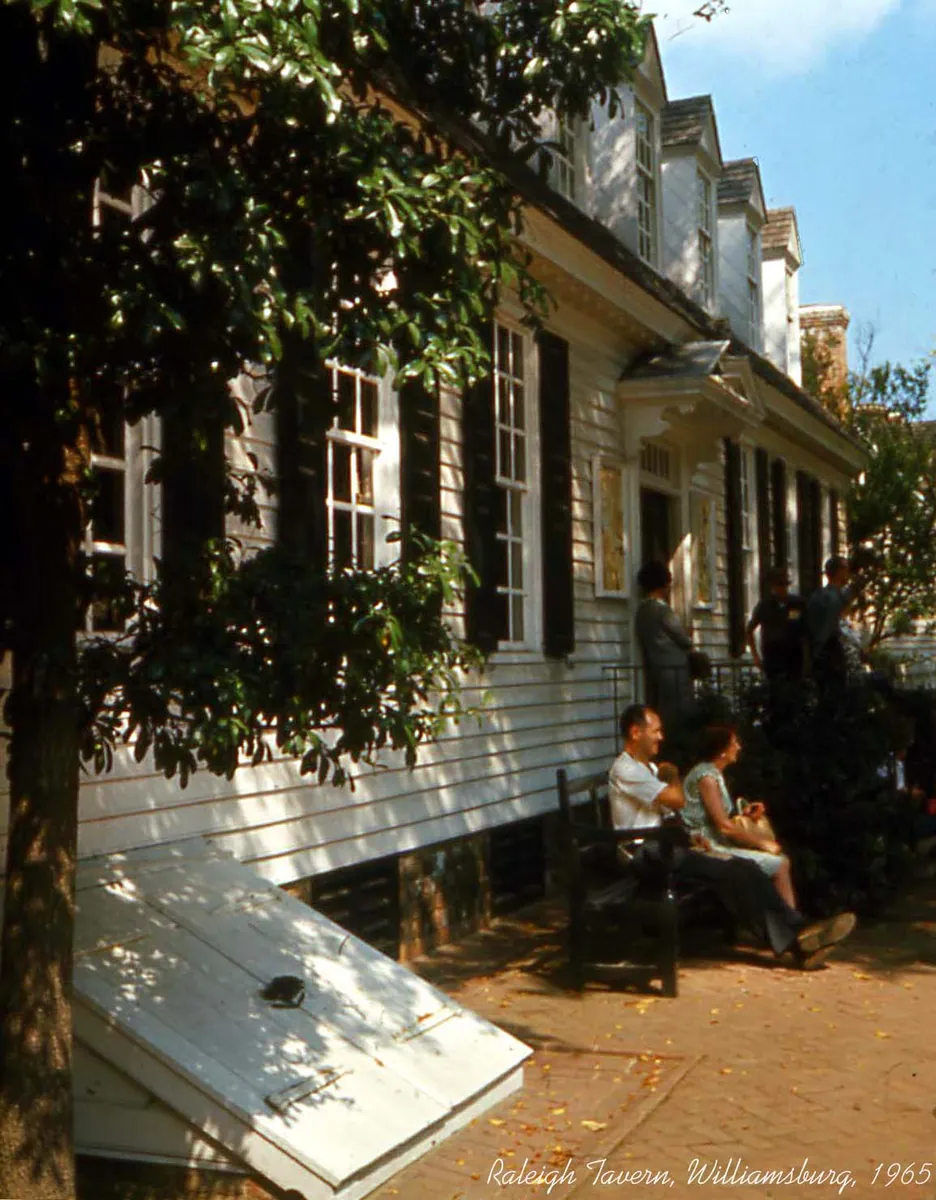
The original Raleigh Tavern burned at the hands of an arsonist in 1859. What stands on Duke of Gloucester Street today is a reconstruction, rebuilt in 1930–31 on the original foundation and opened to the public on September 16, 1932 — marking the opening of Colonial Williamsburg itself. The first building reconstructed, the first opened. That fact alone earns it a look.
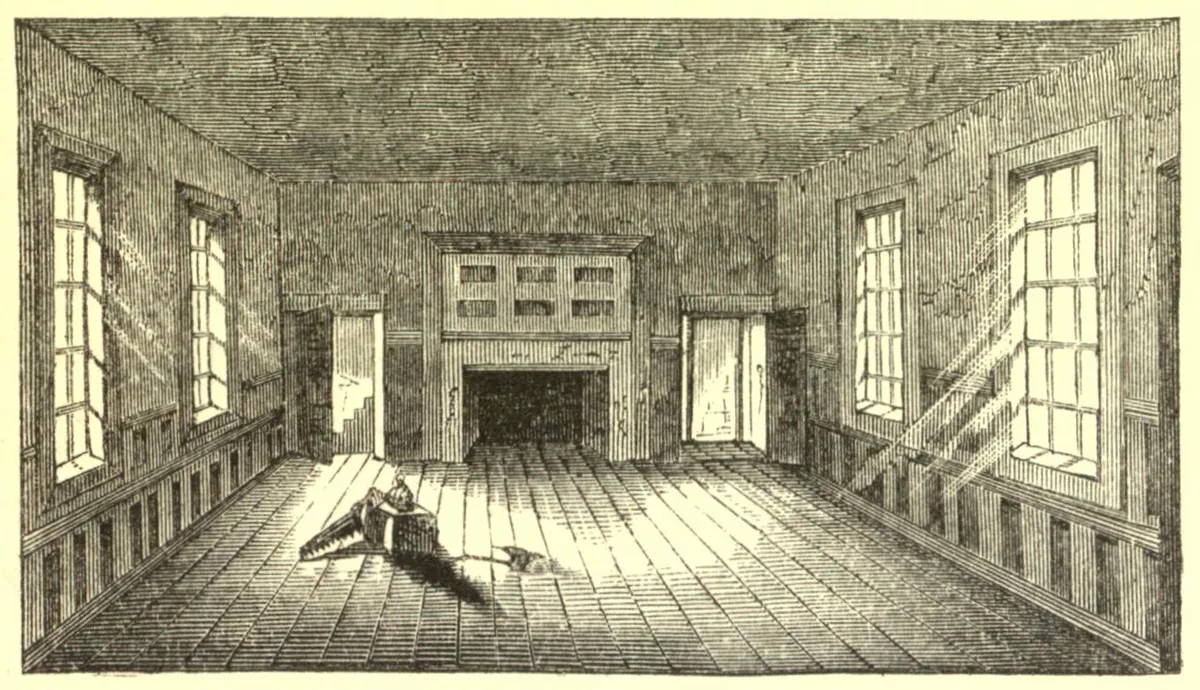
But the reconstruction matters because the original did. When Governor Botetourt dissolved the House of Burgesses in May 1769 — because the burgesses had passed resolutions against the Townshend Acts — the delegates didn't go home. They walked to the Raleigh Tavern and reconvened in the Apollo Room as what they called themselves: the "late representatives of the people." They adopted the Non-Importation Agreement before the day was out. When Governor Dunmore dissolved the assembly again in 1774, they did the same thing. The tavern was where the legal body went when the Crown shut the door on it.
The Apollo Room carried a Latin motto above the mantel: *Hilaritas sapientiae et bonae vitae proles* — jollity is the offspring of wisdom and good living. Thomas Jefferson, Patrick Henry, and other revolutionary figures met here regularly; in 1773 they used the room to develop intercolonial committees of correspondence. The Marquis de Lafayette was entertained at a banquet here in 1824. On December 5, 1776, Phi Beta Kappa was founded within these walls.
The reconstructed building serves as a museum now, not a working tavern. It is, by the account of historian Lyon Gardiner Tyler, the site of more scenes of political excitement than any other single room in North America. That's a claim worth testing in person — the room is right there, and it is smaller than you expect.
- ·Rebuilt colonial tavern where dissolved Virginia Burgesses regrouped 1769 and 1774 after royal governor dismissed them. Apollo Room was the meeting hall. Jefferson and Washington dined here regularly. Botetourt dissolved the assembly; they moved here and signed non-importation agreements.
More archive
Memories
Editorial content compiled with AI assistance. Place details verified against public records.