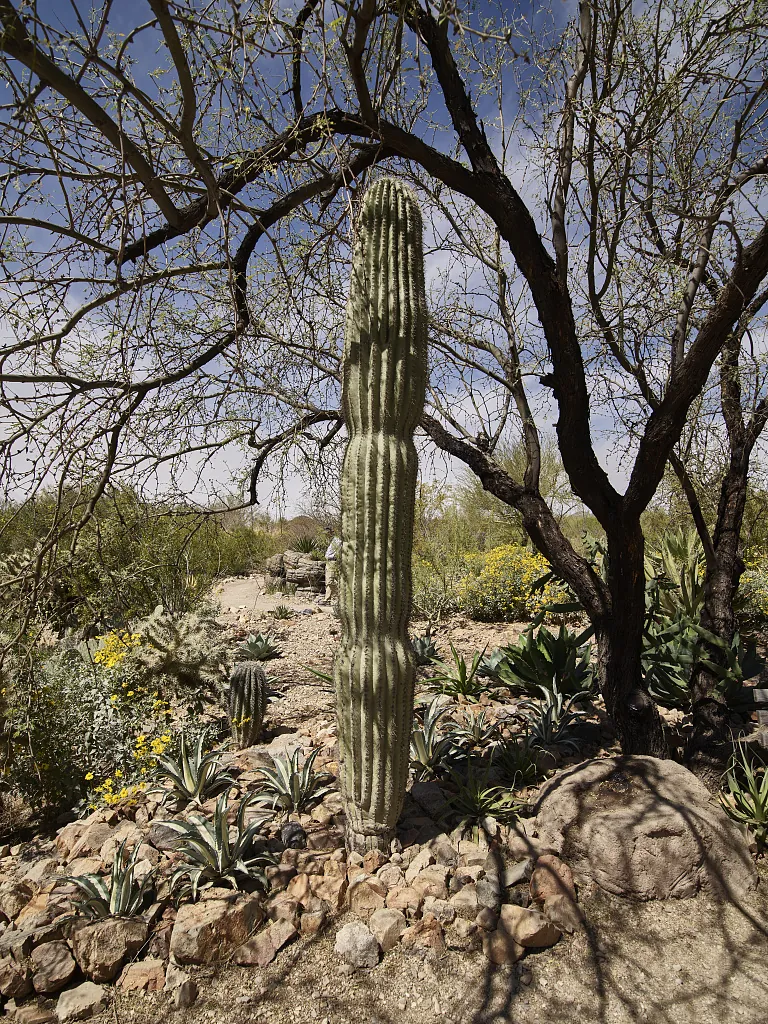
Naturalist William Carr and publisher Arthur Pack opened the Arizona-Sonora Desert Museum on Labor Day 1952, twelve miles west of Tucson in the Tucson Mountains. They called it a museum, but the name undersells what they built — it's a living catalog of the Sonoran Desert itself, spread across ninety-eight acres of bajada and rock. Two miles of trails wind through outdoor enclosures housing 230 animal species and 1,200 plant varieties, native to the desert that surrounds the grounds. Zoo, botanical garden, aquarium, natural history museum — the categories blur because the Sonoran Desert doesn't organize itself by department.
The early board knew what they had. Joseph Wood Krutch, the naturalist-author who wrote *The Desert Year*, sat at the table. So did paleontologist Roy Chapman Andrews, who'd spent decades in Central Asia excavating dinosaur nests and dodging bandits. They brought legitimacy to a project that could have felt like roadside kitsch — a coyote in a pen, a saguaro with a plaque. Instead, the Museum became the argument for why this desert matters, delivered at walking speed under an open sky.
Four hundred thousand visitors a year now make the drive over Gates Pass, the winding route west from the city that drops into a valley of organ pipe and cholla. The animals here — bighorn sheep, javelina, rattlesnakes, Gila monsters — live in enclosures designed to look like the desert they came from, because they *are* the desert, just close enough to see. The plants are the same ones growing wild outside the gates. The experience is immersive not because it's engineered to feel authentic, but because it *is* authentic — the Museum simply carved out a piece of the Sonoran Desert, named everything in it, and opened the gate.
You go to learn what you've been driving through. You leave knowing what to look for next time.
- ·Founded 1952 by William Carr and Arthur Pack; opened Labor Day 1952. Houses 230+ animal species and 1,200+ plant varieties; ~400,000 visitors/yr. Early board included naturalist-author Joseph Wood Krutch and paleontologist Roy Chapman Andrews. Coords approximate (Tucson Mountains, W of city). K-10: 5+ facts.
Memories
Editorial content compiled with AI assistance. Place details verified against public records.
