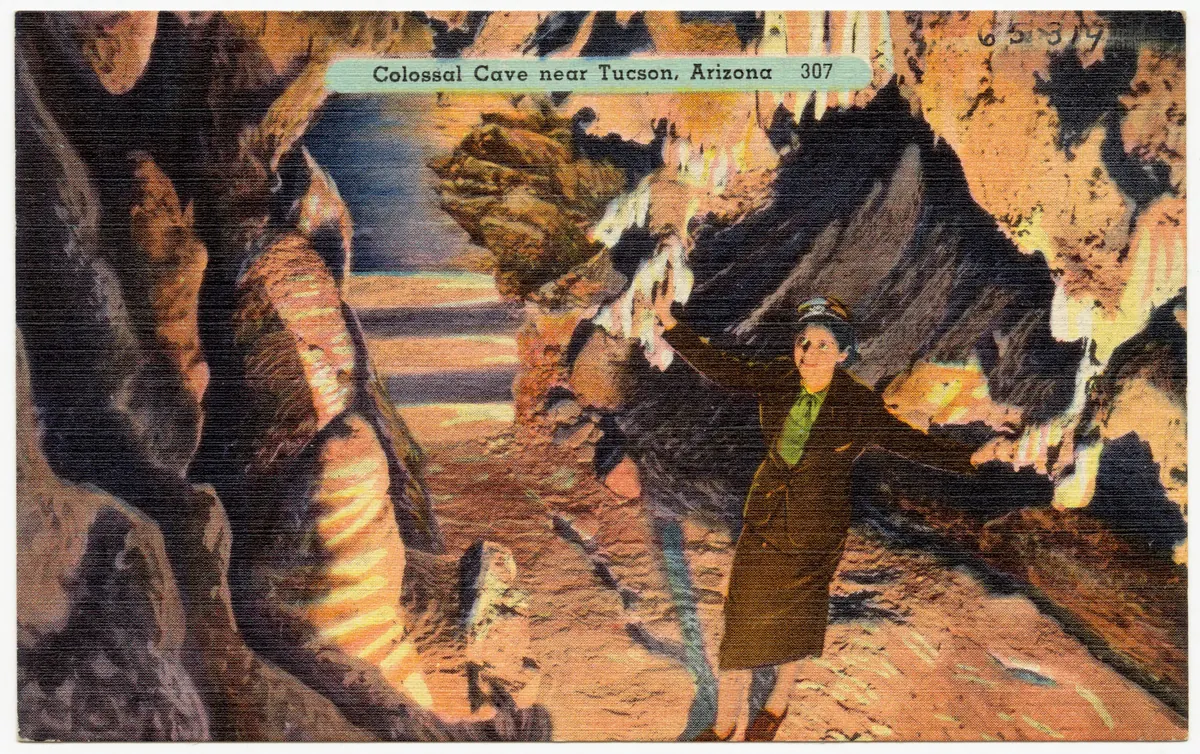
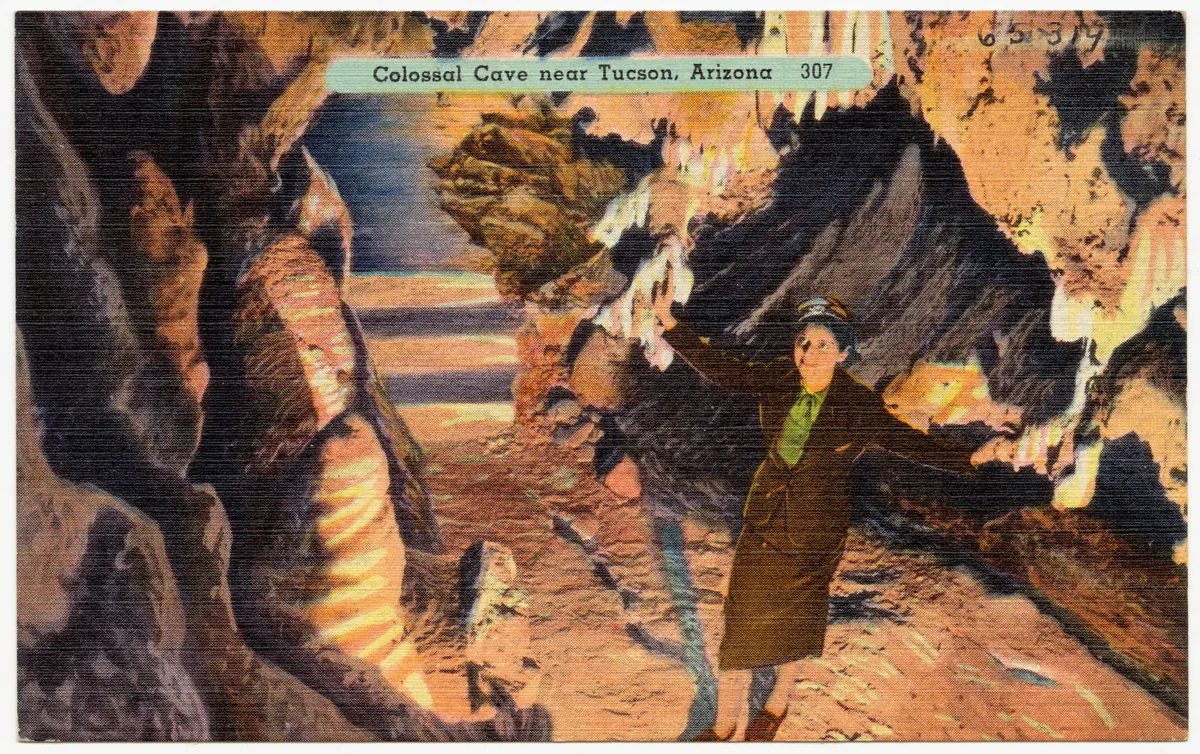
Twenty-two miles southeast of Tucson, a dry karst cave holds 3.9 miles of mapped passages — and a legend nobody's managed to put to rest. The Hohokam, Sobaipuri, and Apache used it from 900 to 1450 AD; soot still blackens the ceilings where they built fires. In 1879, a rancher named Solomon Lick found the entrance while tracking stray cattle. Eight years later, so the story goes, three men robbed the Southern Pacific twice in four months and stashed the gold somewhere in the dark. Nobody's found it yet. The CCC built the trail system in the 1930s; tours run year-round at a constant 70 degrees, through chambers that stopped growing centuries ago when the water moved on to feed a neighboring cave still alive with dripping limestone.
- ·Coords approximate from DesertUSA/park location near Vail (~22mi SE of Tucson) — VERIFY against Wikipedia infobox at apply time; flagged medium confidence on coord precision. KEY FACTS: (1) discovered 1879 by Solomon Lick while looking for stray cattle; (2) used ~900-1450 AD by Hohokam, Sobaipuri, and Apache peoples (soot-blackened ceilings, artifacts); (3) classified 'dry'/dead karst cave — formations no longer grow; ~70 F year-round, ~3.5 miles mapped passages; (4) CCC built improvements and campgrounds in the 1930s; (5) 'Legend of the Lost Loot' — in 1887 three men robbed a Southern Pacific train twice in four months and reputedly hid the gold in the cave; never recovered.
Memories
Editorial content compiled with AI assistance. Place details verified against public records.