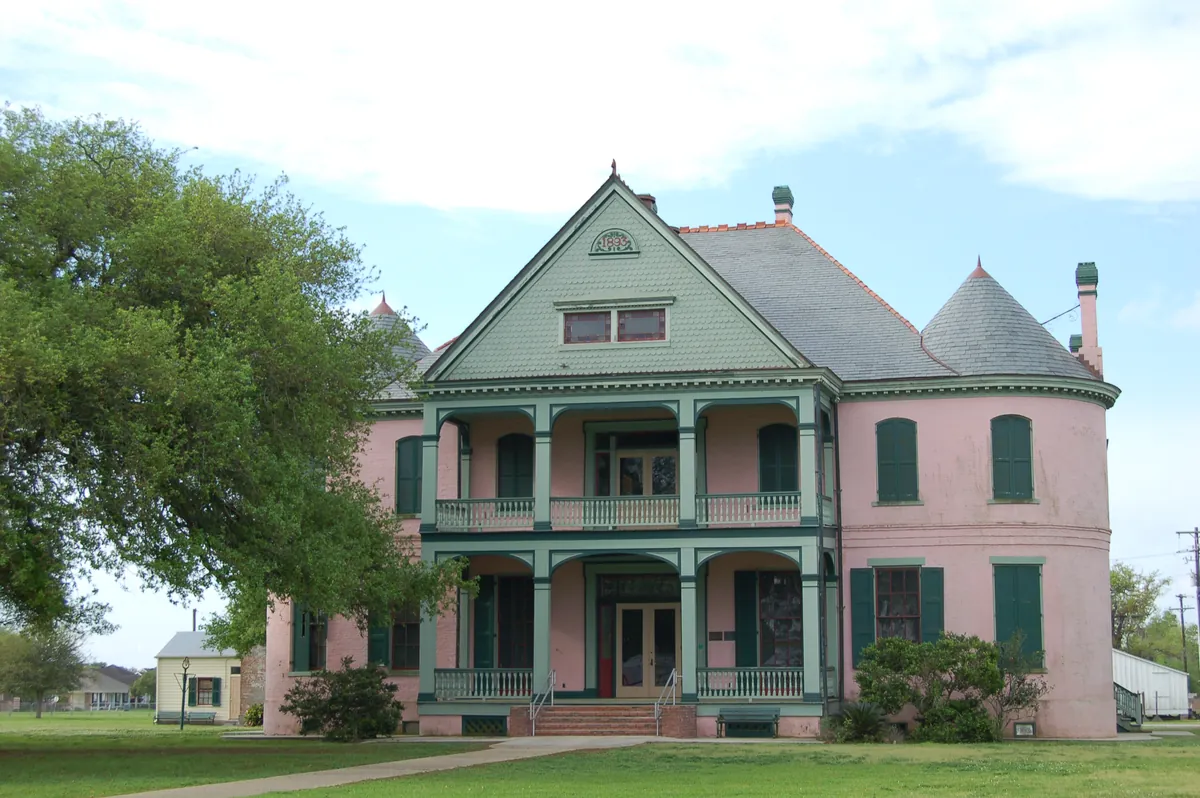
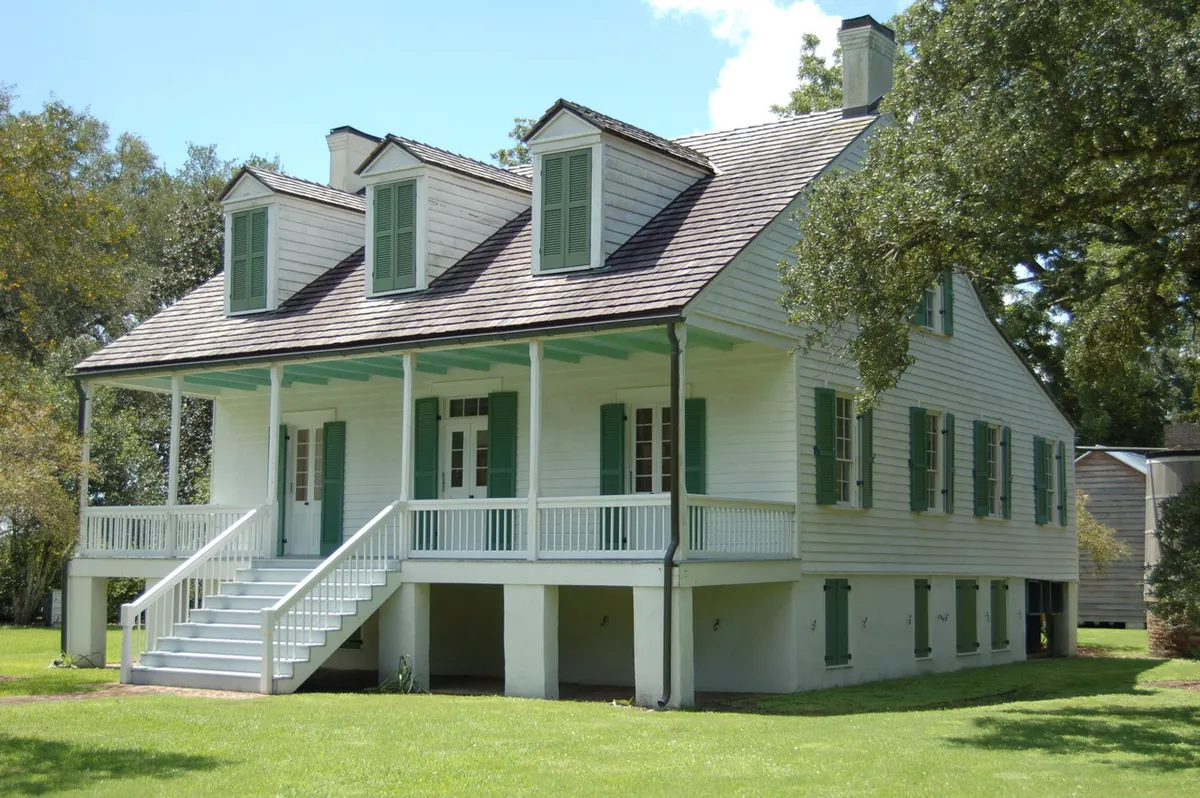
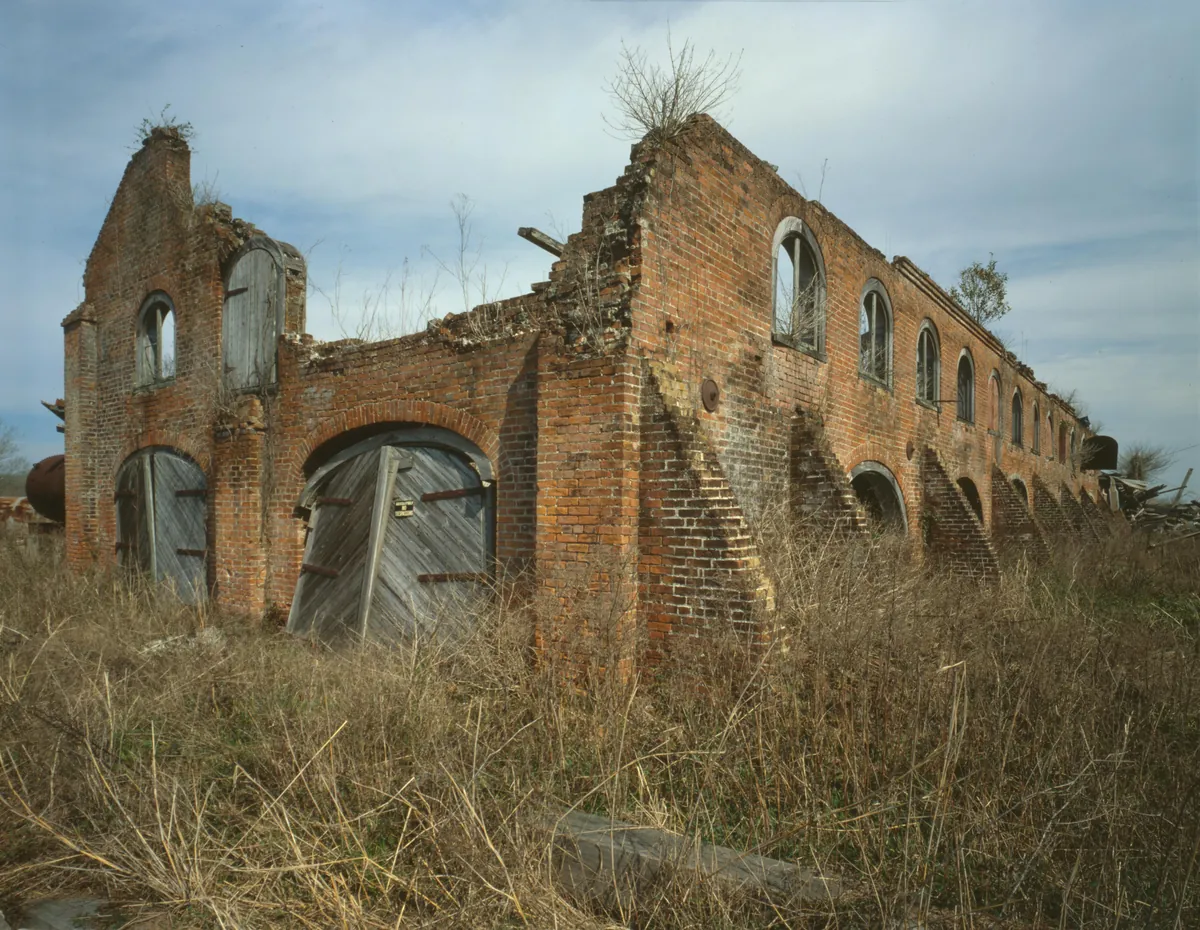
The Bowie brothers cleared indigo here in 1821. The Minor family bought them out, switched to sugar, and ran over 10,000 acres at the industry's height — 233 enslaved people on the property by 1852, the Greek Revival house going up in 1858, the Victorian second story added in 1893 with Favrile glass panels showing the plantation itself pressed into the windows. At its peak, Terrebonne Parish ran 86 sugar mills. Southdown ran the last one standing, until 1979, when the machinery was dismantled, shipped to Guatemala, and reassembled — it still grinds cane today. Two miles south, Laurel Valley shows you the rest of the story without cleaning it up: 40-plus original structures, tenant cabins, the ruined mill, preserved by neglect. What you see is what it looked like. Sugar built this parish; these places hold what sugar cost and what it left behind.