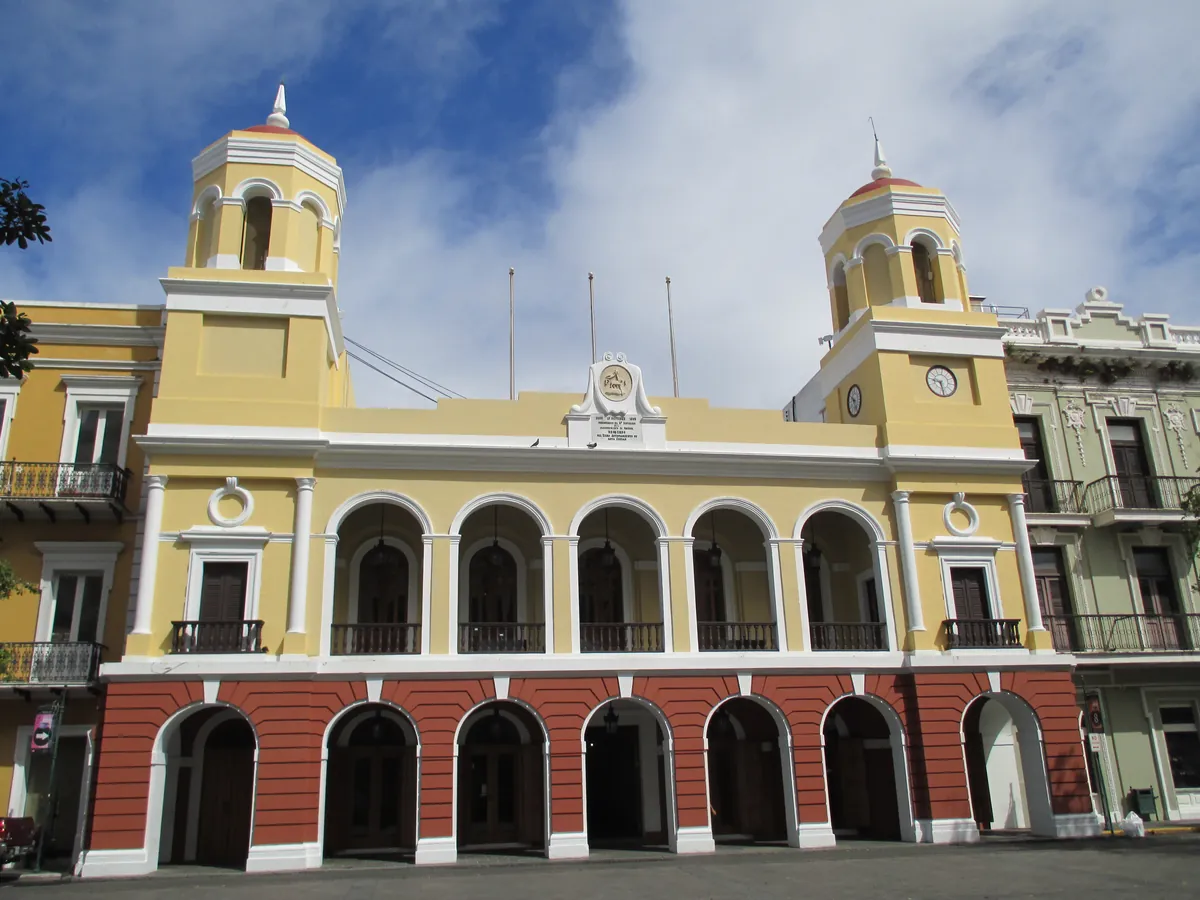
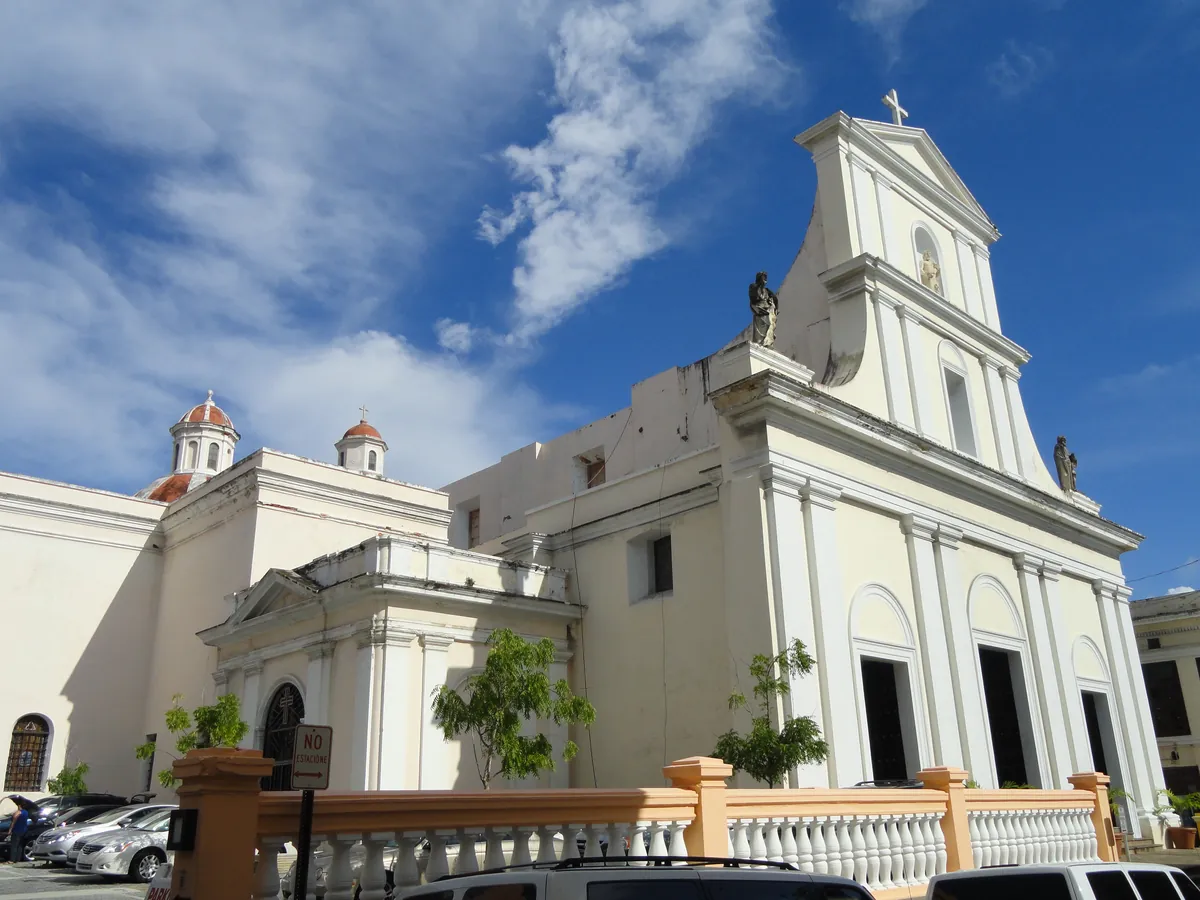
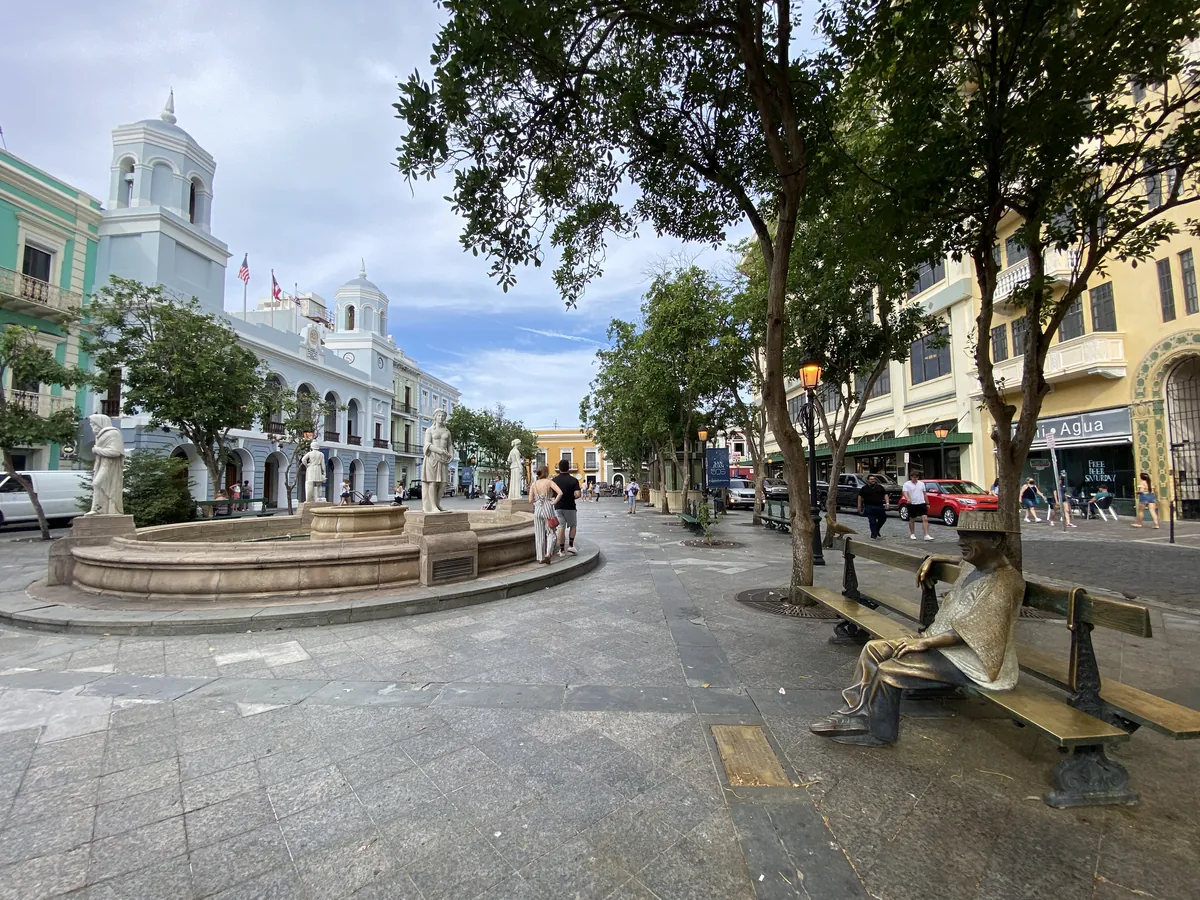
The Spanish built San Juan to hold. The Catedral de San Juan Bautista went up in 1521, was leveled by a hurricane, and came back in 1529 in stone — because wood had already proved its answer. The Plaza de Armas started as a military drill ground in the 16th century and became, by the logic of the city growing outward around it, its central square. The City Hall took from 1604 to 1789 to finish, its final façade modeled on Madrid's Plaza Mayor and completed in 1840 — and it never stopped functioning as a seat of government, never got handed to a preservation society. Inside it, in 1873, Puerto Rico signed the abolition of slavery. These buildings absorbed everything the island lived through — hurricanes, conquest, colonial law, papal visits — and kept working. That is what you are walking through: not a preserved past, but a past that refused to stop.