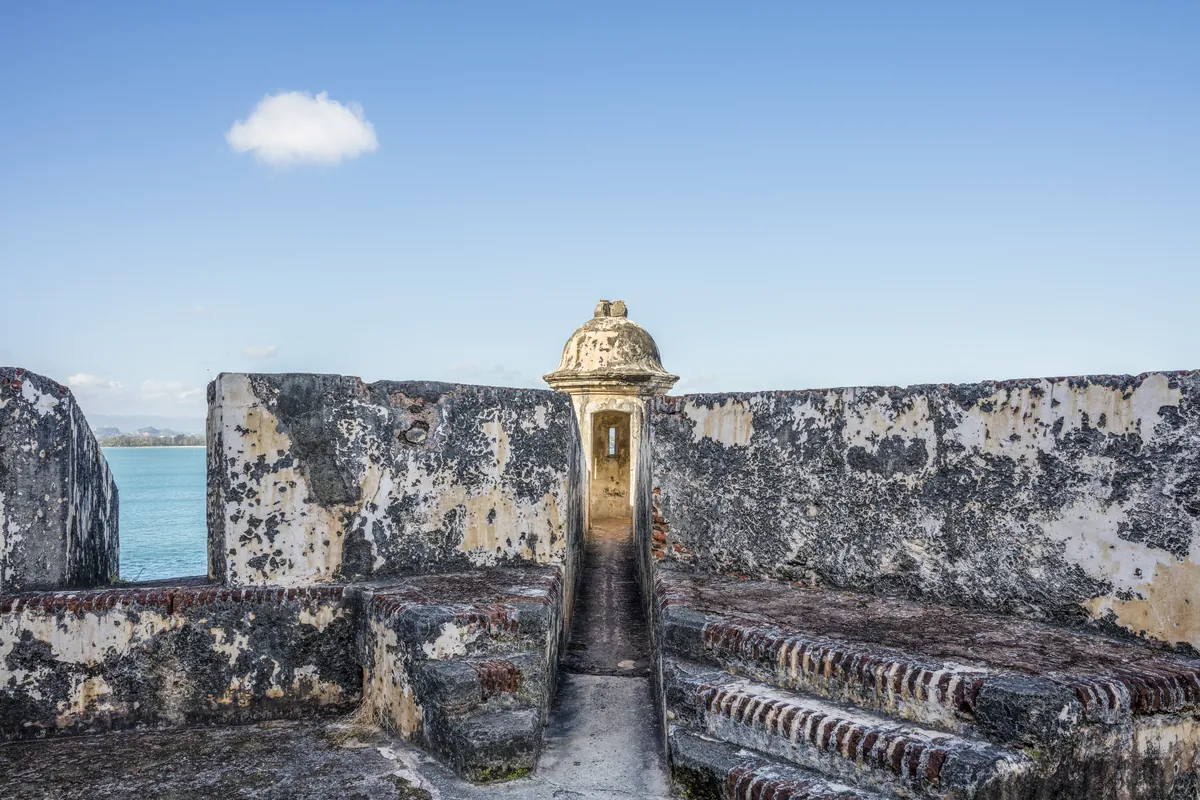
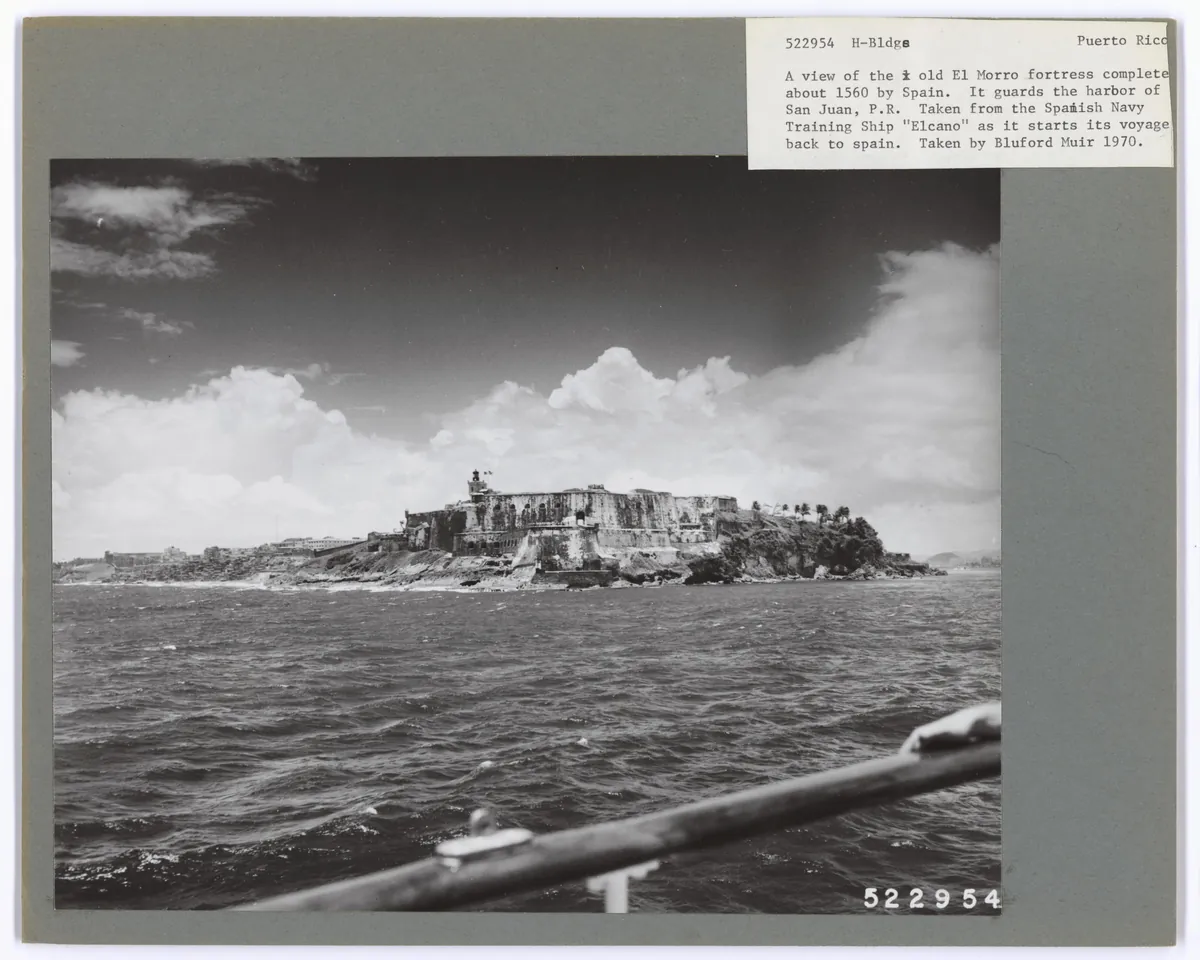
The fortress sits 140 feet above the Atlantic at the entrance to San Juan Bay, commissioned by King Charles I of Spain in 1539 and still standing as the most feared Spanish colonial fortification in the Americas. That reputation was earned. Sir Francis Drake attacked by sea and lost. A subsequent English assault succeeded only by coming overland — the one crack in El Morro's armor — but dysentery drove the occupiers out before they could hold what they'd taken. The Dutch tried next, couldn't force a surrender, and burned the city on their way out. By around 1790, after Italian engineer Bautista Antonelli redesigned the original medieval tower into a six-level masonry stronghold, the fort was considered unconquerable by sea.
It was declared a UNESCO World Heritage Site in 1983. Over two million visitors a year walk its levels. Go for the military history, which is genuinely layered and strange. Stay because the fort itself — rising from a steep rocky headland, its walls between 18 and 25 feet thick — makes the abstractions of empire feel specific and heavy in a way no textbook manages.
Memories
Editorial content compiled with AI assistance. Place details verified against public records.