Puerto Rico
Five centuries of empire, one indestructible island. Old San Juan's walls still stand, the music still plays, the lechón still turns.
Puerto Rico rises from the northeastern Caribbean, a main island and smaller landmasses like Vieques and Culebra, positioned at a crossroads between the Greater and Lesser Antilles. Its strategic location, roughly 1,000 miles southeast of Miami, shaped its destiny from the start. Indigenous peoples like the Ortoiroid, Saladoid, and Taíno settled the archipelago beginning 2,000 to 4,000 years ago, establishing communities long before European contact.
In 1493, Christopher Columbus claimed the island for Spain, naming it San Juan Bautista. Juan Ponce de León established the first Spanish settlement in 1508. What followed was a familiar and devastating pattern: the Taíno population declined rapidly due to disease and exploitation. Spain, however, held its grip for 400 years, using Puerto Rico as a critical military outpost in the Atlantic. Canary Islanders and Andalusians arrived, alongside enslaved Africans, fundamentally changing the island's demographics and culture. By the late 19th century, a distinct Puerto Rican identity emerged, a blend of these European, African, and Indigenous influences.
The course of Puerto Rico shifted again in 1898, when the U.S. acquired the island after the Spanish-American War. The Foraker Act of 1900 established a civil government, and the Jones-Shafroth Act of 1917 granted Puerto Ricans U.S. citizenship. Yet, the island's political status remained a persistent question, fueling debates over statehood, independence, or commonwealth. This enduring tension shaped public life and policy, even as Puerto Ricans served in U.S. military operations, most notably the 65th Infantry Regiment, "The Borinqueneers," in the Korean War.
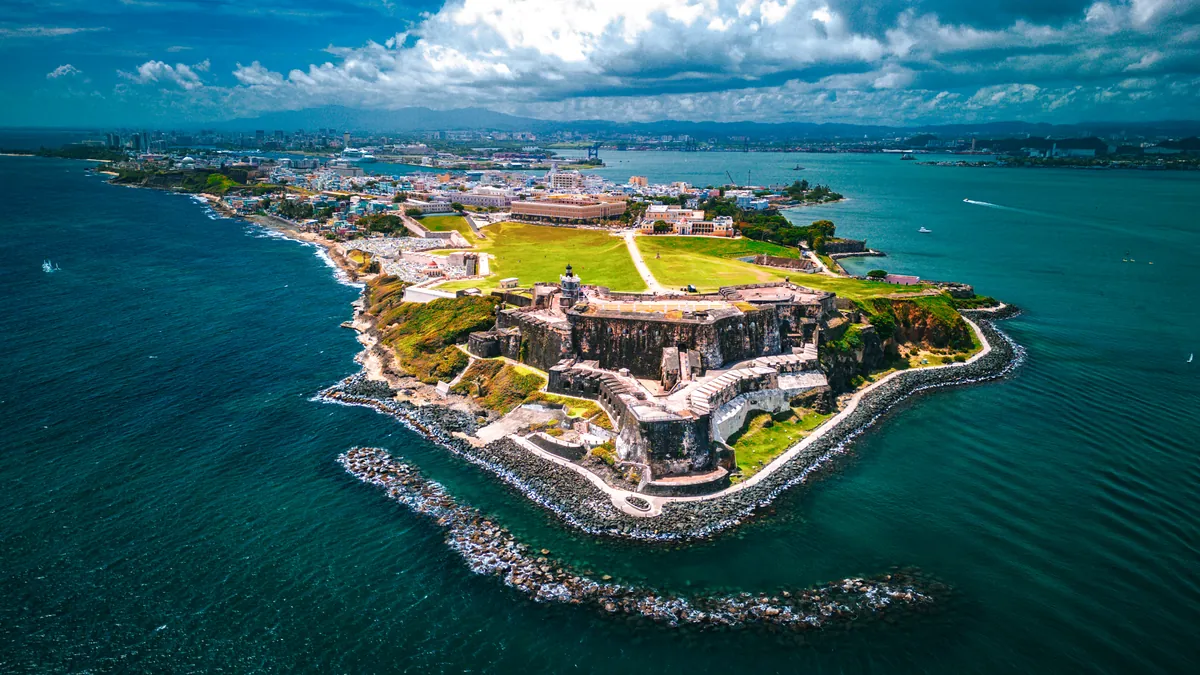
Through these layers of history, Puerto Rico built a culture rooted in survival and invention. The blend of Spanish, African, and Taíno influences is evident in its cuisine, where mofongo and arroz con gandules stand as staples, and in its music, from bomba and plena to the contemporary global reach of reggaeton. San Juan, founded in 1521, grew into a capital city whose Old San Juan district retains its historic fortifications like El Morro and San Cristóbal, alongside the Cathedral of San Juan Bautista, a physical record of the centuries.
Today, Puerto Rico remains a place of complex identity, where calls for self-determination continue alongside a rich tradition of art, literature, and sports. Its resilience is etched into the landscape, a testament to what endures: a vibrant culture that defines this "rich port" in the Caribbean.