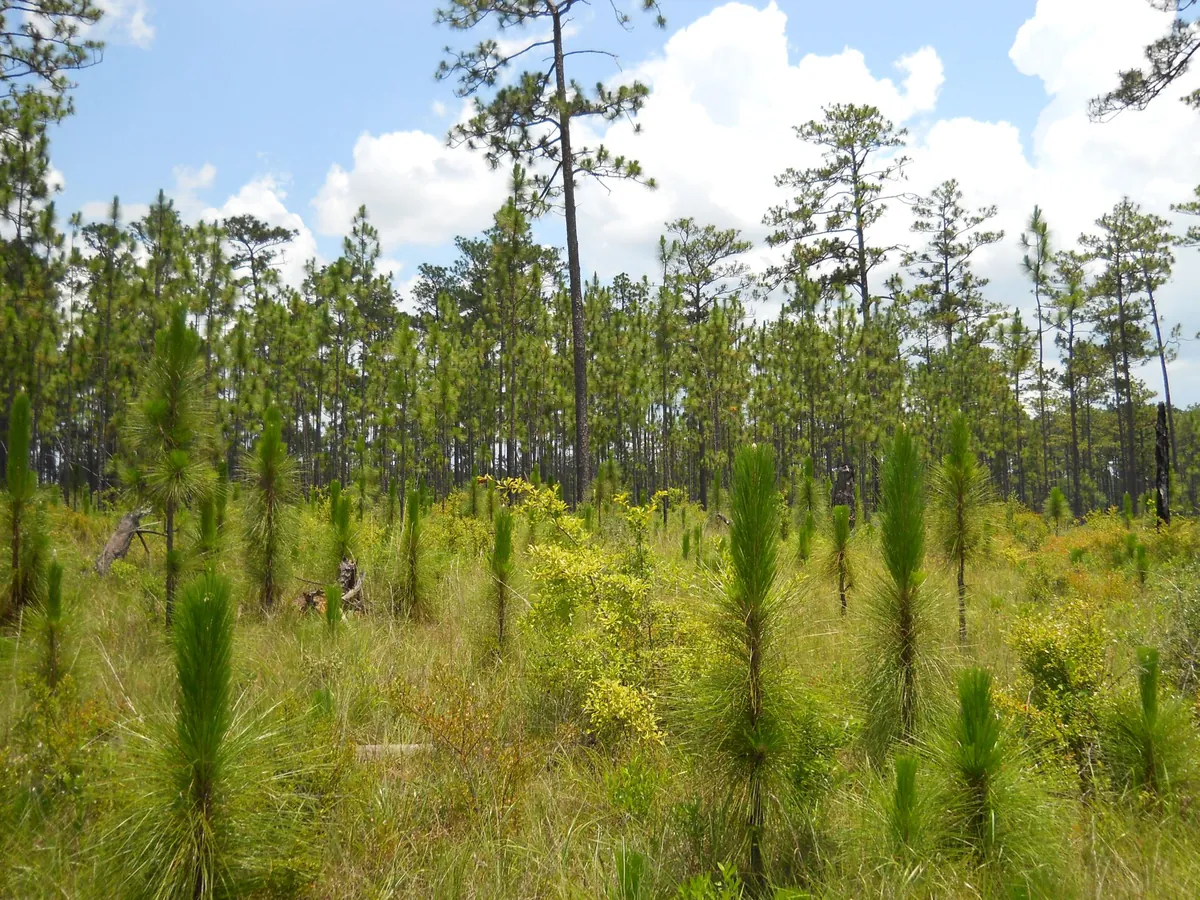
In 1890, the virgin longleaf pine forest covered almost the entire western third of Louisiana — millions of acres of trees that were two to three feet thick at the stump and straight as a plumb line. Northern timber capital arrived with the railroads around 1896, bought the land for $1.25 an acre, and set up mills at a speed that still reads like fiction. Within thirty years, the forest was gone.
DeRidder, Pickering, Fisher, Bon Ami, Slagle, Peason, Cravens — each of these towns was a mill with a post office attached. The Pickering Lumber Company ran three shifts and peaked at 3,000 residents. Fisher was built as a company town by the Louisiana Long Leaf Lumber Company and is now the only surviving intact example in the state. The workforce was integrated in the mill yards (a rarity in the Jim Crow South), ethnically mixed (Cajuns, Anglos, Black workers, and recently-arrived Italians and Mexicans), and exploited equally by all of them. The Grabow Riot of 1912 near Merryville was the bloody high-water mark of the resistance.
By 1935, the longleaf was essentially cut out. The mills closed within months of each other. Some were dismantled and hauled away on flatcars. Some towns were abandoned where they stood. The federal government, panicked about the wasteland the cut had created, began buying up the depleted land to create what is now the Kisatchie National Forest. The ghost of the cut is why most of the 'forest' you see in No Man's Land today is second-growth slash and loblolly — the original longleaf is still coming back one careful restoration plot at a time.