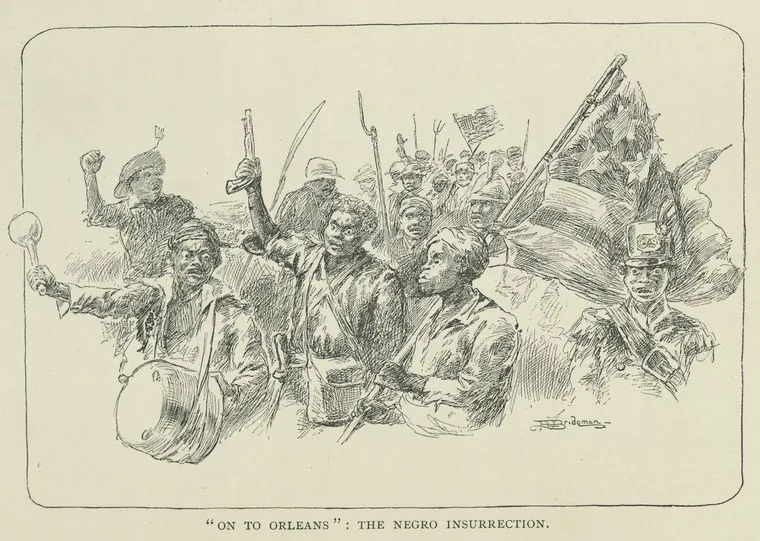
On January 8, 1811, between 200 and 500 enslaved people on the German Coast sugar plantations west of New Orleans organized the largest slave revolt in American history. They marched toward the city along River Road, burning plantations and killing two white men. The militia caught them within two days. At least 40 were executed; their severed heads were mounted on poles along the river from the German Coast to New Orleans as a warning. The revolt was suppressed so brutally and so thoroughly that it was largely erased from public memory until the 21st century.
Quick facts
- ·Between 200 and 500 enslaved people organized and marched toward New Orleans on January 8, 1811 — the largest slave revolt in U.S. history.
- ·The uprising began on the Andry plantation along River Road, approximately 30 miles upriver from the city.
- ·At least 40 participants were executed; their severed heads were mounted on poles along the river as a warning.
- ·The revolt was so thoroughly suppressed that it was largely erased from public memory until scholars revived it in the 21st century.
- ·Artist Dread Scott re-created the march in 2019, with 700 reenactors walking the original route in period clothing.
Memories
Be the first to leave a memory at 1811 German Coast Uprising — The Largest Slave Revolt in American History.
Sign in to see memories your family has left at this place.
Editorial content compiled with AI assistance. Place details verified against public records.