Good forHistory buffs
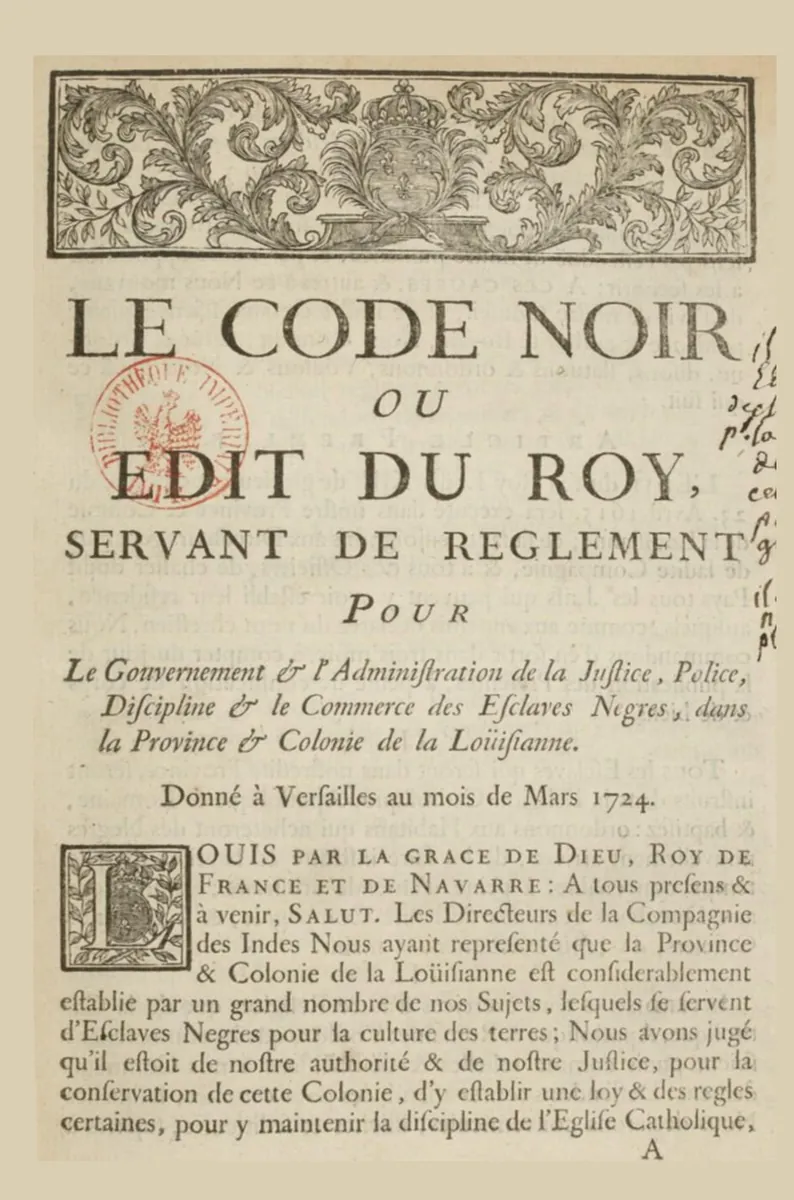
The Code Noir — the Black Code — was the French colonial law that simultaneously regulated slavery and, uniquely in the Americas, gave enslaved people enforceable legal rights: the right to marry, to worship as Catholics, to seek manumission, and to have families kept together. Enacted in Louisiana in 1724, the Code created the legal framework for the large free Black population that made New Orleans unlike any other city in the slaveholding South. The historical marker in Tremé marks the neighborhood where those legal distinctions played out in daily life for two centuries.
Quick facts
- ·The Code Noir — the Black Code — was enacted in Louisiana in 1724 under French colonial rule.
- ·Uniquely in the Americas, it gave enslaved people enforceable legal rights: to marry, worship as Catholics, seek manumission, and keep families together.
- ·Created the legal framework for the large free Black population that made New Orleans unlike any other slaveholding city.
- ·Free people of color in New Orleans owned property, ran businesses, and built the Tremé neighborhood under protections the Code provided.
- ·The Code was both an instrument of slavery and a framework that limited its worst abuses — a contradiction the city never resolved.
- ·Historical marker located in Tremé, the neighborhood where these legal distinctions played out for two centuries.
Memories
Be the first to leave a memory at Code Noir Historical Marker.
Sign in to see memories your family has left at this place.
Editorial content compiled with AI assistance. Place details verified against public records.