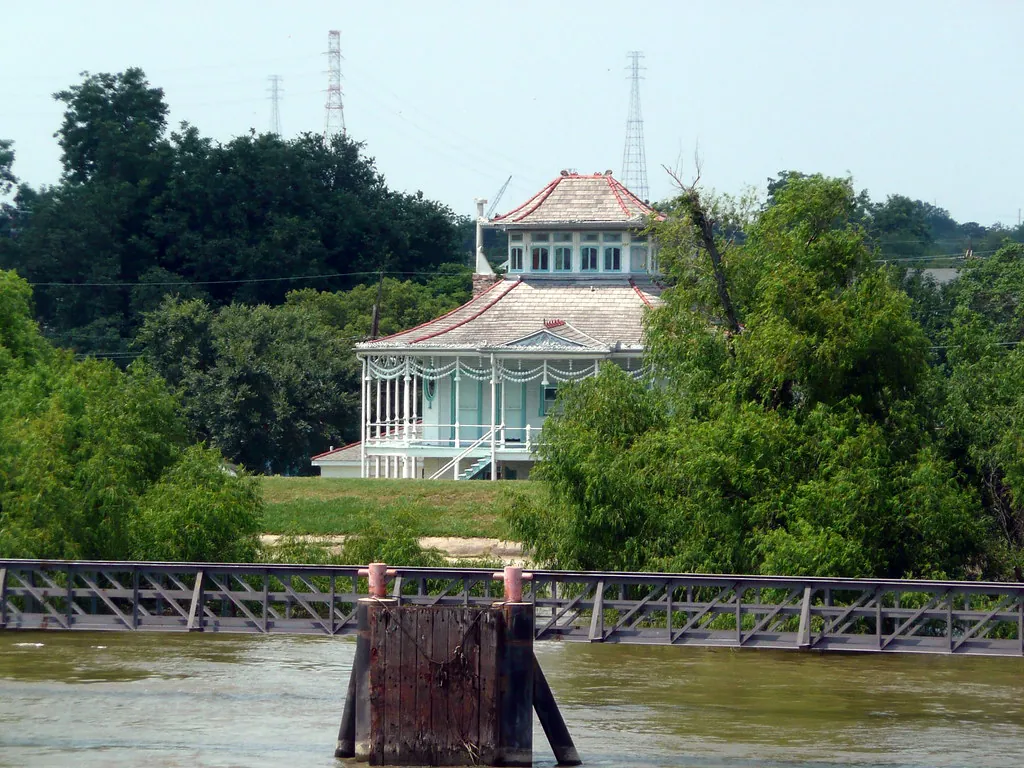
Captain Milton Doullut commanded a Mississippi River steamboat. In 1905, he built himself a house in Holy Cross that looked like one. Then he built a second, matching house next door. Both have pilot-house observation decks rising above wraparound galleries modeled on steamboat promenades. The woodwork is Japanese-influenced — a decorative style fashionable in early 1900s riverboat décor.
New Orleans was the largest port in the Southern United States throughout the 19th century, exporting most of the nation's cotton and farm products. The river built the city, and the river built fortunes for the men who commanded the vessels that moved the freight. Doullut's houses are what a steamboat pilot did with his: he made his home a monument to the thing that made him.
The Doullut Steamboat Houses are listed on the National Register of Historic Places. They remain the most eccentric domestic architecture in a city that rewards eccentricity. Both are private residences. View them from Egania Street on foot or by bike.
- ·Built in 1905 by Captain Milton Doullut, a Mississippi River steamboat pilot who designed his home to look like the vessel he commanded.
- ·Two matching houses on Egania Street feature pilot-house observation decks and wraparound galleries modeled on steamboat promenades.
- ·Japanese-influenced woodwork reflects a decorative style fashionable in early 1900s riverboat décor.
- ·The most eccentric domestic architecture in a city that rewards eccentricity.
- ·Both are private residences — viewable from the street only.
- ·Located on Egania St in Holy Cross, Lower Ninth Ward. Best seen on foot or by bike.
Memories
Editorial content compiled with AI assistance. Place details verified against public records.