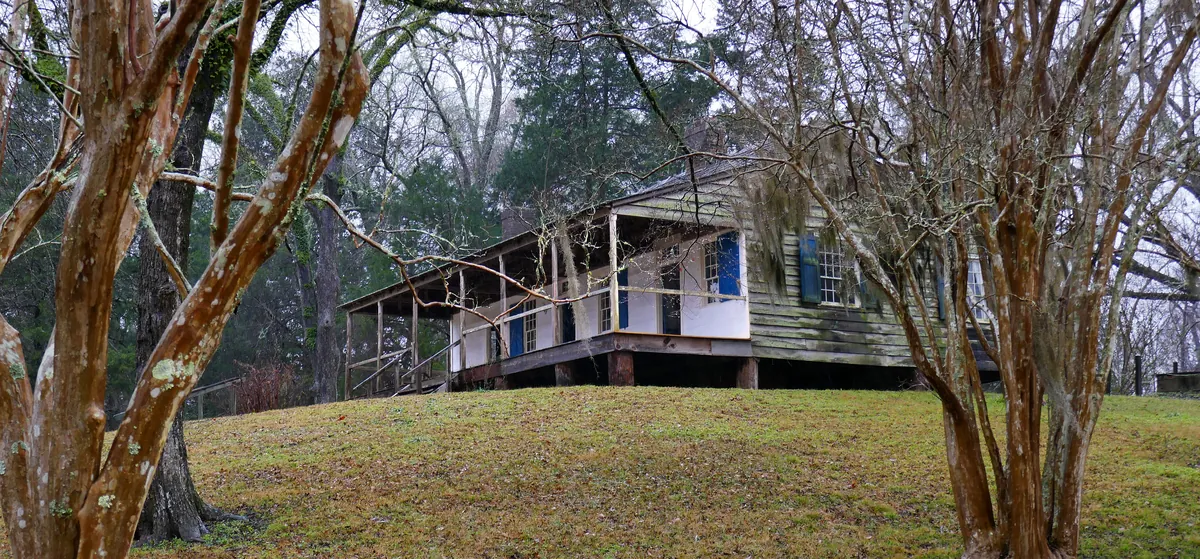
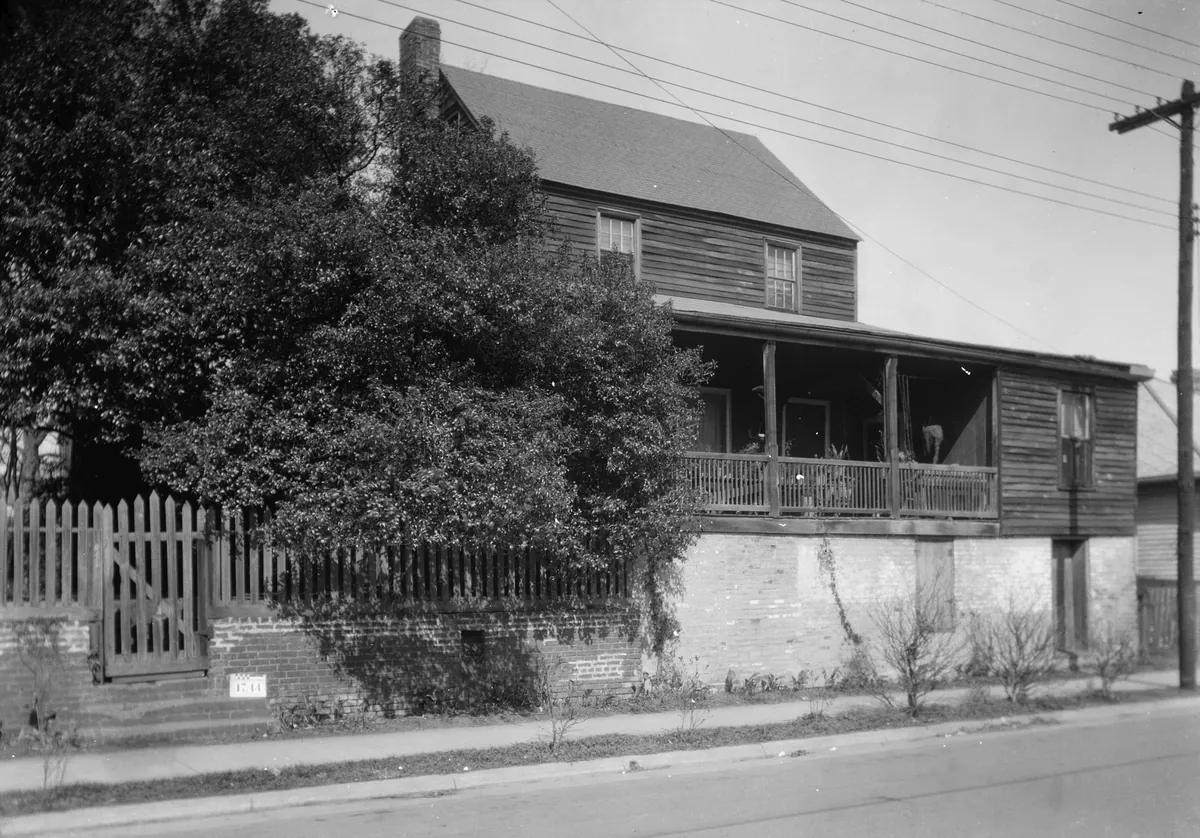
The Natchez Trace began as a path — buffalo first, then Choctaw and Chickasaw, then the flatboatmen called Kaintucks who floated goods downriver to Natchez or New Orleans and walked home from here. Natchez was the hinge: where the river commerce stopped and the overland return north began. Over fifty inns and stands operated along the route when traffic peaked around 1810. One survives, at milepost 15.5 — built circa 1780, open to the public, with a section of the original sunken Trace still visible in the woods behind it. At the southern terminus, a tavern built circa 1789 still stands at the start of that long walk home. During renovations in the 1930s, workers found three skeletons sealed behind a wall. It is now a restaurant. The Parkway itself — 444 miles to Nashville, no stoplights, no commercial vehicles — has been a National Park Service road since 1938.