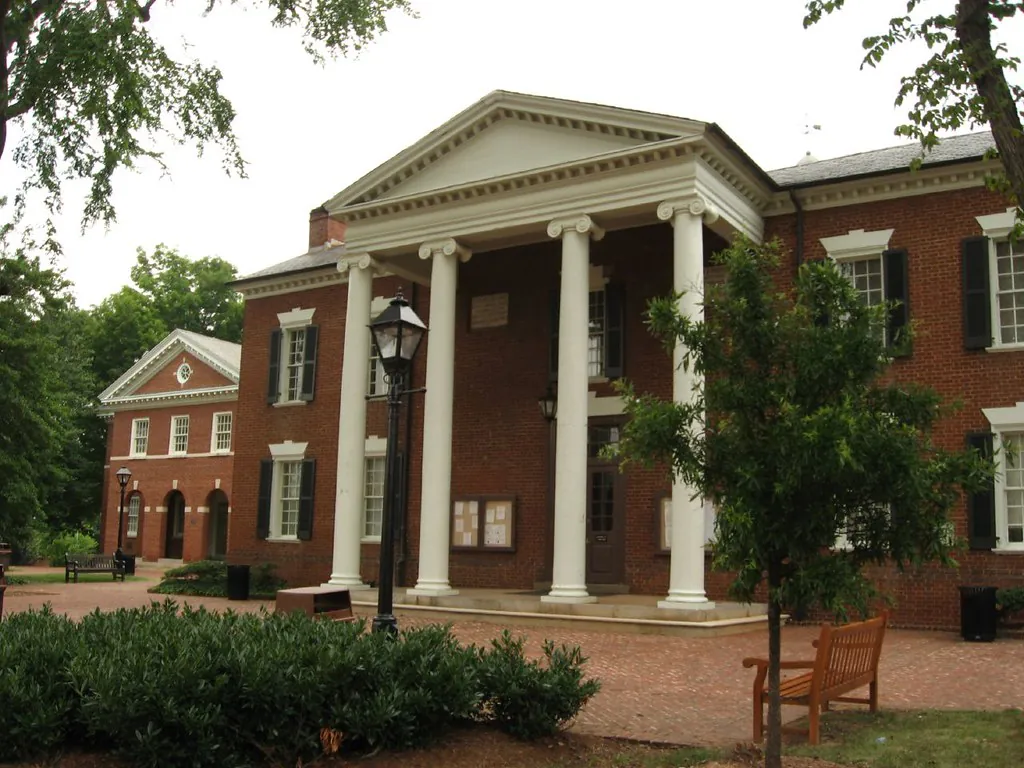
Charlottesville was established in 1762, laid out along Three Notch'd Road — the trade route connecting Richmond to the Shenandoah Valley. The square took its name from Queen Charlotte, and Thomas Walker served as its first trustee. That's the official founding story.
The harder one: for more than a century, enslaved people were sold here on Court Days, transactions folded into the ordinary business of the town. After Jefferson's death, thirty-three people from Monticello were auctioned at the Eagle Hotel in January 1829 to satisfy his debts. The man who designed a university and wrote about human liberty had accumulated obligations that were settled in human bodies, in this square, in a single morning.
Charlottesville has spent years deciding what to do with that fact. Court Square is where the decision gets made visible. The courthouse still operates. Come because this is where the city's founding idealism and its founding brutality occupied the same ground — and still do.
- ·After Jefferson's death, 33 enslaved people from Monticello were auctioned at the Eagle Hotel in January 1829 to satisfy his debts.
Memories
Editorial content compiled with AI assistance. Place details verified against public records.