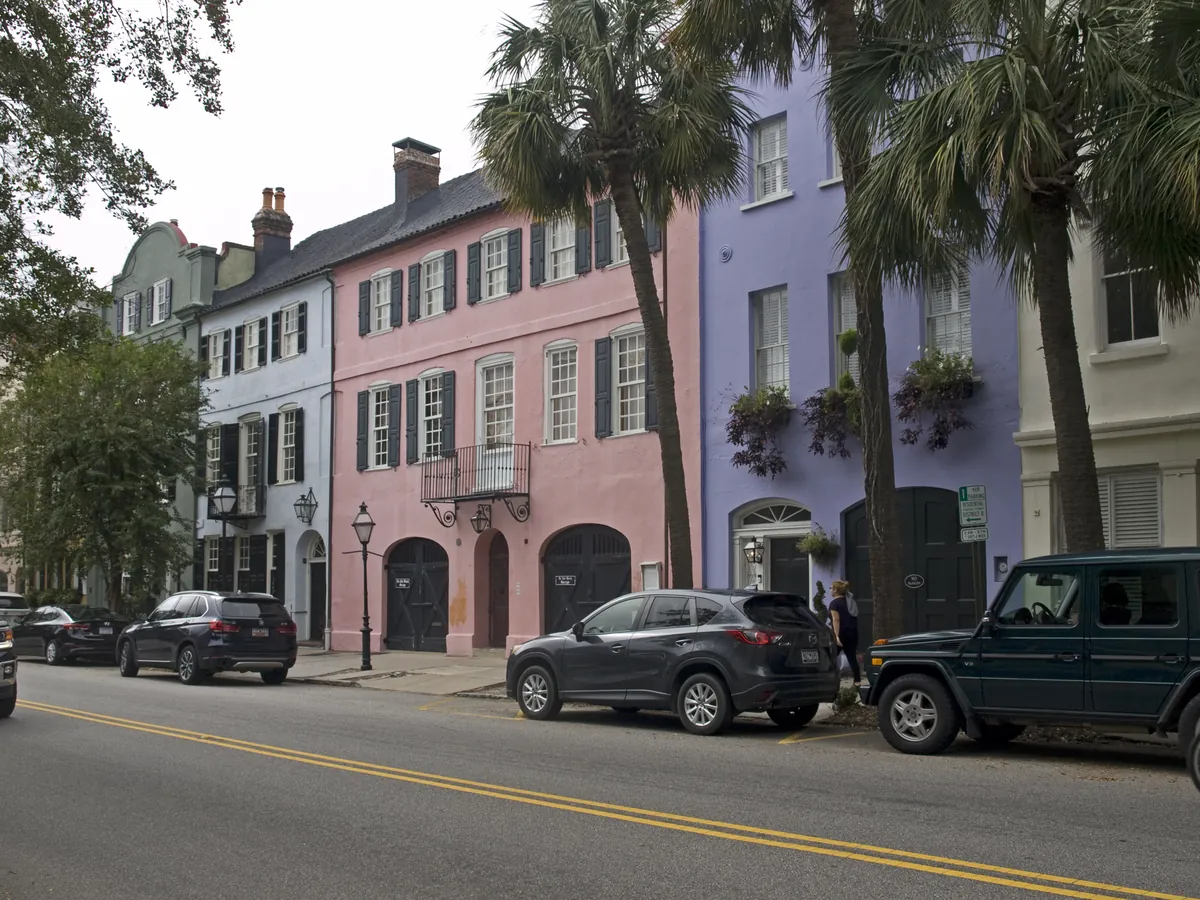
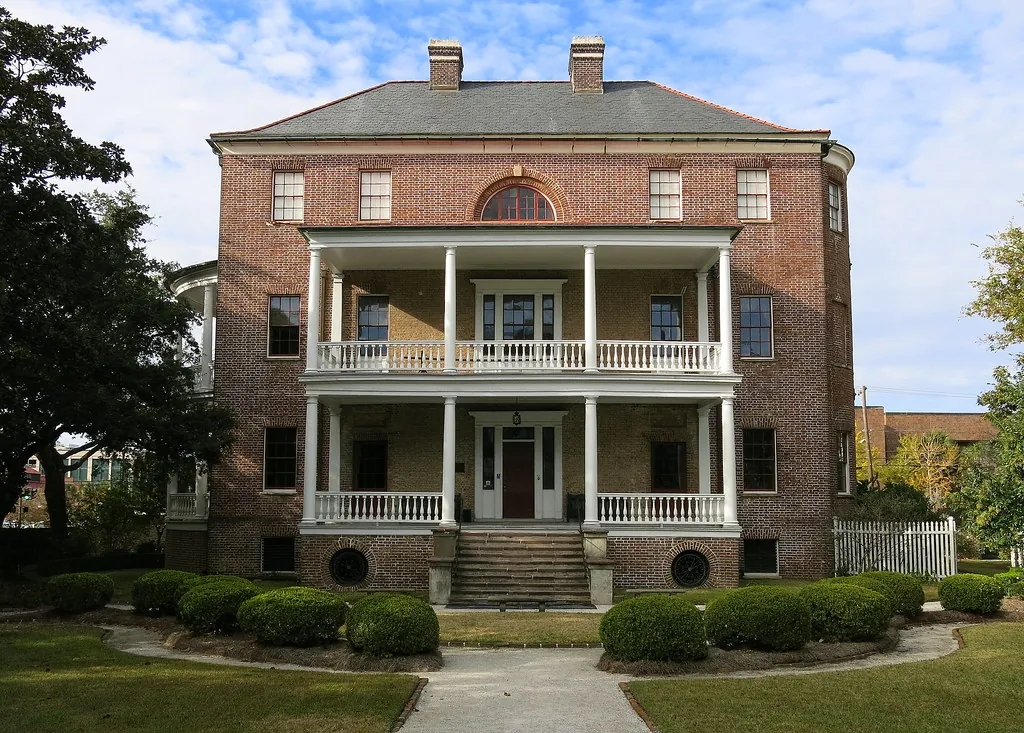
In 1920, the Joseph Manigault House — Gabriel Manigault's 1803 example of Adam-style architecture, built for his brother Joseph — nearly became a gas station. That threat pushed a group of Charlestonians to organize the Preservation Society of Charleston, the city's first serious preservation effort, born specifically to save the building. The instinct spread. Along East Bay Street, the thirteen merchant row houses known as Rainbow Row had fallen into near-slum conditions after the Civil War; in the 1920s Susan Pringle Frost bought six of them, and in 1931 Dorothy Haskell Porcher Legge painted a section pink — she wanted to uplift the block, though local tradition holds the colors helped sailors find their bearings from port. By 1945 most were restored. This is a city that learned to fight for its own buildings, one near-loss at a time. What you walk past in Charleston survived because someone refused to let it go.