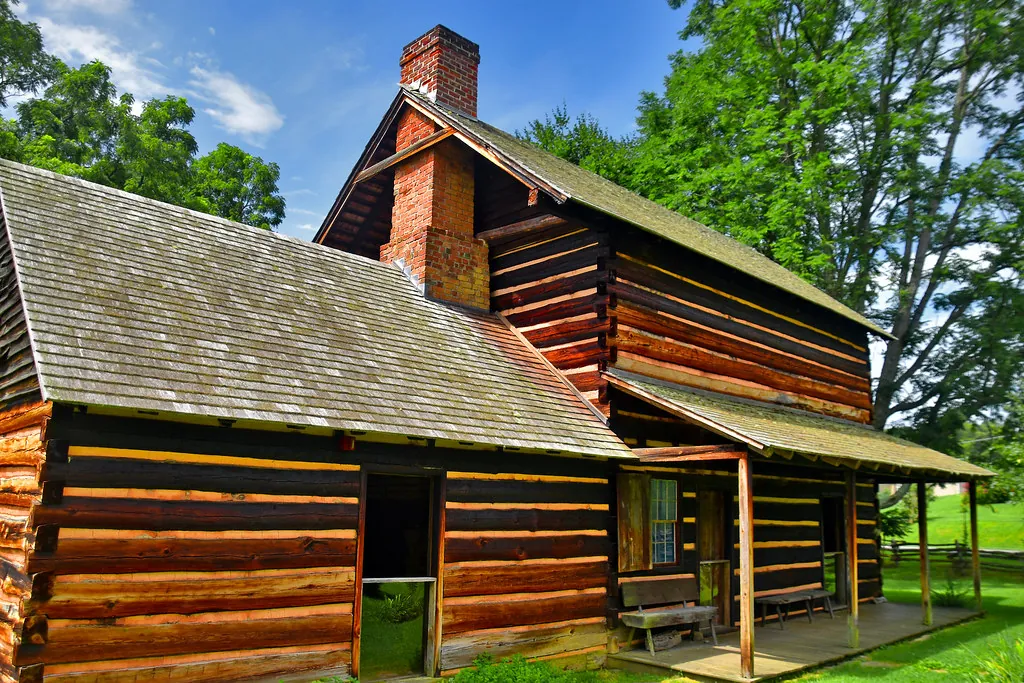
The Reems Creek Valley, twelve miles north of Asheville, is where David Vance staked his claim between 1785 and 1790, building a mountain plantation after the Revolution. His grandson, Zebulon Baird Vance, was born here in 1830, in a two-story log house reconstructed around the original chimney. Zeb Vance would serve as North Carolina's Civil War governor, then as a three-term U.S. senator until his death in 1894. The exhibit traces how this early mountain life shaped Vance's politics — the farm where he learned the rhythms of a working plantation before the war, before the statehouse, before Washington.
Eighteen enslaved people lived and worked this land. The 1790 slave house stands as part of the guided tour. The outbuildings — loom house, tool shed, spring house, smoke house, corn crib — are the infrastructure of a working farm, reconstructed to show what subsistence looked like in the Blue Ridge at the turn of the nineteenth century. The site is owned by the North Carolina Division of State Historic Sites. It's free to visit.
Vance is buried at Riverside Cemetery in Asheville. The farm is where the story starts — not the monument, not the statehouse portrait, but the place where a future governor learned what a mountain farm demanded, and who paid the cost.
- ·911 Reems Creek Road, Weaverville. Vance buried at Riverside Cemetery. Five outbuildings reconstructed.
More archive
Memories
Editorial content compiled with AI assistance. Place details verified against public records.