Providence sits at the head of Narragansett Bay, where the Providence River forms from the confluence of the Moshassuck and Woonasquatucket Rivers. Roger Williams, a Reformed Baptist theologian exiled from the Massachusetts Bay Colony for advocating the separation of church and state, founded the city here in 1636. He named the settlement "Providence" in honor of what he called "God's merciful Providence," which he believed led him to this haven.
The new settlement organized itself, allotting tracts along the eastern side of the Providence River. Without a royal charter like its neighbors, Providence Plantations grew into an agricultural and fishing settlement, despite lands difficult to farm. In 1703, the Rhode Island General Assembly legalized slavery, and Providence merchants became active in the slave trade, contributing to the city's rise as a major port. Providence was burned during King Philip's War in 1676; the Rhode Island legislature later rebuked other colonies for provoking the conflict.
In 1770, Rhode Island College, later Brown University, moved to Providence from Warren. This relocation marked a shift in power away from Newport and toward Providence. Two years later, Providence residents instigated the Gaspee Affair, burning a British customs schooner in what became the first armed resistance to British rule in North America, preceding the Boston Tea Party. Rhode Island was the first colony to renounce the British Crown in 1776.
After the Revolutionary War, Providence shifted its economy from maritime trade to manufacturing, particularly textiles, machinery, tools, silverware, and jewelry. By the turn of the 20th century, Providence hosted major manufacturing plants, including Brown & Sharpe and Gorham Manufacturing Company. This industrial expansion attracted waves of immigrants from Ireland, Germany, Sweden, England, Italy, Portugal, Cape Verde, and French Canada. During this era, Providence became one of the wealthiest cities in the United States, earning the moniker "jewelry capital of the world" by the 1960s.
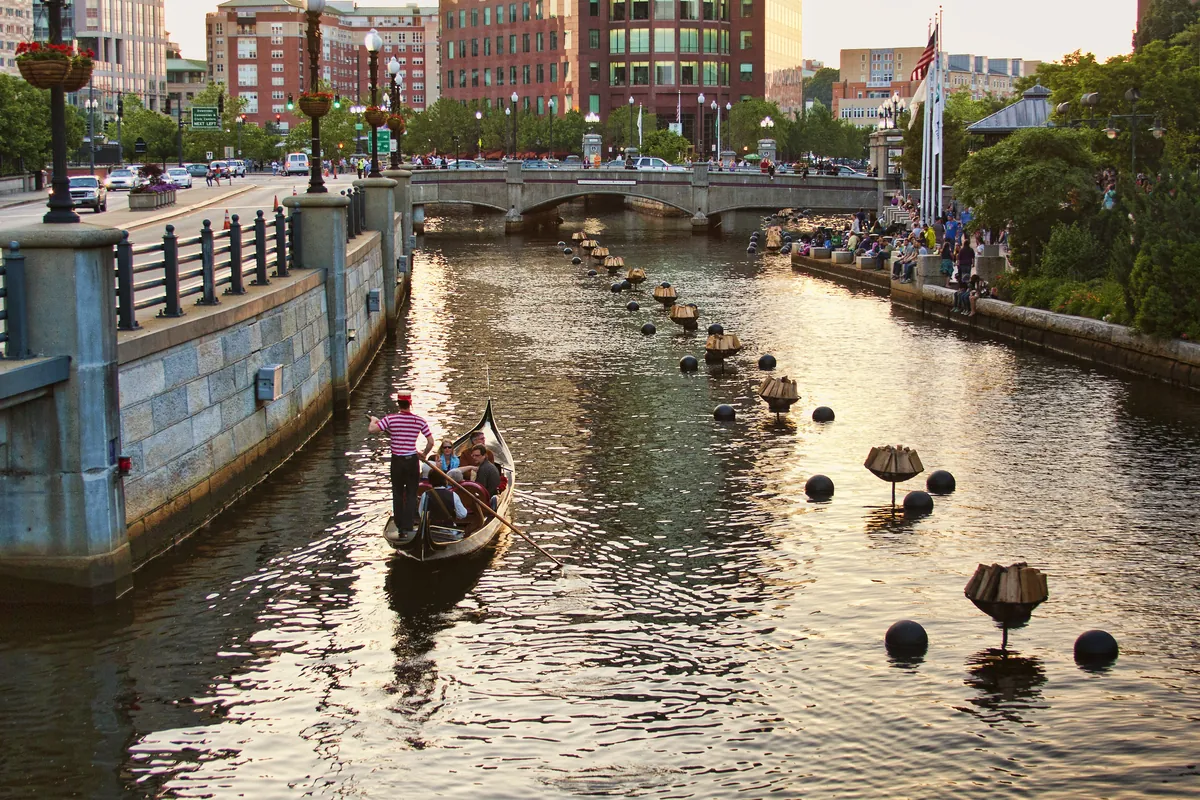
The city faced decline in the mid-1920s as manufacturing industries began to close, exacerbated by the Great Depression, the 1937–1938 recession, and the devastating 1938 New England Hurricane. From the 1940s to the 1970s, Providence saw a significant outmigration of its white middle-class population. By the 1990s, the city undertook major revitalization projects, realigning railroad tracks, relocating rivers, and creating Waterplace Park, transforming its downtown core. Today, Providence maintains its compact, historic street grid, with an economy increasingly centered on its eight colleges and universities and eight hospitals, even as it preserves its manufacturing legacy in districts like the former Jewelry District, now rebranded the Knowledge District.