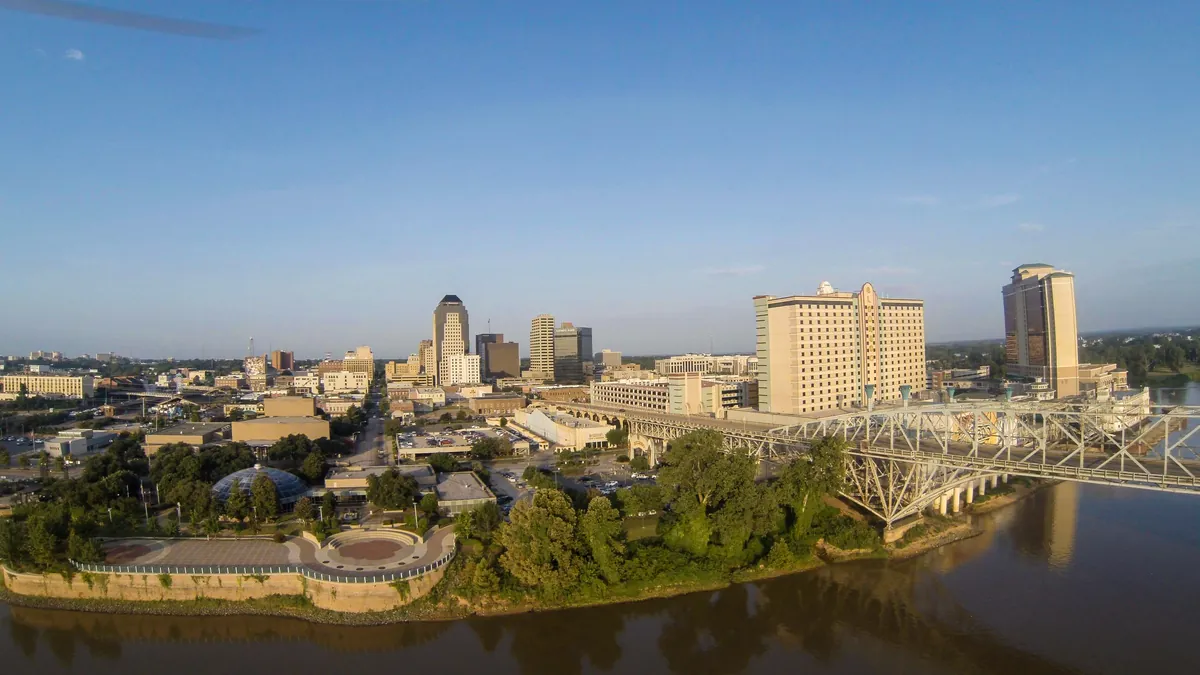
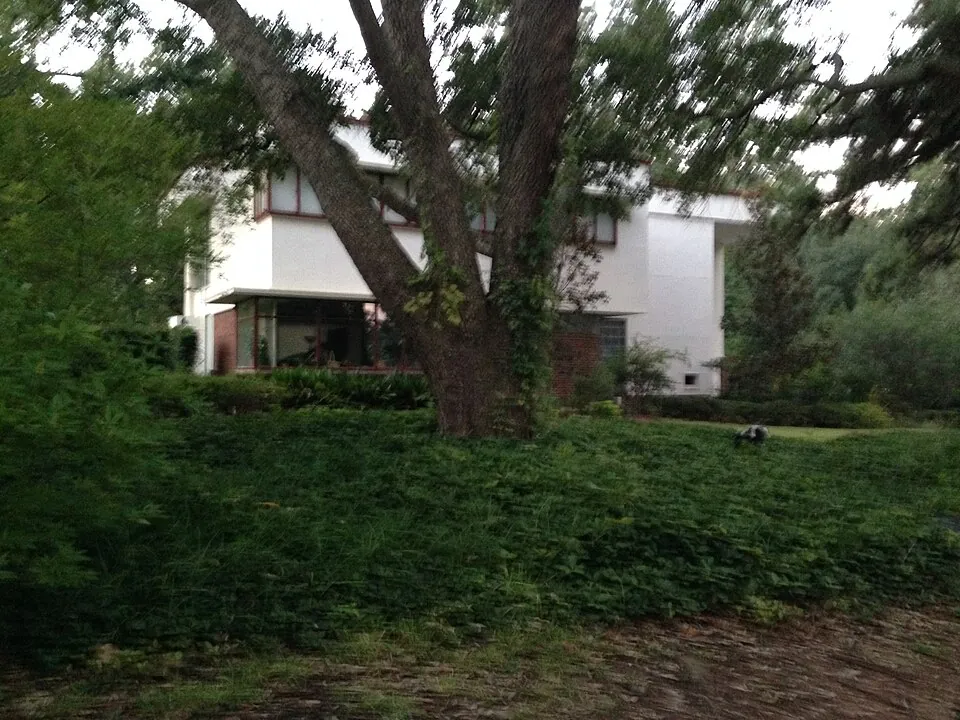
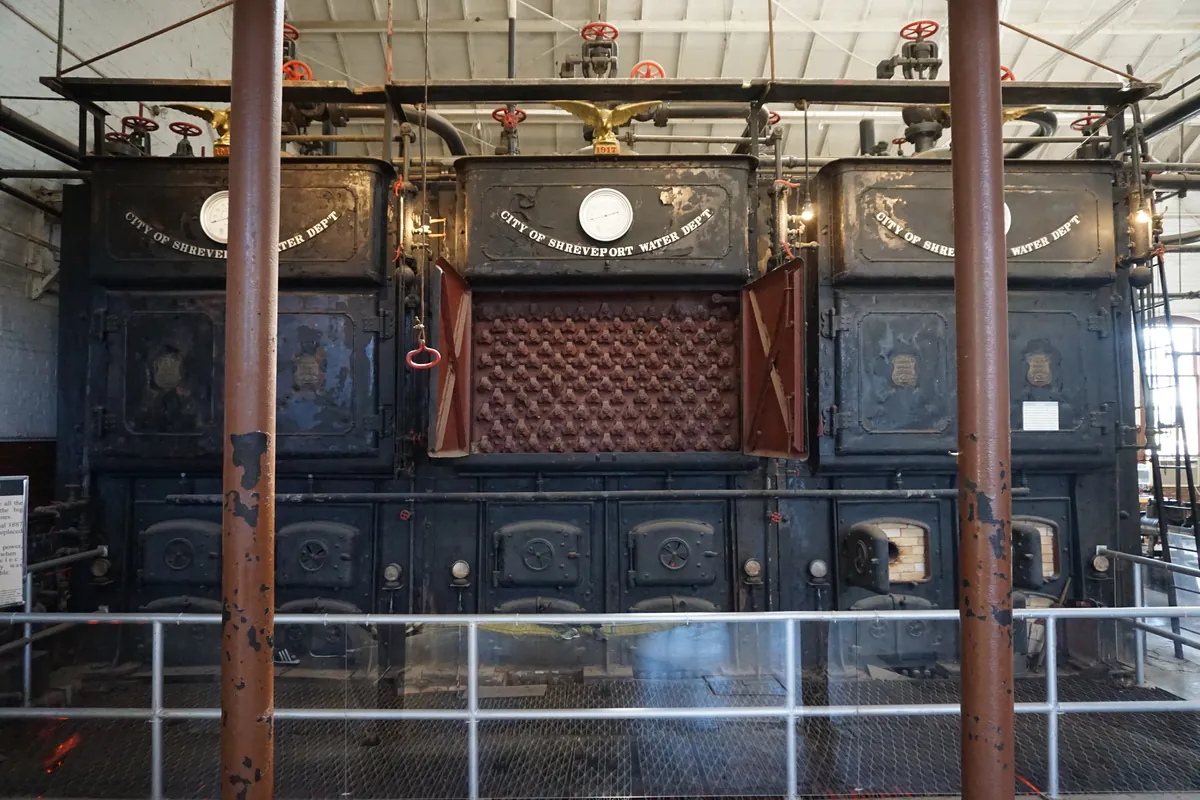
The money that built Shreveport came down the Red River and up the rail lines, and it left its evidence in brick. Through the 1880s into the 1920s, cotton and commerce filled the bluff above the river with Romanesque and Italianate warehouses — arched storefronts, corbeled cornices, cast-iron columns holding up pressed-metal ceilings. South of downtown, along the Line Avenue corridor, the affluent families who moved that commerce built in a different register: Victorian turreted corners, wraparound porches, Queen Anne and Classical Revival facades meant to outlast the people who commissioned them. The McNeil Street Pumping Station, drawing from the river since 1887, kept the whole apparatus running for over a century. What Shreveport did not do, mostly, was tear these things down. The Slattery Building went up in 1923 and the layers kept accumulating — Italianate beside Art Deco beside Modernist — until the district itself became the record.