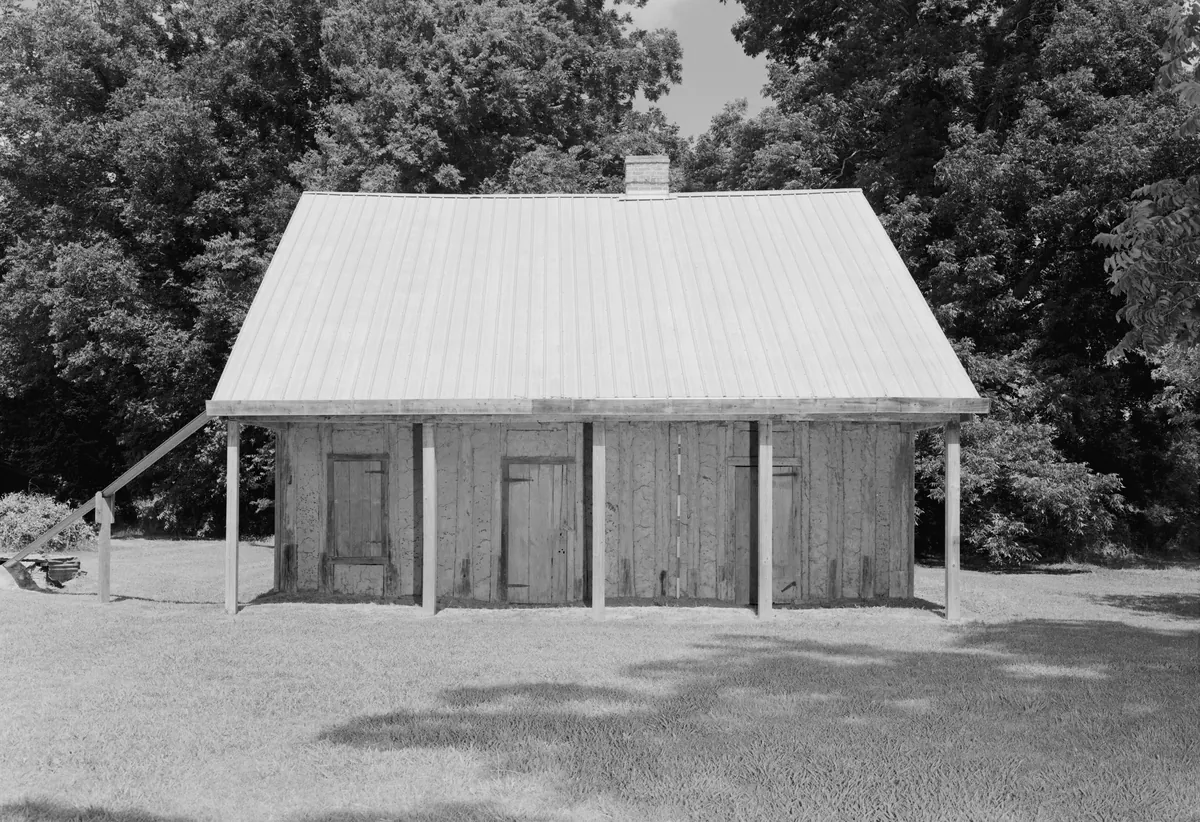
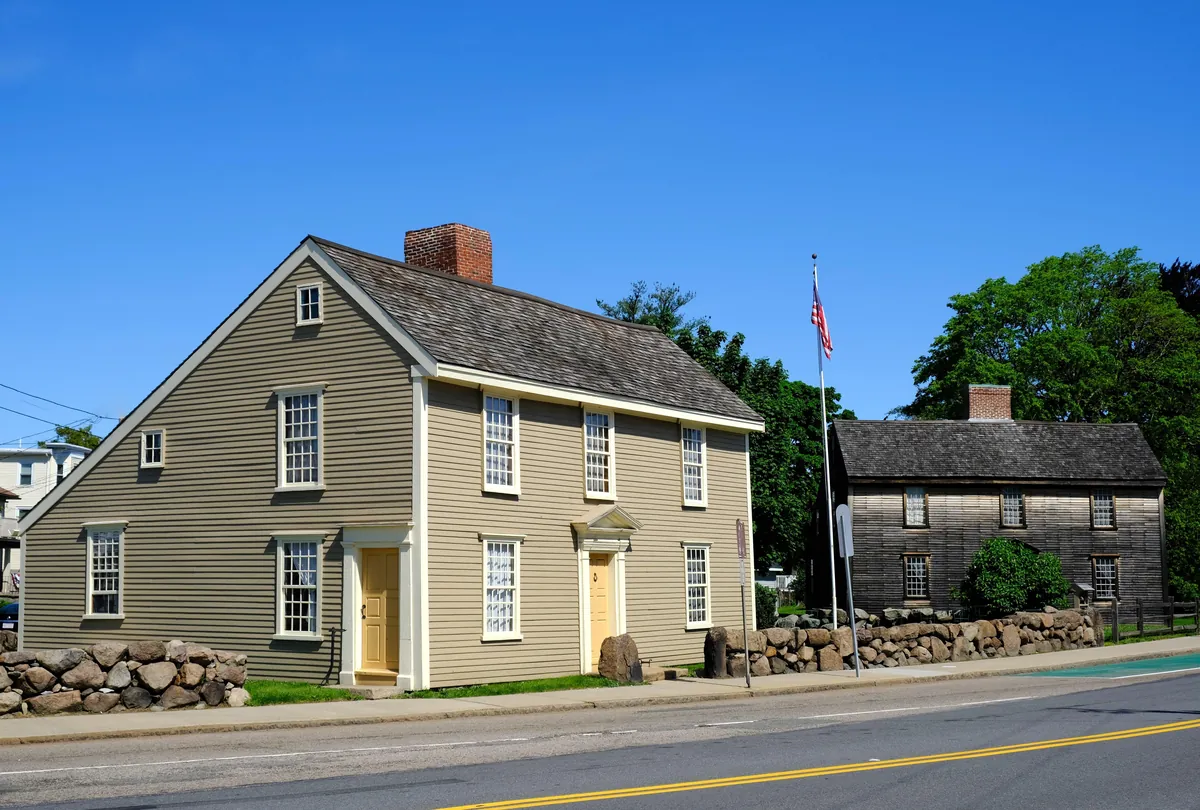
The technique came from the Caribbean: mud and moss packed between hand-hewn cypress posts, a method called bousillage entre poteaux. French settlers adapted it here after St. Denis established Natchitoches in 1714, and what they built has refused to disappear. The Roque House — one of the oldest standing structures in the Historic Landmark District — went up around 1790, was moved to the Cane River lakefront in the 1960s to save it, and still stands there. Around the same time, François Rouquier raised a two-story bousillage structure on a Spanish land grant; what he built is said to be the largest surviving bousillage building in the country, and one of the few remaining two-story examples anywhere in the United States. By 1830, the French Creole raised-cottage form — galleries on two sides, the Caribbean inheritance reshaped for northwest Louisiana — had become its own vernacular. Three buildings, three moments, one material logic.